City Centre, Crescent Beach, Cloverdale, and the park network — Surrey rewards exploration well beyond the highway corridors.
Surrey is Metro Vancouver’s second-largest city, with City Centre, Cloverdale, and South Surrey offering very different ways to spend a day. This guide covers practical stops for visitors, from free cultural spaces and heritage sites to parks, waterfront walks, and seasonal events.
Surrey City Centre and Holland Park
The Surrey Art Gallery sits in the civic complex beside City Hall — free to enter, focused on contemporary art, with two or three rotating exhibitions running at any given time. It is not a large gallery, but it is well-programmed and worth 45 minutes while you are already in City Centre. One of the more overlooked free cultural stops in Metro Vancouver.
The City Centre area around Surrey Central SkyTrain station has transformed in the past decade into something that actually functions as an urban core. New residential towers, a redesigned civic plaza, SFU Surrey campus, and the Central City shopping complex have created a density that didn’t exist here fifteen years ago. It’s not polished the way downtown Vancouver is, but it has an energy — particularly on evenings and weekends when the plaza fills up.
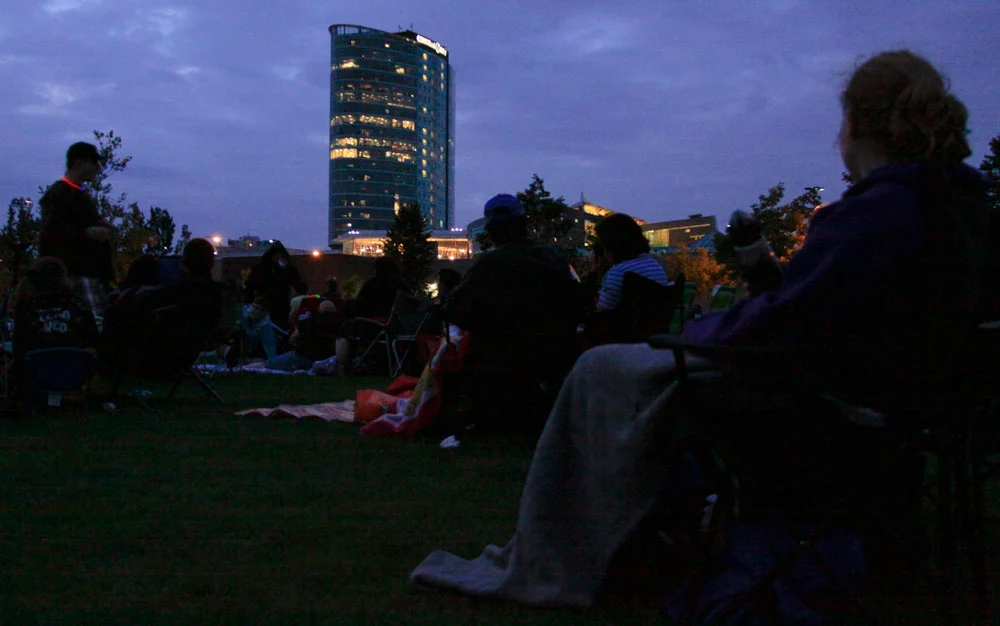
Holland Park, right next to the SkyTrain station, is one of Surrey’s genuine surprises. It’s a large, well-maintained urban park with open lawns, walking paths, and a performance stage that hosts concerts and community events through the warmer months. Surrey City Hall is in the same area — a good landmark for orienting yourself in the civic core.
Cloverdale’s historic core

Drive or take transit to Cloverdale and you’ll understand immediately why people who live there are attached to it. The historic downtown strip along 176 Street has heritage storefronts, independent shops, and a genuinely small-town main street character that’s increasingly rare in the Lower Mainland. It borders the Township of Langley and shares more in common with Langley’s agricultural character than with the urban Surrey of City Centre.
The Cloverdale Rodeo and Country Fair has been running for over a century — it’s a legitimate piece of living local history, not a manufactured heritage event. The Museum of Surrey, located in Cloverdale, covers the region’s agricultural and Indigenous history and is free to visit — worth stopping in while you’re in the neighbourhood. The Fraser Valley Heritage Railway runs weekends from May through September — a ticketed ride experience centred on the region’s tram and interurban history, with a seasonal schedule that should be checked before visiting. Cloverdale is also home to some of the better antique shops in Metro Vancouver, concentrated along the main strip and in the side streets around it.
South Surrey, Crescent Beach, and the Waterfront
The southern end of Surrey feels entirely different from City Centre. The Semiahmoo area borders White Rock and has a suburban residential character punctuated by parks and waterfront access. Crescent Beach is the gem of this area — a quiet seaside community on Mud Bay with a distinct village feel, tidal flats that stretch dramatically at low tide, and views across the water that you don’t expect to find this deep in the suburbs.
The village has a short main street with a handful of cafés and a fish and chip shop that has been operating long enough to qualify as a local institution. At low tide, the flats extend far out — you can walk onto exposed sand and look back at the waterfront cottages from the water. On a clear day, Roberts Bank is visible to the west and the North Shore Mountains frame the skyline to the north. There is no boardwalk, no tourist infrastructure, no busy waterfront strip. The community has stayed quiet, and that is its main quality.
The Semiahmoo Trail connects parks through this southern corridor and is popular with cyclists and walkers. Boundary Bay Regional Park, technically in Delta but easily accessed from South Surrey, is one of the best birding spots in BC — the mudflats and marshes host enormous numbers of migratory shorebirds in season, particularly in fall. Even if birds aren’t your thing, the flat, wide beach at Boundary Bay on a clear day with Mount Baker visible across the water is genuinely spectacular.
Parks, Trails, and Green Space
Surrey has invested heavily in its park and trail network, and it shows. Bear Creek Park in central Surrey has an outdoor pool, spray park, playground, gardens, and walking paths. Tynehead Regional Park in Newton has a proper forest trail system centred on the Serpentine River. The main loop runs around 5 kilometres through second-growth forest, with the river running alongside for much of the route. The canopy closes in fast from the trailhead — within a few minutes of parking you have lost the suburban grid entirely. A solid free half-day option in the north of the city, accessible off 168 Street. Families planning around free activities with children — Bear Creek Park, Redwood Park, the Museum of Surrey, trails along the Fraser — will find the free kids’ activities in Surrey guide covers each in more detail. The Metro Vancouver parks guide maps out what else in the region is worth a similar kind of morning.
Green Timbers Urban Forest was completely logged by 1929, then replanted and later became a city park in 1974. It now has more than 10 kilometres of nature trails, a stocked fishing lake, picnic areas, and the Surrey Nature Centre. This is second-growth forest, not old growth.
Elgin Heritage Park in South Surrey covers different ground — wetlands, meadows, and forested trails along the tidal Nicomekl River, centred on the Historic Stewart Farm, a restored 19th-century heritage farmhouse that has free heritage-building access Tuesday through Sunday from noon to 4:30 p.m. The nature trail runs over 3 kilometres. The wetland section is the most interesting part: herons, red-winged blackbirds, and a quietness that is genuinely hard to find this close to a highway interchange. Free and open from dawn to dusk year-round.
Eating in Surrey
Surrey has one of the most ethnically diverse populations in Canada — the food scene reflects this in ways that the tourist guides consistently underreport. The 72nd Avenue corridor and the Newton area have some of the best South Asian food in the Lower Mainland — Punjabi restaurants, sweet shops, bakeries, and grocery stores stocking ingredients that are genuinely hard to find elsewhere in the region. If you eat South Asian food and you’ve been sleeping on Newton, fix that. The specific draw is the concentration — within a few blocks on 72nd Avenue and the surrounding streets, mithai shops selling fresh barfi and jalebi sit alongside restaurants doing full Punjabi thali. Some of these places have been running for decades and built their reputation on a customer base that knows the food well. The prices reflect that. It is not a tourist corridor.
The area around Surrey Central and Whalley has been developing a more varied independent restaurant and café scene as the residential density has increased. It’s still catching up to the food neighbourhoods in Vancouver proper, but the gap is closing faster than most people realize.
Seasonal events
Surrey’s Vaisakhi parade in April is one of the largest celebrations of the Sikh harvest festival anywhere outside of Punjab. The route runs through the Newton area and draws hundreds of thousands of people — food stalls, floats, and live music along the street for most of the day. It is free and open to everyone. If you are in Metro Vancouver in mid-April, this is worth rearranging your schedule for.
The Cloverdale Rodeo runs on Victoria Day weekend in May at the Cloverdale Fairgrounds. It is one of the oldest continuously running rodeos in Canada — over a century of operation — and draws competitors from across Western Canada alongside a full country fair. For a city that reads as entirely suburban to most visitors from outside the region, the rodeo’s longevity says something real about Cloverdale’s identity.
The Surrey Fusion Festival at Holland Park in summer is a free multicultural music and food event — multiple stages, food vendors representing many of the communities that make up Surrey’s population, and a crowd that reflects the city accurately. It runs over a weekend, usually in late June or July. Check the City of Surrey events calendar for dates each year, as the timing shifts.
Getting Around Surrey
Surrey is primarily a car city — there’s no getting around that for much of it. But the Expo Line SkyTrain runs through City Centre, King George, and Whalley, giving solid transit access to the urban core. The South Surrey and Cloverdale areas are harder to reach without a car.
If you’re coming from Vancouver for the day, Surrey Central is about 40 minutes on the SkyTrain from Waterfront — fast, cheap, and direct. For Cloverdale, Route 320 links Surrey Central Station and Cloverdale. It is the direct transit option, but travel times vary, so check the trip planner before leaving. For Crescent Beach and South Surrey, Bus 351 connects from Bridgeport Station through Newton and down to the White Rock area; allow 40–50 minutes. Bus 321 runs a similar south corridor from King George Station if you are starting from that end of the line. Neither route is frequent, so check the TransLink trip planner before you go and build in extra time. If Surrey is one stop on a longer day, the Metro Vancouver weekend guide is worth checking before you plan.
Surrey is large enough that driving between its distinct communities takes 20 to 40 minutes depending on traffic. Most day trips work better when organized around one area rather than trying to cover everything in a single outing. City Centre and Cloverdale make a reasonable pair — Bus 320 from King George SkyTrain connects them directly. South Surrey and Crescent Beach are another logical pairing. Trying to combine North Delta, Cloverdale, and the waterfront in one day spreads the trip too thin to do any of it properly.
Travel details change. YVRBlog aims to use official sources and show the review date above. If something has changed, please contact us.