Gastown's Blood Alley Square and Trounce Alley are both finished and open. Water Street goes car-free on Sundays from July 5. Here's what changed, where to eat, and how to spend a few hours in the neighbourhood without doing the steam clock and leaving.
Gastown means different things depending on how long you have lived in Vancouver. For most visitors it is cobblestones, a steam clock, and a short walk from the cruise terminal. For locals it is the oldest part of the city, reworked block by block over recent years into one of the more interesting places downtown to eat and walk. The renewed Blood Alley Square and Trounce Alley are finished, Water Street closes to cars on summer Sundays, and the dining runs from oyster bars to one of the better fine-dining rooms in the city. This guide covers what the neighbourhood is, how to walk it, where to eat, whether it is a good base for your trip, and how it fits a wider day in Vancouver.
What Gastown Is, in Two Minutes
Gastown is where Vancouver started. The neighbourhood grew up around a saloon opened in 1867 by John Deighton, the talkative riverboat captain locals nicknamed Gassy Jack, and the area carried his name from there. The Great Fire of 1886 levelled the original wooden settlement, and the brick and stone Victorian buildings you see today went up in the rebuild that followed. That architecture is the reason Gastown is a designated National Historic Site, and it is why the streetscape feels so different from the glass towers a few blocks west. If you want the wider context of where it sits among the city’s districts, our guide to things to do in Vancouver places it on the map.
Blood Alley Square and Trounce Alley: What Changed
Blood Alley Square, the small laneway plaza between Water and Cordova, completed its redesign in 2024. The city finished the connecting piece in 2026 when Trounce Alley, the short alley that links the square to Water Street, was rehabilitated so its surface matches the square. Together they form a real outdoor gathering space with a performance stage, fixed seating, new globe lighting, and trees. It is smaller and quieter than Maple Tree Square, which makes it a better spot to sit with a coffee and watch the neighbourhood go by.
Maple Tree Square itself, the meeting point of Water, Alexander, Carrall, and Powell, is set for a much larger overhaul in a later phase of the city’s plan. The full scope and timing live on the City of Vancouver’s Gastown Public Spaces Plan page, which is the place to check before you assume any one project is done.
Car-Free Sundays on Water Street
On summer Sundays, Water Street closes to cars and turns over to people on foot. In recent years the pedestrian zone has run on Sunday afternoons across the core summer months, with patios spilling onto the cobblestones and room to walk the corridor without dodging traffic. Surveys of residents and businesses have backed the pilot strongly, and the city has moved toward making it a regular summer fixture. The exact dates and hours have shifted from year to year, so confirm the current schedule with the Gastown Business Improvement Society’s Water Street pilot page before you build a Sunday around it. When it is on, a Sunday afternoon here, with water views at the end of every cross street, is a different neighbourhood from a wet Tuesday.
How to Walk Gastown
Gastown is small and flat, which makes it one of the easiest parts of downtown to see on foot. A simple loop starts at Waterfront Station and runs east along Water Street, past the steam clock at Cambie, to Maple Tree Square. From there you can drop south into Blood Alley and Trounce Alley, then come back up through the side streets on Cordova and Carrall and finish where you started. The whole circuit takes well under an hour at a slow pace, longer if you stop to eat or browse. The cobblestones are charming and also genuinely uneven, so flat shoes beat heels here.
Should You Stay in Gastown, or Just Visit?
Gastown works better as a place to visit than a place to stay for most first-time trips. It has only a handful of hotels, and it leans lively at night rather than quiet. It is a strong base if you want character, restaurants, and unbeatable transit — Waterfront Station connects the Expo Line, Canada Line, SeaBus, and West Coast Express — and it is convenient for cruise passengers, since the Canada Place terminal is a short walk. The honest caveat: Gastown’s eastern edge, around Maple Tree Square and beyond, borders the Downtown Eastside, an area with visible poverty and street issues. The core tourist stretch along Water Street is busy and walkable by day, but it is worth knowing the neighbourhood’s character before booking a room at the eastern end. If you are weighing neighbourhoods, our guide to the best areas to stay in Vancouver compares Gastown against the other central options.
Gastown is also a common starting point for walking and food tours of the old town, so even if you stay elsewhere it is an easy area to build a half-day around.
Where to Eat and Drink
Gastown’s dining runs from oyster bars to izakayas to one of the better fine-dining rooms downtown. Hours, menus, and reservations change often, so check each venue’s own page before you go.
- L’Abattoir sits at the high end and has for years. It is inventive without being exhausting about it, and the right level of formal for the neighbourhood. Book ahead for dinner.
- Steamworks Brewpub is the opposite end, a large brewpub in a heritage building, more reliable than thrilling, with outdoor seating that earns its keep on a car-free Sunday.
- Revolver on Cambie Street is where coffee people go when they are in Gastown, with a rotating selection from roasters around the world and no fuss about it.
- Guu with Otokomae on Water Street is the loud, communal izakaya format: cheap small plates, good skewers, and sake until you stop ordering. Not every mood, but the right one often enough.
- Rodney’s Oyster House on Hamilton Street has been the city’s oyster institution for a long time, with fast shuckers and a happy hour that means what happy hour is supposed to mean.
For the current roster of restaurants, cafes, and bars, the Gastown Business Improvement Society keeps a neighbourhood directory that stays more up to date than any single list.
The Steam Clock, Addressed Once
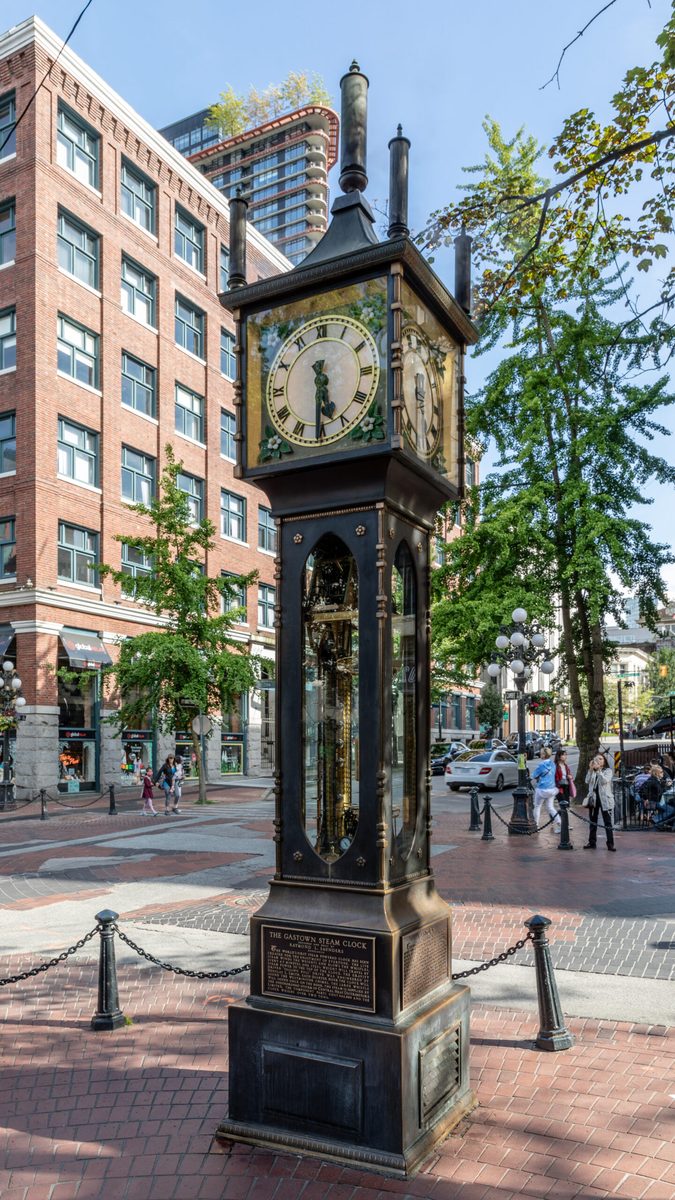
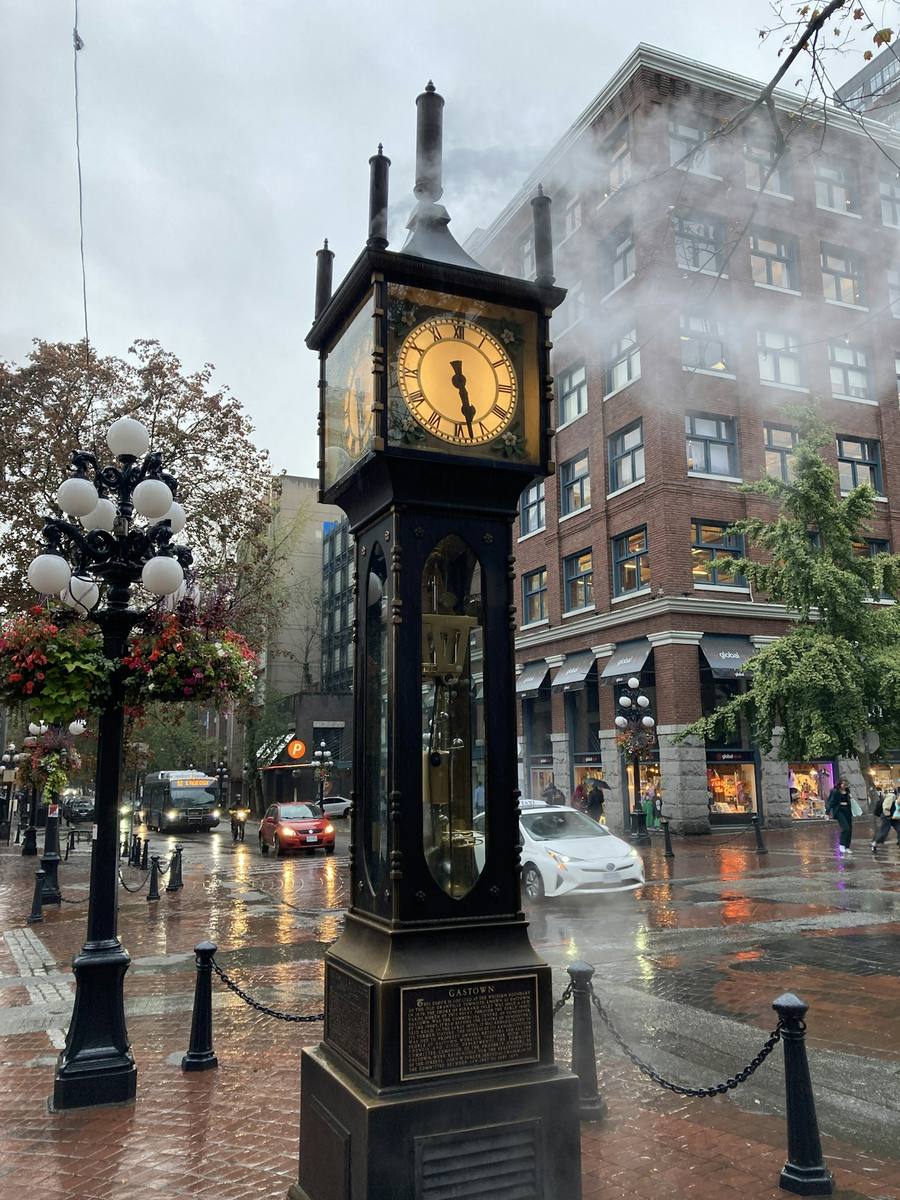
The steam clock at Water and Cambie is a 1977 installation, not a Victorian antique. It runs on steam from the downtown district heating system, whistles on the quarter hour, and is photographed thousands of times a day. It is fine. It is not the reason to be in Gastown, and you will have seen it without trying.
Shopping, Galleries, and Indigenous Art
Beyond the food, Gastown is one of the better parts of the city for independent shops, design stores, and galleries. Several long-running galleries in the area specialize in Northwest Coast and Indigenous art, and the side streets hold boutiques and homeware shops you will not find in a mall. Stock and store hours turn over regularly, so treat any specific recommendation as a starting point rather than a guarantee. Destination Vancouver’s Gastown neighbourhood overview is a reasonable place to scan what is currently open.
When to Go and What to Check
Weekday mornings are the quietest time to walk Water Street, before the lunch crowds and the cruise-season foot traffic. Summer Sundays are the liveliest, when the car-free zone is on and the patios are open. Like much of downtown, the area is more polished on some blocks than others, and the renewed laneways and the Water Street corridor are the heart of what most people come for. A few things worth checking before you go: restaurant hours and reservations, the current Sunday pedestrian-zone schedule, and any construction around Maple Tree Square if you are coming for the public spaces specifically.
Pair Gastown With the Rest of Your Day
Gastown works best as one piece of a larger downtown day rather than a destination on its own. From Waterfront Station you are a short walk from Canada Place and the start of the seawall. Follow the water around and you can reach False Creek, where the mini-ferries and both shorelines make for an easy afternoon. If you would rather cross the water, our half-day route through Kitsilano and Granville Island pairs naturally with a Gastown morning. For another neighbourhood with the same walk-and-eat rhythm, Commercial Drive is a short transit hop east. And if you are planning a full trip, our weekend in Metro Vancouver guide shows where a couple of Gastown hours fit among everything else.
Getting There
Waterfront Station puts you at the edge of Gastown, about five minutes on foot from Water Street, and it connects the Expo Line, the Canada Line, the SeaBus, and the West Coast Express. Stadium-Chinatown Station works from the east. On car-free Sundays there is little reason to drive at all. Plan your route with the TransLink trip planner, and if you are arriving from the airport, our guide to getting from YVR to downtown Vancouver covers the Canada Line and your other options.
Gastown FAQ
Is Gastown worth visiting?
Yes, especially if you like walkable, historic neighbourhoods with good food. Give it a couple of hours, more if you plan to eat, and combine it with the seawall or a nearby district to make a fuller day.
How long should I spend in Gastown?
A slow walk of the core takes under an hour. With a meal, a coffee, and some browsing, two to three hours is realistic. It is compact, so you are not committing a whole day to it.
When is Water Street car-free?
The pedestrian zone runs on summer Sundays in recent years, but the dates and hours have changed between seasons. Check the Gastown Business Improvement Society and the City of Vancouver for the current year’s schedule before you plan around it.
Is Gastown walkable from downtown?
Very. It sits at the northeast edge of the downtown core, a few minutes on foot from Waterfront Station and Canada Place, and flat the whole way.
Gastown rewards a slow pace more than a tight schedule. Walk the cobblestones, look up at the brickwork, sit in the renewed laneways, eat something good, and let the rest of downtown wait. The neighbourhood has spent years getting better at being itself, and it is one of the easiest couple of hours to recommend to a first-time visitor.
Travel details change. YVRBlog aims to use official sources and show the review date above. If something has changed, please contact us.