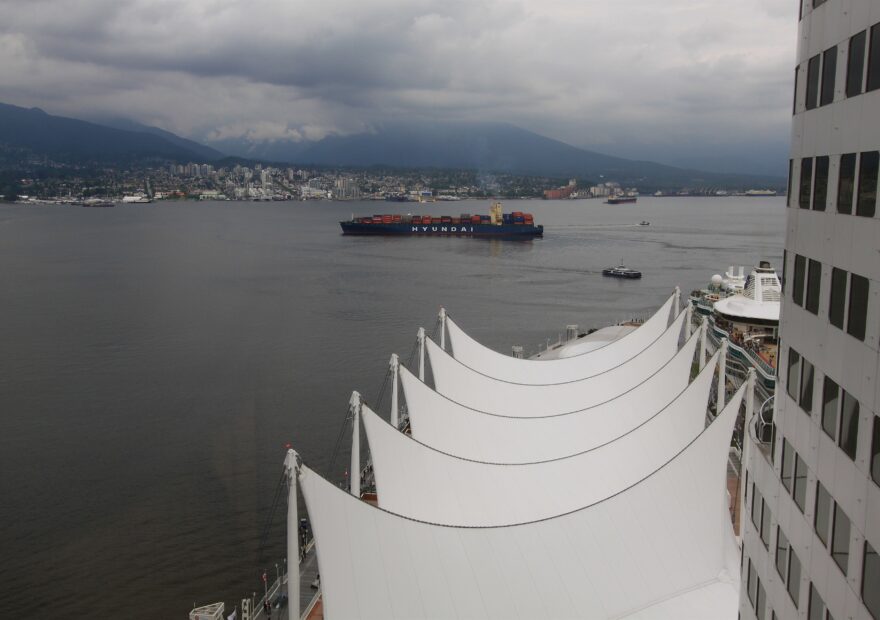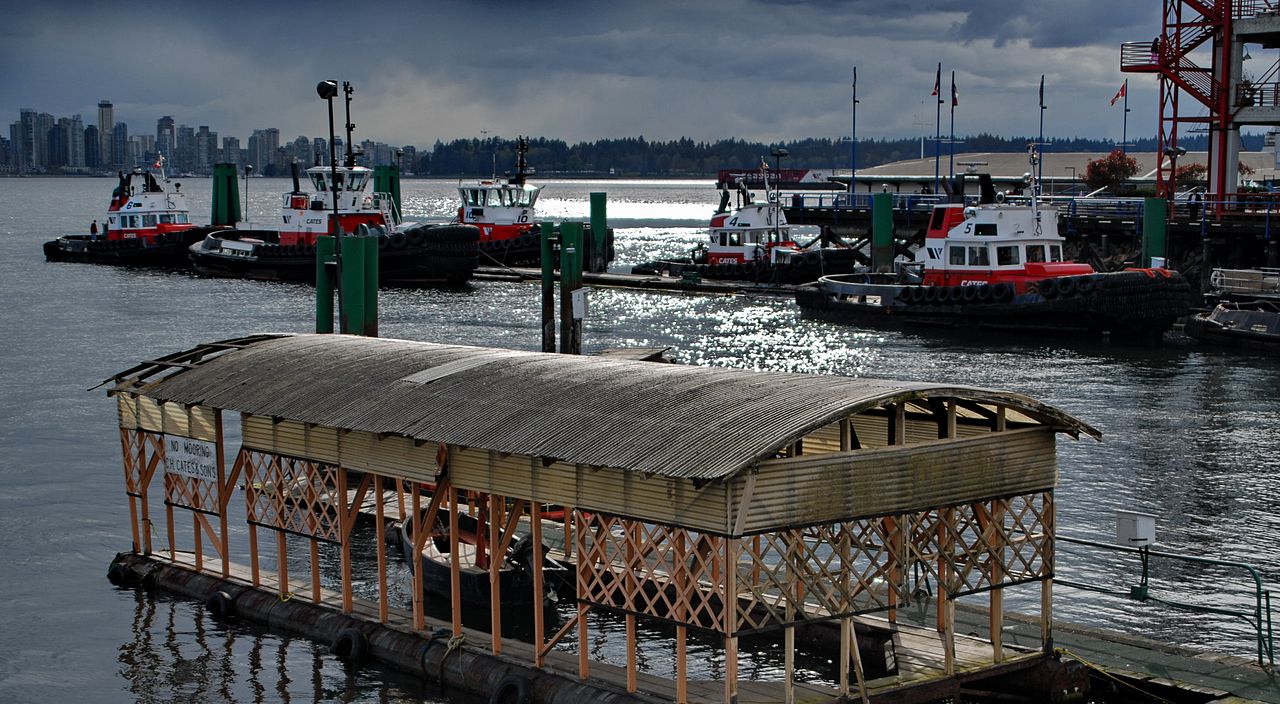
The North Shore sits across Burrard Inlet from Vancouver, twelve minutes by SeaBus, and the two municipalities that make it up have distinctly different characters worth knowing before you plan your day. North Vancouver is the denser, more transit-accessible side: Lonsdale Quay, the Grouse Grind, Lynn Canyon, Deep Cove. West Vancouver, to the west, is quieter and wealthier, with exceptional public waterfront, Cypress Provincial Park, and the BC Ferries terminal at Horseshoe Bay. Between them, one trip across the inlet covers more ground than most visitors expect.
Getting to the North Shore
The SeaBus from Waterfront Station to Lonsdale Quay runs every 15 minutes during peak hours and takes 12 minutes. It is the best way to reach North Vancouver and worth taking for the crossing alone. From Lonsdale Quay, buses connect into the city and district, with seasonal shuttles running toward Grouse Mountain and Capilano in summer.
West Vancouver runs on a separate bus network. The 250 and 257 from downtown Vancouver travel along Marine Drive through Ambleside and Dundarave. The 257 express reaches Horseshoe Bay from downtown in about 40 minutes. For the waterfront sections of West Van, buses work well. For Cypress Provincial Park and the upper trails, you need a car or a seasonal shuttle from Park Royal.
One practical note before you plan: the lower parts of both North Van and West Van are very manageable without a car. The moment you want to reach the mountains and backcountry, driving is the reliable option outside of summer shuttle windows. Plan your day around one side of the North Shore rather than trying to reach both mountain areas in the same trip.
Lonsdale Quay and Lower Lonsdale
Start at Lonsdale Quay if you come by SeaBus. The market building has a good mix of local food stalls and vendors without the tourist-trap pricing of some Vancouver markets. The Lonsdale market on the plaza beside the SeaBus terminal is one of the better Saturday farmers markets in the region. But honestly, the best thing about the Quay is standing outside with coffee and watching the skyline across the inlet. That view from the north side is better than it gets credit for.
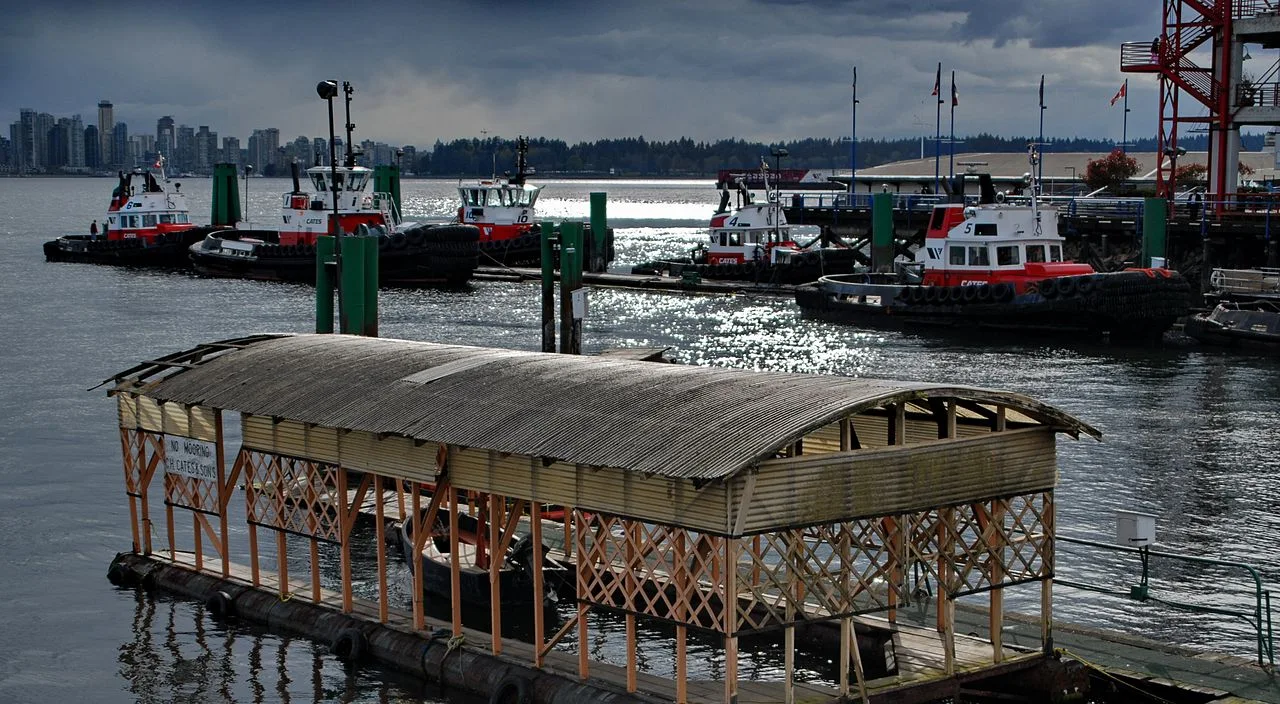
Walk north up Lonsdale Avenue and you reach Lower Lonsdale, which has become one of the better neighbourhoods in Metro Vancouver for an evening out. It has the kind of slightly rough character that Gastown lost years ago: independent spots, good food, bars that function as bars. Most of the action sits between the waterfront and 15th Street. If you are coming to North Van specifically for dinner and a walk, this is the right neighbourhood.
Lynn Canyon and Capilano River
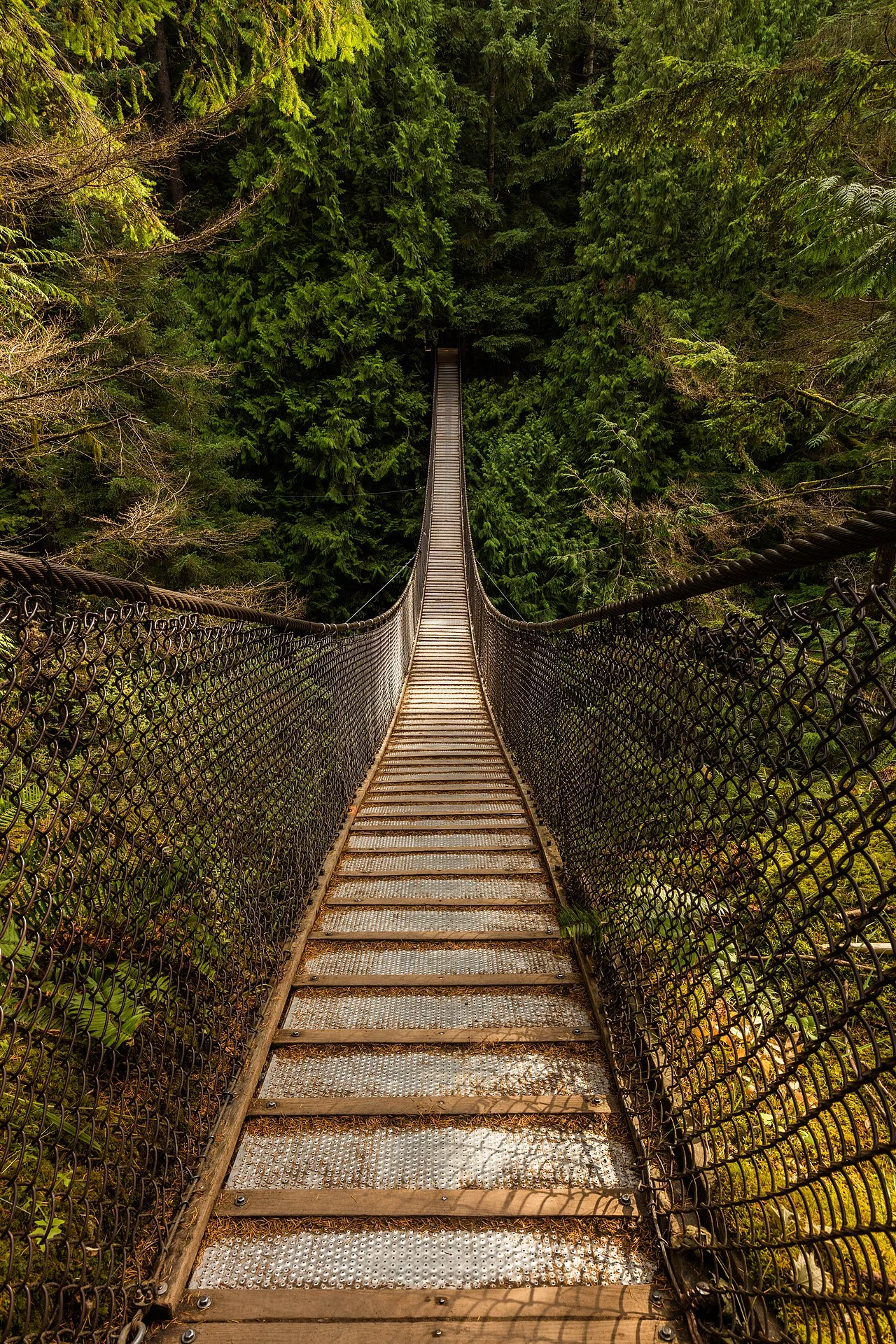
Before you pay the entrance fee at Capilano Suspension Bridge, know that Lynn Canyon Park exists and is completely free. It has its own suspension bridge over a canyon, trails through old-growth forest, and swimming holes below the bridge that are popular in summer. The Ecology Centre at the entrance is worth a quick stop. Lynn Canyon is one of the better entries in the free things to do in Metro Vancouver list, and the combination of the bridge, forest, and swimming hole covers a full morning. Arrive before 10am on weekends if you are driving; the parking lot fills up fast and there is no good alternative nearby.
That said, Capilano is legitimately impressive, especially if you add the Cliffwalk. It is a tourist attraction, but a good one. If you have visitors from out of town and the budget for it, it is worth doing once. The suspension bridge itself crosses 70 metres above the river and 137 metres long; the experience is different from Lynn Canyon in scale, even if the free version covers most of what people remember.
Mount Seymour Provincial Park to the east is the overlooked option for skiing in winter. It lacks the marketing of Grouse and the scale of Whistler, but has solid terrain, four chairlifts, and shorter lineups. In summer the road stays open for hiking, with routes ranging from easy loops to proper alpine terrain. It is the quietest of the three North Shore ski areas and often the most pleasant.
Grouse Mountain and the Grind
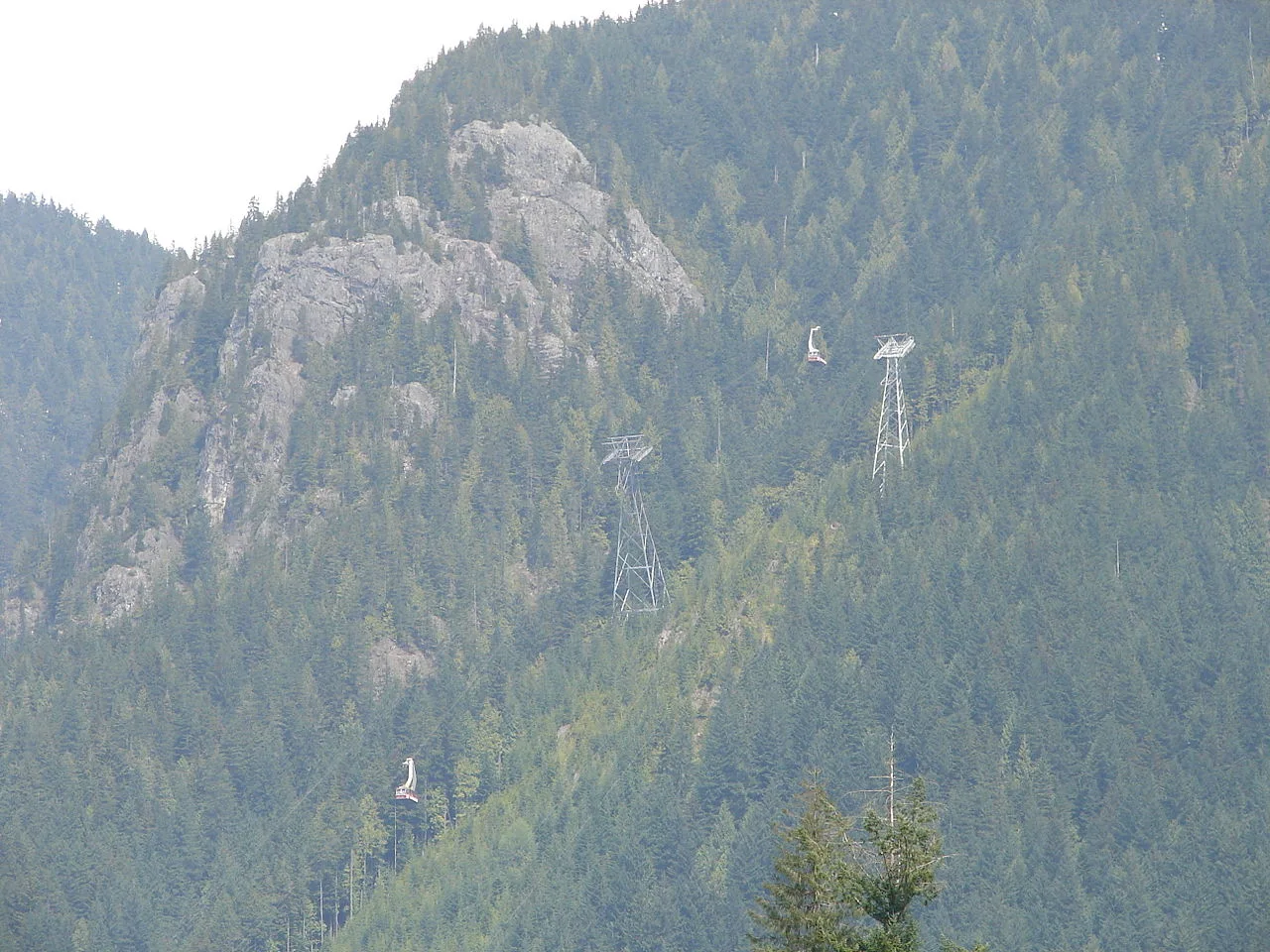
Grouse Mountain is the most commercially developed of the North Shore mountains. The gondola runs year-round and the summit delivers on its promise: a grizzly bear rescue sanctuary, ice skating in winter, a lumberjack show in summer. The skiing is limited by North Shore standards, but transit access makes Grouse the easiest mountain to reach without a car. A shuttle runs from downtown Vancouver; check the Grouse Mountain website for current schedules.
And then there is the Grouse Grind, the near-vertical trail up the mountain face that Vancouver residents treat as a personality test. It is 2.9 kilometres and 853 metres of elevation gain. Do not be fooled by how short it sounds. Budget 90 minutes to two hours if you are not a regular hiker, bring more water than you think you need, and pay a few dollars for the gondola down. Your knees will appreciate it.
The summit itself sits at 1,231 metres and the views on a clear day extend across the Strait of Georgia to Vancouver Island. The restaurant at the top is the kind of place that works better as a reward than as a destination, but it serves the purpose. In winter the resort adds night skiing with lifts running to 10pm on weekdays, which makes an evening run down under the lights a genuine option for people staying in Vancouver.
Deep Cove
East of the city, Deep Cove is one of those places that looks designed for Instagram and turns out to be genuinely lovely. Kayak rentals on the water, a small village strip, mountains pressing in on three sides. The lineup at Honey Doughnuts on weekends is real and worth accepting. The surrounding trails connect into the broader North Shore mountain bike network, which is well-regarded by riders across the region for its range and quality.
The cove itself is protected and calm, which makes it one of the better places in the region to learn to kayak. Rentals are available at the waterfront without needing to book in advance most weekdays. On summer weekends, booking ahead is worth it. Paddling out onto Indian Arm — the long, narrow fjord that extends north of the cove — is a different experience from the open water of Burrard Inlet: quieter, shadowed by mountains on both sides, and more likely to produce wildlife sightings. Seals are common. Eagles are a reliable fixture on the taller trees around the shoreline.
Deep Cove is easier to reach by car, though the 212 bus runs from Phibbs Exchange (reachable via SeaBus and connecting bus). On a summer weekend, driving is worth the effort; the village and cove are the kind of place where an hour easily becomes three.
West Vancouver waterfront
West Vancouver is the wealthiest municipality in Canada by median household income, a fact that is both relevant and overstated when people describe it. What the wealth produces, practically, is exceptional public infrastructure: parks maintained to a high standard, a seawall that runs the full waterfront, and land that has not been overdeveloped because people here can afford not to sell. For visitors, this is worth knowing.
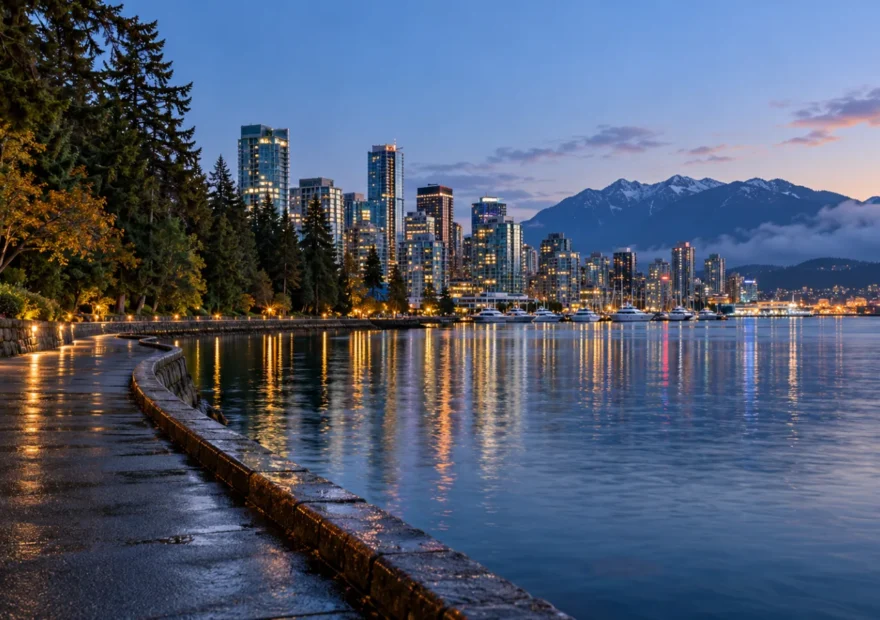
The West Vancouver Seawall runs from the western foot of Lions Gate Bridge through Ambleside, Dundarave, and Fisherman’s Cove — roughly 13 kilometres of continuous waterfront path. The views across Burrard Inlet rank among the best in the Lower Mainland: Vancouver’s skyline to the east, English Bay and Point Grey, the Gulf Islands to the west, the Coast Mountains behind you.
Ambleside is the most active section: a beach, a pier, a bandshell, and open lawn with shade trees. It is where West Vancouver residents come to walk dogs and sit in the sun. On a weekday it is quiet; on summer weekends it is busy without being congested. Dundarave Beach, the next section west, is slightly quieter with its own small commercial village above the seawall. The restaurants and cafes on Marine Drive in Dundarave are good enough to stop at if you are walking the full length.
The full seawall from Ambleside to Horseshoe Bay is 13 kilometres one way, which is more than most visitors want to walk in a single stretch. A practical approach: take the 250 bus to Horseshoe Bay, walk the coastal path east toward Dundarave or Ambleside, and catch the bus back. You get the best westward views on the walk east, and finish at Ambleside where the park facilities and transit connections are. The path is paved and flat the entire way, which makes it accessible even in wet weather. The West Vancouver Seawall connects to the broader False Creek Seawall at the Lions Gate Bridge eastern foot, so it is possible to walk from Ambleside into Stanley Park and around to False Creek in a full day if the weather holds.
Cypress Provincial Park
Cypress Provincial Park above West Vancouver has the best front-country access of the three North Shore ski areas. In winter, Cypress Mountain hosts alpine skiing and snowboarding; it held the 2010 Olympic freestyle skiing events. In summer the park becomes a hiking destination. Eagle Bluffs is the trail most people mean when they talk about accessible Cypress hiking: about 7 kilometres return from the Cypress Bowl day lodge, with bluff views across Howe Sound that are worth the effort. On a clear day you can see Vancouver Island from the top.
The trail is well-marked and well-traveled, suitable for reasonably fit hikers in proper footwear. It is one of the better half-day hikes accessible from Vancouver without committing to a full backcountry route. The Howe Sound Crest Trail and Black Mountain Loop are options for longer days.
Horseshoe Bay
Horseshoe Bay at the western tip of West Vancouver is where BC Ferries runs sailings to Langdale on the Sunshine Coast and Nanaimo on Vancouver Island. Even if you are not taking a ferry, the village is worth knowing. A small commercial street, a waterfront park with inlet views, and a few reliable spots for fish and chips or a pre-ferry meal. The bay has steady boat traffic from the ferries and marina on summer weekends, which makes the waterfront park more interesting than it might otherwise be.
Whytecliff Park
Whytecliff Park, a few minutes west of Horseshoe Bay, is the Lower Mainland’s most accessible marine protected area. Rocky shoreline and kelp beds make it one of the top shore diving sites in BC; divers use it year-round. Non-divers come for the coastal walk and the views of Howe Sound from the bluffs. It is a genuinely quiet park that most visitors never find.
When to go
The North Shore is worth visiting in every season, but the practical experience varies significantly. Summer brings the full range of outdoor options: swimming at Lynn Canyon, kayaking at Deep Cove, hiking at Cypress and Seymour, the Grouse Grind at its busiest. Trails are dry and accessible from May through October; the mountains get snow from November. Winter is good for skiing at Cypress, Grouse, or Seymour, and for the quieter version of the waterfront walks in both municipalities.
For the parks and trails specifically, weekday visits are considerably calmer than weekends. Lynn Canyon parking fills by 10am on a summer Saturday. Deep Cove village is noticeably quieter on a Tuesday. If you have flexibility, midweek makes a difference on the North Shore in a way it does not in the city.
Where to eat on the North Shore
In North Vancouver, Lower Lonsdale has the best concentration of restaurants and bars, mostly independent, mostly good. The neighbourhood has improved steadily over the past several years without losing its character. For a sit-down meal after a day on the trails or at Deep Cove, this is where to head.
In West Vancouver, the Ambleside and Dundarave commercial strips on Marine Drive have independent restaurants that reflect the neighbourhood. The quality is generally high. Horseshoe Bay village is the right place for fish and chips, particularly if you are waiting for or just off a ferry. Park Royal Shopping Centre at the east end of West Vancouver has chain options if that is what you need.
Travel details change. YVRBlog aims to use official sources and show the review date above. If something has changed, please contact us.