Plan whale watching from Metro Vancouver: Vancouver and Steveston departures, seasons, boat types, what you may see, and what to check before booking.
Whale watching is one of the few trips around Metro Vancouver that depends entirely on wild animals and the weather. Knowing how the day works before you book makes it easier to choose the right tour and set fair expectations. This guide covers where tours leave from, when they usually run, what you might see, and how to pick a trip that suits your group.
This is a practical booking guide. If you want the background on which killer whales appear near the city and how to act if you see them from shore or a kayak, read our guide to orcas in Vancouver, which covers the wildlife side in more detail than a tour briefing can.
Quick answer: is whale watching from Metro Vancouver worth it?
For many visitors, yes, with one condition: sightings are never guaranteed. Tours head out into the Strait of Georgia and the surrounding waters, where marine life moves freely. A trip usually lasts several hours, runs in most weather short of unsafe conditions, and is led by guides who follow viewing rules. If you treat it as a few hours on the water with a good chance of wildlife rather than a certainty, you are unlikely to be disappointed. If you need a sure sighting on a fixed date, it is the wrong activity to pin your hopes on.
Where whale-watching tours leave from
Tours from Metro Vancouver leave from two main areas: Steveston in Richmond, and Granville Island in central Vancouver. The departure point shapes your whole day, from how you get there to how far the boat travels before it reaches open water.
Steveston is a working fishing village in Richmond, south of the airport. Several operators run tours from its docks into the Strait of Georgia. It pairs well with a few hours spent exploring the village itself, so it suits people already planning time in Richmond. For ideas on filling out the rest of the day, see our guide to visiting Steveston.
Granville Island, in False Creek just south of the downtown core, is the easier option if you are staying in the city without a car. Prince of Whales runs its Vancouver departures from the Maritime Market on Granville Island — a few minutes from downtown by mini-ferry, and reachable by bus or on foot. If you are arriving by plane and basing yourself downtown, our guide on getting from the airport to downtown Vancouver explains the transit and taxi options.
Operators that depart from Steveston include Vancouver Whale Watch and Steveston Seabreeze Adventures, both running trips that commonly last three to five hours. Prince of Whales runs its Vancouver season from Granville Island — roughly March through November — on covered catamarans with indoor seating and a washroom. Departure points, seasons, and schedules change year to year, so confirm the current details directly with the operator before you book.
When whale-watching tours usually run
The main season runs roughly from spring through fall, when daylight is long and marine life is most active in local waters. Some operators extend the season at either end, and a few run limited trips outside it. Exact start and end dates shift year to year, so check current schedules rather than assuming a fixed calendar.
Weather drives the rest. Operators cancel or rebook when conditions are unsafe, and a calm forecast makes for a more comfortable trip. Morning and midday departures are common, but schedules vary by operator, season, and weather. Because timing moves with the season and the forecast, it helps to build some flexibility into your plans instead of booking the only free slot on a tight day.
Summer weekends are the busiest stretch, and popular departure times can sell out several days ahead. If you are travelling in peak season or want a particular boat, book early and treat the schedule as the fixed part of your plan and the wildlife as the variable.
What you might see
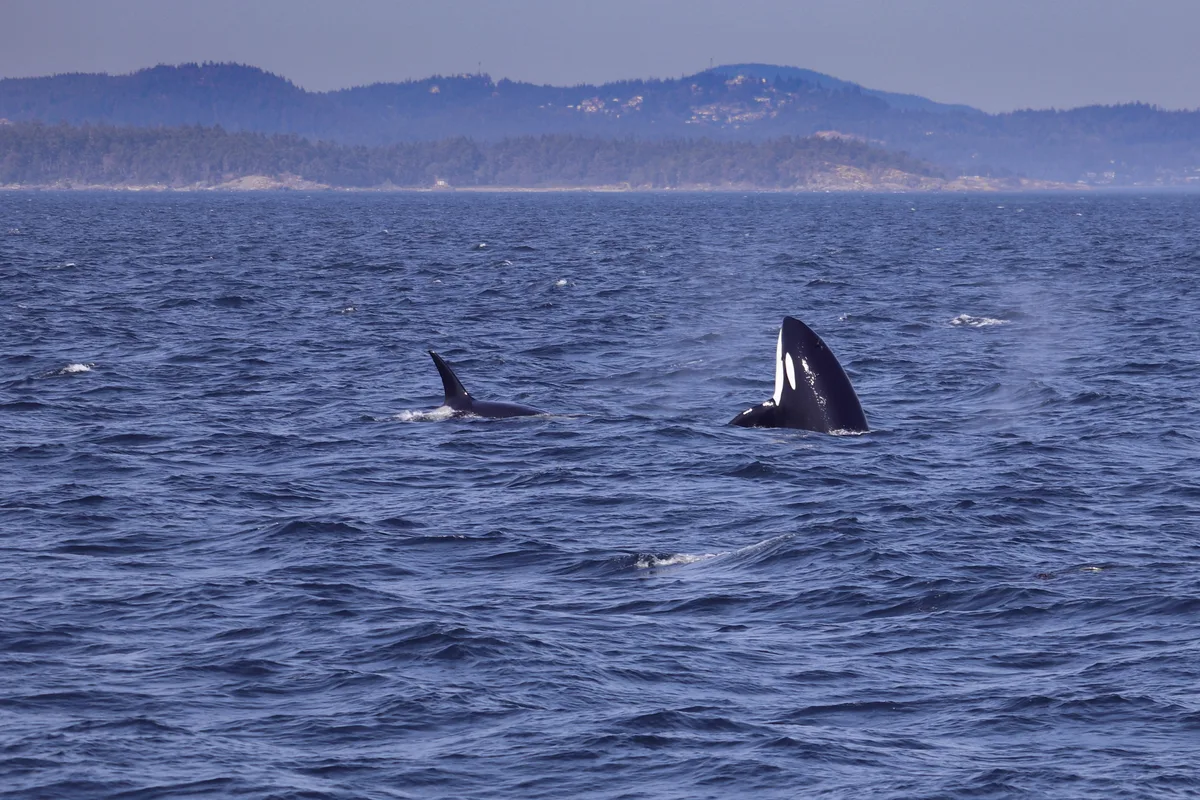
The water around Metro Vancouver supports a wide range of marine life, and no two trips are the same. On a given tour you might see Bigg’s killer whales, also called transient orcas, along with humpback whales, which have become more common in the Salish Sea in recent years. Other species pass through from time to time, including the occasional grey whale, but they are far less reliable.
Whales are the headline, but they are not the only wildlife. Harbour seals, Steller and California sea lions, porpoises, bald eagles, and seabirds are all regular sights. Some trips deliver close whale encounters; others are quieter and centre on the other animals and the scenery. Sightings are never guaranteed, which is exactly why careful operators avoid promising specific species on a specific day.
A tour also reaches water you cannot see from land. Whales often travel well offshore, so a boat can put you near animals that rarely come close to the seawall or the shoreline parks. That is the main reason to book a trip rather than wait for a sighting from the beach, although patient shore watchers do get lucky on the right day.
Boat types: zodiac vs covered vessel
Most operators run one of two boat styles, and the choice affects comfort far more than it affects sightings.
- Open zodiac-style boats, also called rigid inflatables, are fast and sit low to the water, so they feel more adventurous. They are also more exposed to wind and spray, and the ride can be bumpy. Many operators set a minimum age for these trips.
- Covered vessels are larger, slower, and more sheltered, usually with indoor seating and a washroom. They tend to suit families with young children, anyone prone to motion sickness, and longer trips in cooler weather.
Neither type is better in general. Match the boat to your group, the season, and how well you handle wind and motion on the water.
How to choose a tour
Beyond the boat, a few practical points separate a good booking from a frustrating one:
- Departure point. Pick the location that is easiest for you to reach, then plan transport and parking around it.
- Trip length. Tours commonly run a few hours; confirm the expected duration so you can plan the rest of the day.
- Cancellation and rebooking. Ask how the operator handles weather cancellations and trips that find no whales. Policies vary, so read them before you pay.
- Responsible-viewing standards. Operators that belong to the Pacific Whale Watch Association follow shared guidelines for keeping a safe distance from whales.
- Accessibility. If anyone in your group has mobility needs, check boarding and seating arrangements before booking.
What to bring
Even in summer, it is colder on the water than on shore, and wind makes it feel cooler still. Pack for a few hours outdoors:
- Warm layers, including something windproof and water-resistant
- Sunglasses and sunscreen, since glare off the water is strong
- Water and a snack
- A camera or phone on a strap, and a zoom lens if you have one
- Motion-sickness preparation if you are prone to it; ask a pharmacist about your options before the day
Soft-soled shoes help on a moving deck, and a small dry bag keeps phones and cameras safe from spray on the open boats.
Responsible whale watching
Whale watching in British Columbia is regulated to protect both the animals and the people near them. Current rules require boats to keep a minimum distance from whales, prohibit approaching, feeding, or chasing them, and call for slowing down near marine mammals. In much of southern coastal British Columbia the minimum distance from killer whales is 200 metres, and it is larger in some areas. These rules change over time, so check the Fisheries and Oceans Canada guidance for the current distances before you go.
A careful operator will not chase animals or crowd them for a closer photo, and will explain the rules before heading out. If a boat ignores the distances or pressures wildlife, treat that as a reason to choose someone else next time. The rules exist to keep the whales healthy and the people on the boat safe, and good operators treat them as the floor, not the ceiling.
Steveston vs Vancouver departure
If you are deciding between the two main departure areas, it usually comes down to where you are staying and how you want to spend the rest of the day.
Reaching Steveston without a car takes a little planning, usually the Canada Line to Richmond and then a local bus, so allow extra time if you are coming from downtown. Granville Island, by contrast, sits just across False Creek from downtown and is reachable by a short mini-ferry ride, by bus, or on foot across the Burrard or Granville bridges.
| Departure point | Best for | Watch out for | Good pairing |
|---|---|---|---|
| Steveston (Richmond) | People already exploring Richmond or arriving by car | Drive or transit time from downtown; parking fills on busy days | A half-day in Steveston village |
| Granville Island (central Vancouver) | Downtown-based visitors without a car | Covered catamaran; season runs roughly March–November | A Granville Island and seawall afternoon |
Either way, leave room in your schedule. Boats can return a little later than planned when there is something to watch, and rushing back to another booking takes the calm out of the trip. If you are planning a wider itinerary, our weekend visitor guide to Metro Vancouver can help you fit a tour into the days around it.
Final advice
Book a date you can keep flexible, check the forecast the day before, and dress warmer than you think you need to. Treat the trip as time on the water with a strong chance of wildlife rather than a guaranteed encounter, and pick an operator that follows the viewing rules. Do that, and a whale-watching tour from Metro Vancouver is an easy half-day to recommend.
Travel details change. YVRBlog aims to use official sources and show the review date above. If something has changed, please contact us.