A practical car-free guide from Vancouver, Burnaby, or Surrey to Victoria: getting to Tsawwassen, boarding BC Ferries, and reaching downtown from Swartz Bay.
Vancouver to Victoria is an easy trip to describe and a long one to do casually. The ferry crossing itself takes about an hour and 35 minutes, but Tsawwassen is well south of the city and Swartz Bay is north of Victoria. If you are travelling on foot, the whole trip has three separate parts: get to Tsawwassen, take the ferry to Swartz Bay, then take a Victoria bus into town.
It works well when you plan it as one journey instead of treating the ferry as the whole journey. From downtown Vancouver, a realistic public transit trip to central Victoria can take about four and a half hours each way. That makes an overnight visit comfortable and a day trip possible only if you start early, keep the plan modest, and take a late return.
This guide is for people starting in Vancouver, Burnaby, or Surrey without a car. YVR is included only when it is genuinely useful, because the same Bridgeport transfer works for airport arrivals too.
The route at a glance
- Get to Bridgeport Station in Richmond.
- Take the 620 bus to Tsawwassen Ferry Terminal.
- Board the BC Ferries sailing to Swartz Bay as a foot passenger.
- At Swartz Bay, take a BC Transit bus toward downtown Victoria.
The regular transit option is the least expensive and gives you the most flexibility. The BC Ferries Connector is easier if you would rather keep your luggage with you and avoid the Bridgeport and Swartz Bay bus changes. It uses the same ferry, but the through-ticketed coach stays with the ferry crossing and continues to Victoria.
First, decide whether a day trip makes sense
Victoria is not a quick side trip from Vancouver. It can be a great day, but only if the ferry times give you enough time on the ground. Count the full door-to-door journey, not just the sailing time. A 90-minute ferry becomes several hours once you add the train or bus to Tsawwassen, check-in, the ride from Swartz Bay, and the return in reverse.
For a one-day visit, aim for one of the first available sailings from Tsawwassen and choose a late return. Check the live sailing board before leaving home. BC Ferries publishes current departures, estimated vehicle space, and service notices for the Tsawwassen to Swartz Bay route. Even as a walk-on passenger, it is worth checking. A delay at the terminal changes the rest of the day.
If you have a dinner reservation, a show, or a hotel check-in in Victoria, give the transit connections some buffer. The route is simple, but a missed ferry or a missed bus on either side costs real time.
Getting from Vancouver to Tsawwassen without a car
The useful meeting point is Bridgeport Station, not downtown Vancouver. From downtown, take Canada Line south toward YVR and Richmond, then leave at Bridgeport. Follow the signs for the bus exchange and look for the 620 toward Tsawwassen Ferry Terminal. Check the live departure display and the TransLink Trip Planner on the day because bays and departure times can change.
The 620 is the regular connection between Bridgeport and Tsawwassen Ferry Terminal. It is a normal transit bus, so it can be busy around ferry departures. If you have one rolling suitcase, the trip is straightforward. If you are travelling with several large bags, a stroller, a bike, or a group, build in more time. You do not want to discover a crowded bus when you have a ferry to catch.
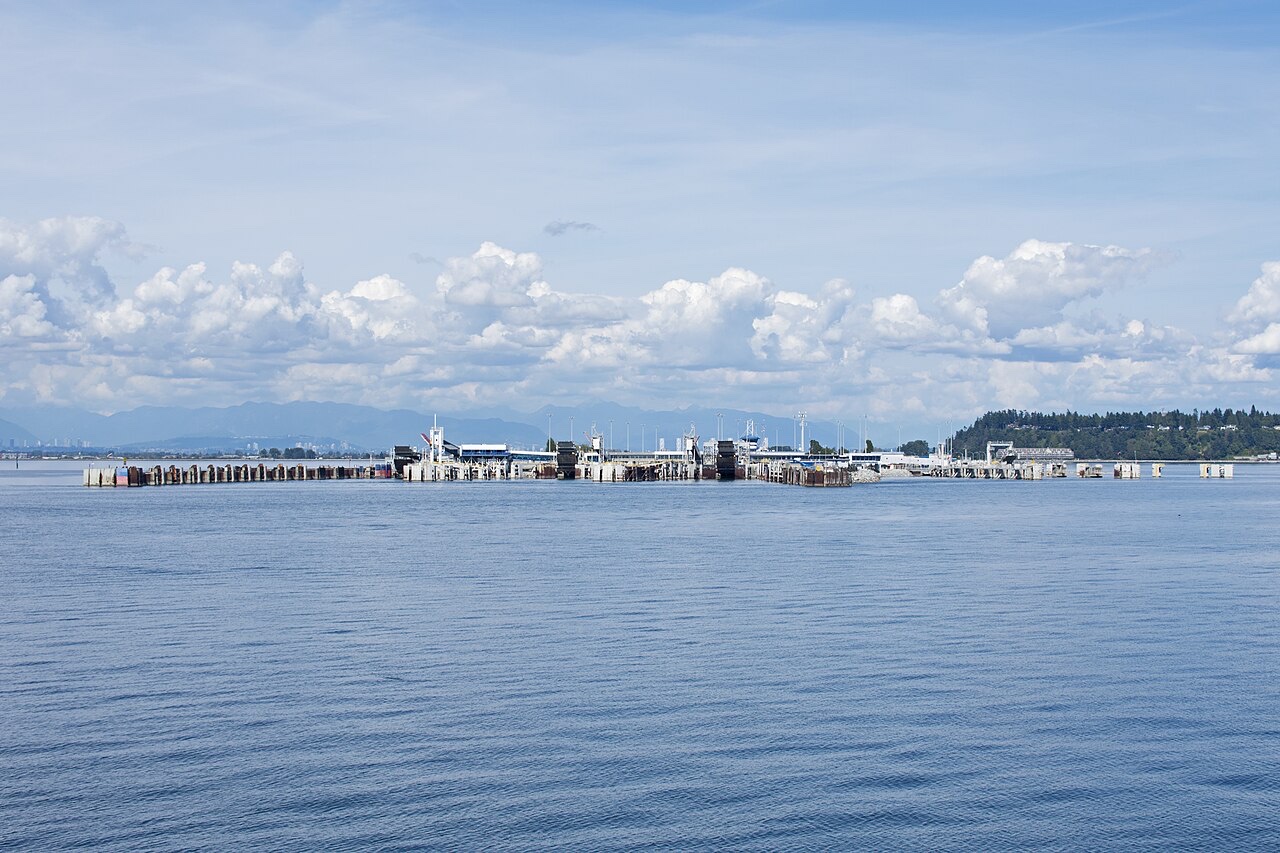
From Burnaby, the exact starting route depends on where you are. Most trips involve SkyTrain to a Canada Line connection, then Bridgeport and the 620. From Surrey, you will usually ride SkyTrain into Vancouver before continuing to Bridgeport. Do not assume that heading downtown first is always quickest. Put your actual address or hotel into the Trip Planner and set Tsawwassen Ferry Terminal as the destination.
From YVR, Canada Line also takes you to Bridgeport. The airport connection is convenient, but leave enough time for baggage claim and for the fact that the airport portion of Canada Line has an AddFare. Use the same payment method throughout the TransLink part of the journey.
How much transfer time should you allow?
The calm version of this trip is to arrive at Bridgeport with time to spare and catch a 620 that leaves you comfortably ahead of your planned sailing. The rushed version is to land on the bus that appears to line up perfectly, then lose the plan to traffic, a full vehicle, or a line at the terminal.
For a walk-on trip, I would rather wait at Tsawwassen with a coffee than watch the ferry pull away from the bus stop. Give yourself a generous buffer when you are travelling on a Friday, a holiday weekend, during school breaks, or with checked luggage. If you are using a reservation or travelling with a vehicle, follow the check-in window in the booking confirmation. A late arrival may be treated as a regular arrival instead of being held for the reserved sailing.
Buying a ticket and boarding as a foot passenger
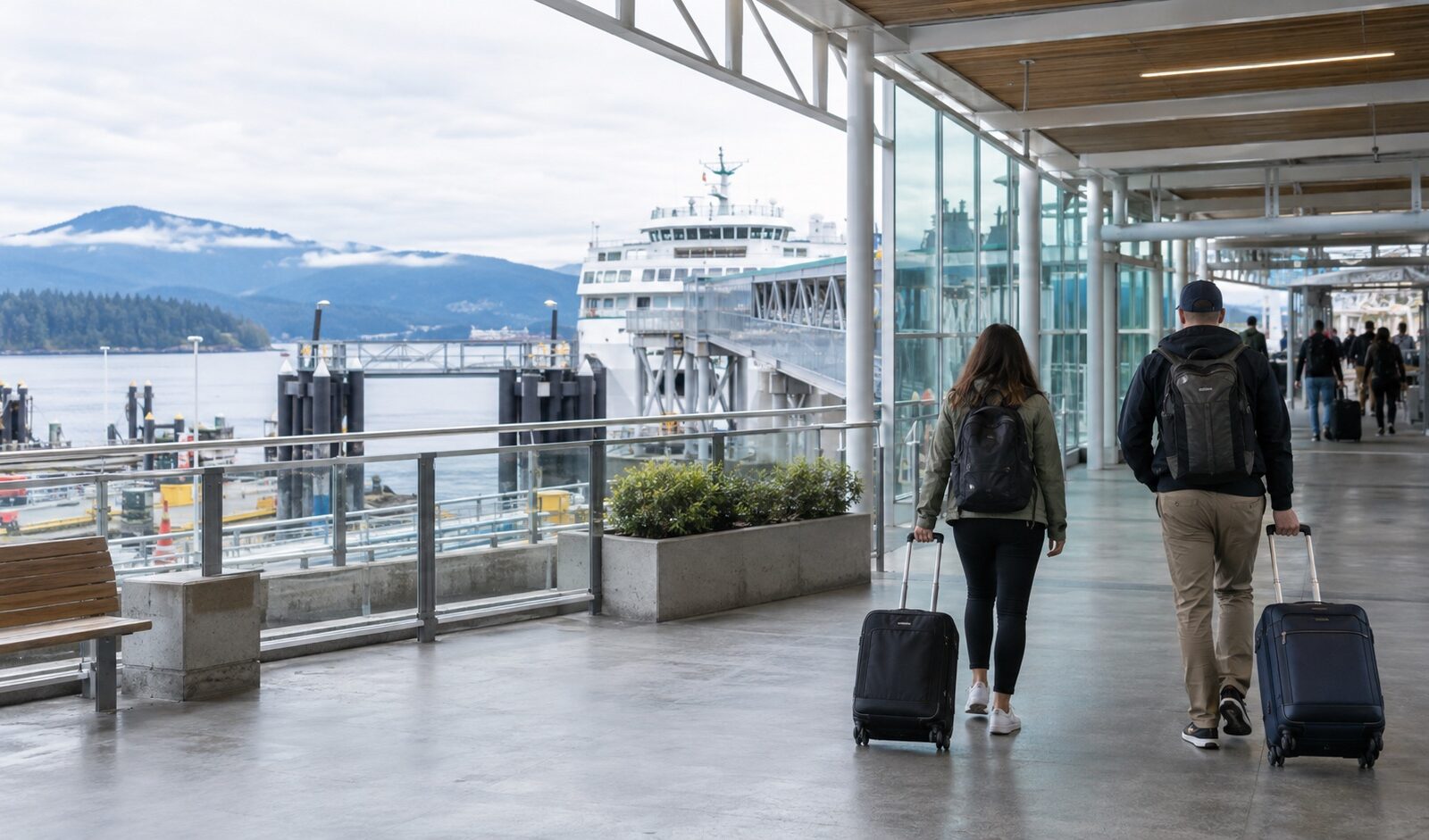
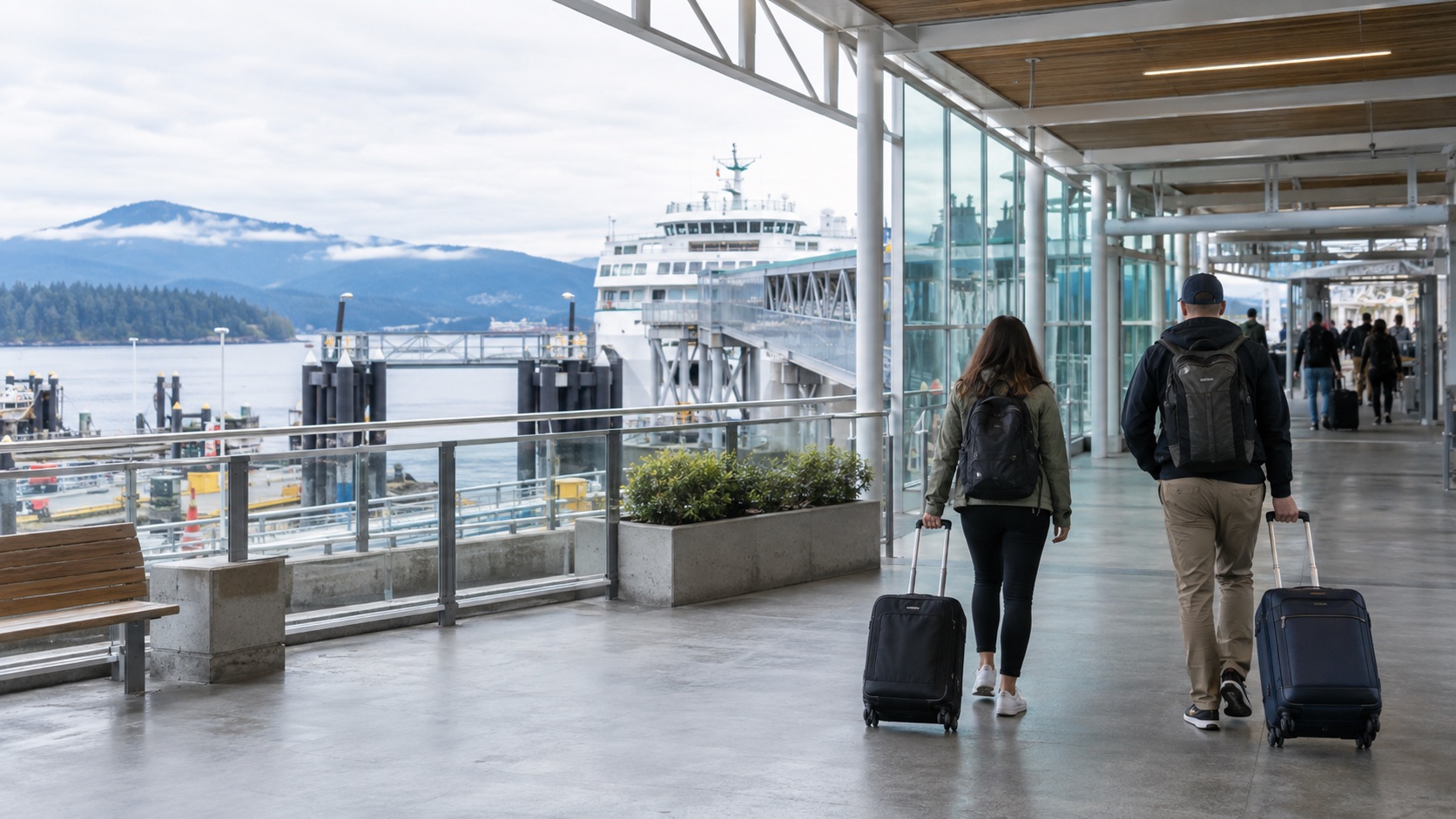
At Tsawwassen, walk-ons check in with a ticket agent or use a self-serve machine where available. BC Ferries asks foot passengers to review the terminal's current boarding information before travelling. Keep your ticket or booking details available until you are on board.
The foot-passenger process is simpler than driving onto the ferry, but do not mistake simple for instant. You still need to reach the terminal, check in, wait for boarding, and walk to the passenger decks. Wear shoes you can comfortably walk in. The terminal and ferry are accessible, but it is still a large transportation facility with ramps, corridors, and people moving at once.
You can bring a carry-on, backpack, or small suitcase aboard. Keep your bags close to you rather than spreading them across seats or blocking aisles. A ferry crossing is a good time to eat, charge a phone, or look over a map of Victoria, but set an alarm before arrival if you tend to settle in. Swartz Bay comes up quickly once the boarding announcement starts.
What the ferry crossing is like
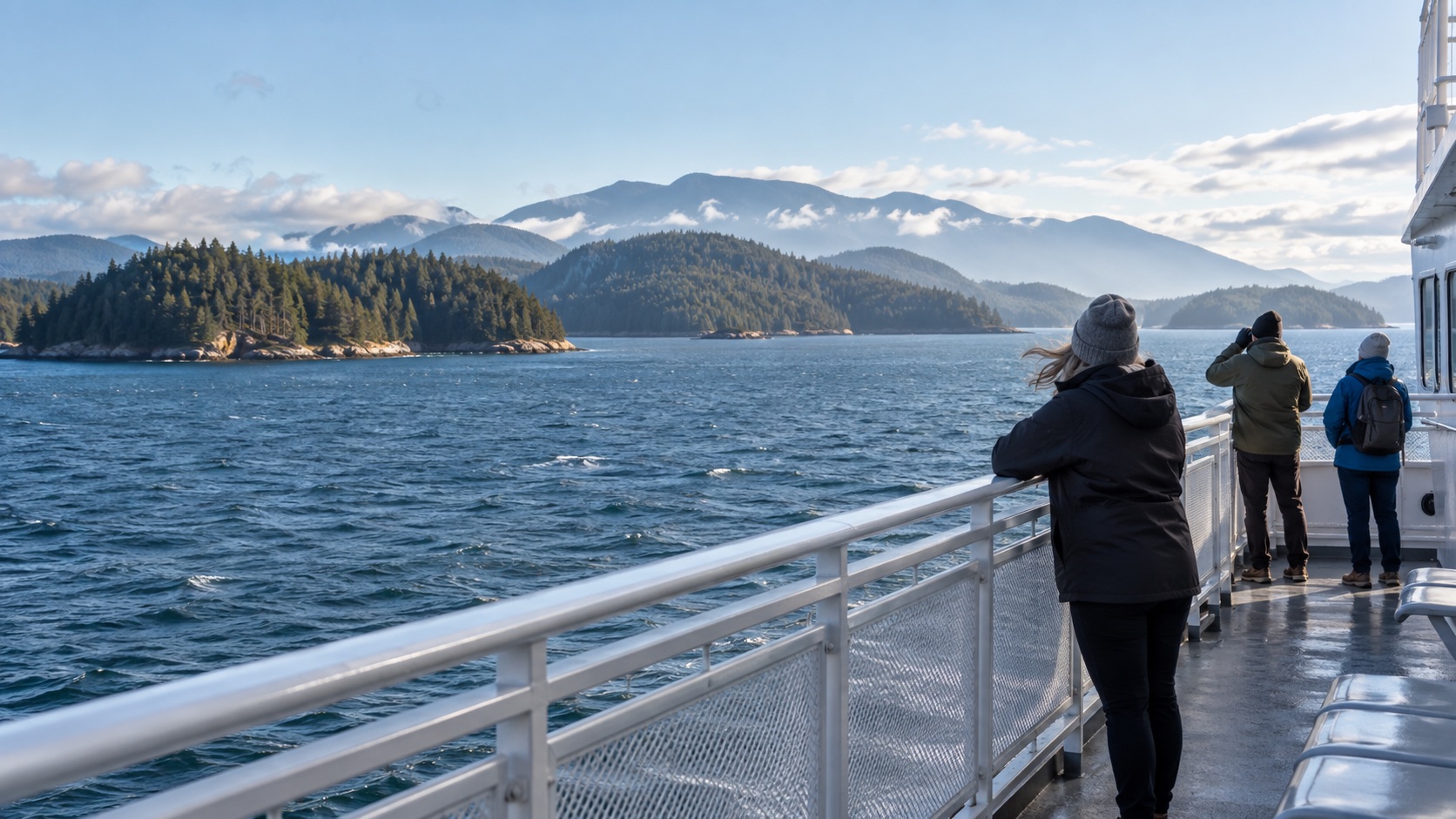
The Tsawwassen to Swartz Bay sailing is roughly 1 hour and 35 minutes. On a clear day, the views are part of the trip. On a rainy or windy day, the useful things are inside: seating, washrooms, food service, and space to reset before the next bus.
If you are prone to motion sickness, choose a seat near the centre of the vessel and keep water with you. The crossing is usually smooth, but weather changes the experience. If the ferry is busy, find a seat first and then take a short walk outside if conditions are pleasant.
Do not rely on one exact sailing time from a guide, including this one. Schedules change by season and service notices can affect individual departures. BC Ferries' current conditions page is the source to use on travel day.
Swartz Bay to downtown Victoria
Swartz Bay is not downtown Victoria. Once you walk off the ferry, you still need a ride south. BC Transit routes 70, 70X, 72, and related services connect the terminal with the Victoria region, but the best option depends on the time and your exact destination. Route 72 is a regular Swartz Bay to downtown service, while limited-stop and seasonal options can make other trips faster.
Use the BC Transit trip planner and route pages when you land. It will tell you which bay to use and whether a route is heading where you need to go. Do not base a tight appointment on an old screenshot or a timetable you found months ago.
Fares in Victoria are separate from TransLink fares. Your Compass payment from Vancouver does not carry over. Have a payment method ready before you leave the ferry terminal, especially if you are arriving with a group. If you have luggage, keep it on the lower deck of a double-decker bus and out of the aisle, as BC Transit asks passengers to do.
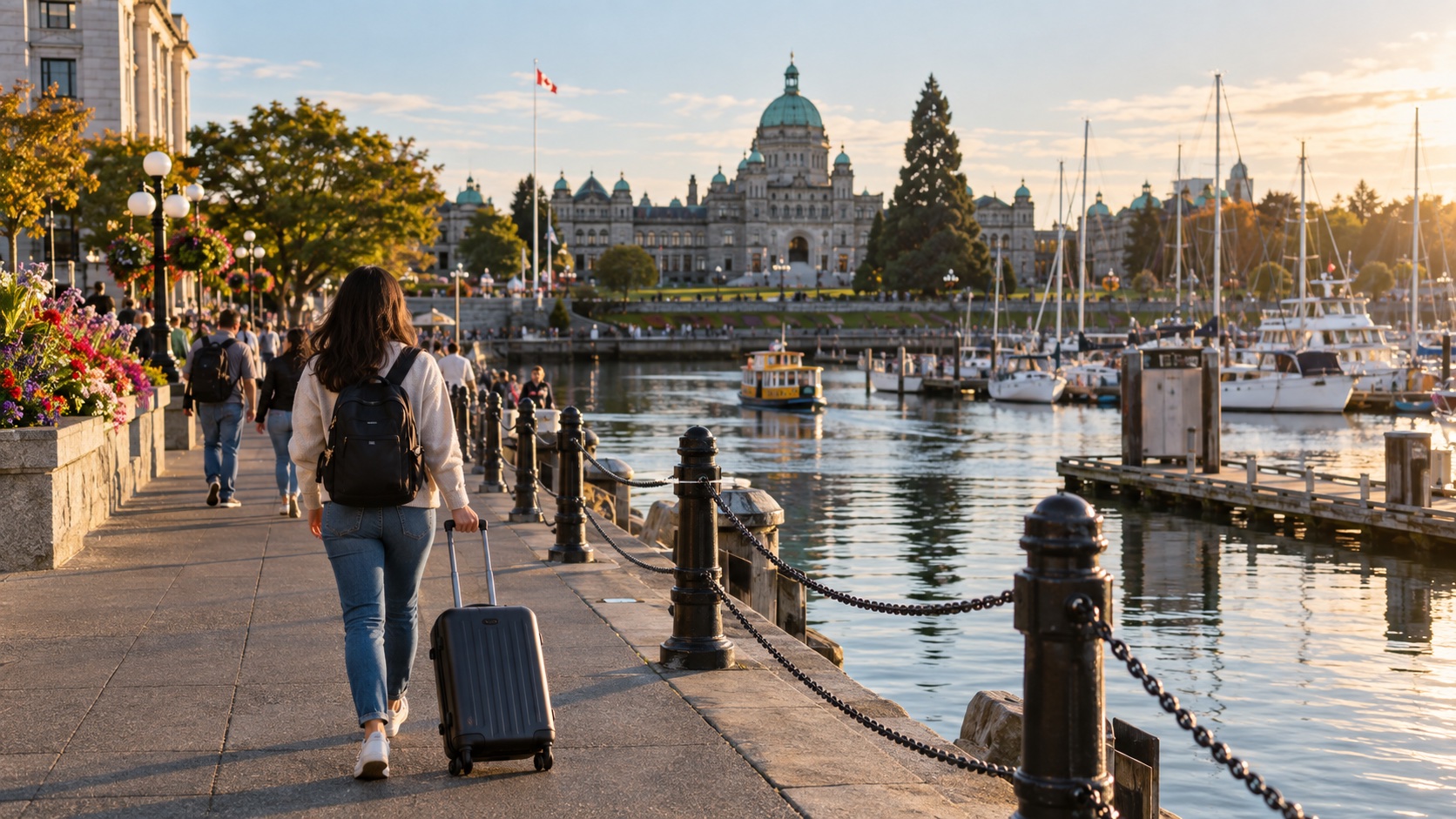
Downtown Victoria is the sensible stop for the Inner Harbour, the Legislature, Chinatown, most central hotels, and a first visit. If you are going to Butchart Gardens, UVic, Langford, or the airport, plan that second leg before you leave Vancouver. Victoria is compact once you reach the centre, but the island-side connections can add time.
The easier alternative: BC Ferries Connector
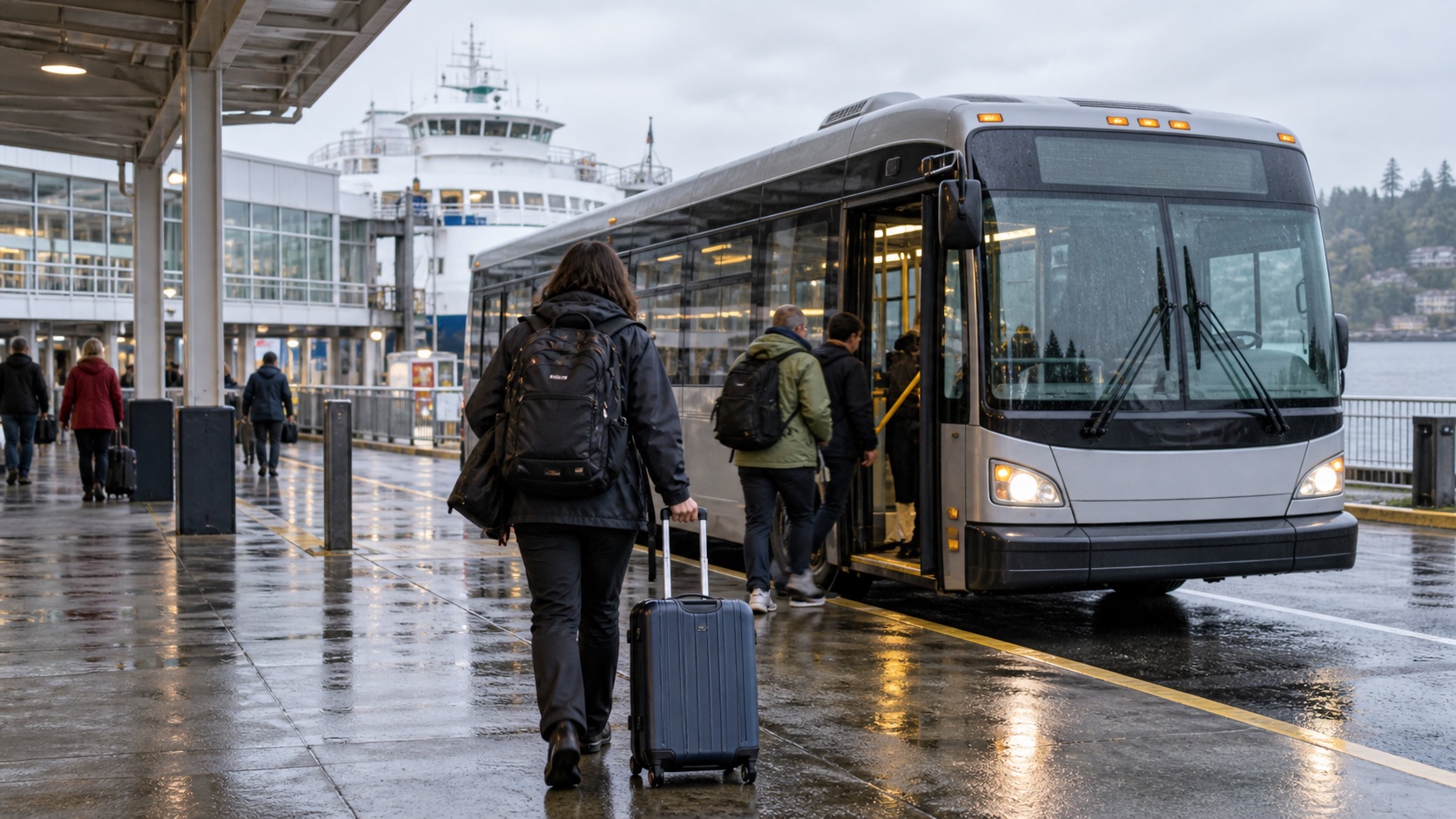
The BC Ferries Connector is worth considering when your priority is a simpler journey rather than the lowest fare. Its coaches link downtown Vancouver, YVR, Tsawwassen, Swartz Bay, and downtown Victoria. You stay with the coach through the ferry portion instead of managing the 620 at Bridgeport and a separate BC Transit transfer at Swartz Bay.
It is particularly useful after a flight, with heavy luggage, when you are travelling with children, or when a same-day connection matters. The tradeoff is that you need to book the coach itinerary that suits you and follow its check-in instructions. Its schedule changes seasonally, so use the operator's current timetable rather than copying a departure time from an old blog post.
I would use this option if you are unfamiliar with Metro Vancouver transit and your hotel is near one of the Connector's city stops. It removes two transfers from the trip. For confident transit riders travelling light, the public route is still perfectly manageable.
When a car is the better choice
Taking a car makes sense if you are continuing beyond central Victoria, carrying camping gear, travelling with a family, or visiting places that are awkward by bus. It does not automatically make the day easier. You still need a vehicle reservation if you want certainty on a busy sailing, and you still need to arrive during the booking window.
For a central Victoria weekend, a car can become an expensive thing to park. A walk-on ferry and downtown hotel are often more relaxed if you plan to stay in the city. Think about the trip after Swartz Bay before choosing. If you are heading straight to Victoria's core, you may not need wheels at all.
A few details that prevent a bad travel day
- Check current conditions before you leave Vancouver and once more before your return sailing.
- Save your booking confirmation, ferry route, and Victoria accommodation address offline.
- Use the same payment method on the TransLink portion of the journey to avoid a fresh transfer charge.
- Leave the ferry early enough to find the correct Victoria bus bay without running.
- If you are returning late, confirm the last useful bus to Swartz Bay before dinner or an event begins.
- Pack a light layer. Ferry decks can be cold even when Vancouver felt warm at the start of the day.
My practical recommendation
For a first car-free Vancouver to Victoria trip, use regular transit if you are travelling light and have room in your schedule. Canada Line to Bridgeport, the 620 to Tsawwassen, BC Ferries to Swartz Bay, and BC Transit into Victoria is a reliable route once you understand the handoffs.
Choose the Connector when you value fewer transfers, have substantial luggage, or are arriving at YVR. Choose a car when Victoria is only the first stop in a larger Vancouver Island trip. The ferry ride is easy. The useful planning happens on the land at both ends.
Useful links
- BC Ferries: Tsawwassen to Swartz Bay current conditions
- BC Ferries: foot passenger check-in and boarding
- TransLink Trip Planner
- TransLink 620: Bridgeport Station to Tsawwassen Ferry Terminal
- BC Transit Victoria schedules and route maps
- BC Ferries Connector stops and schedules
Last reviewed: September 13, 2026.
Travel details change. YVRBlog aims to use official sources and show the review date above. If something has changed, please contact us.