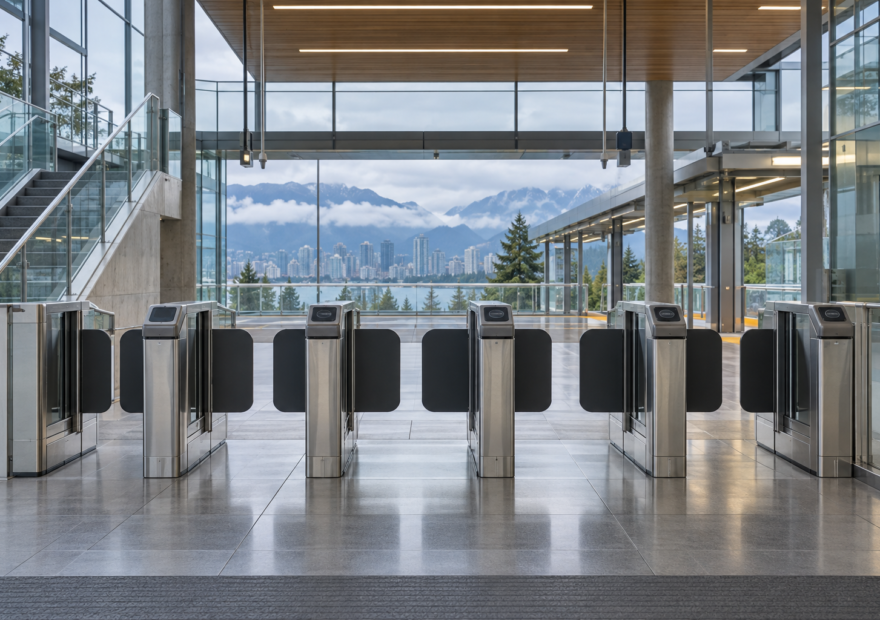
The simplest car-free trip from Vancouver to Whistler is a scheduled coach. Here is how to choose an airport or downtown pickup, allow for luggage, and avoid a tight connection.
For most visitors, the simplest way to get from Vancouver to Whistler without a car is a scheduled coach. Start from downtown if you have already checked into the city, or use an airport pickup if YVR is your first stop. The important decision is not the scenic route — every coach gets that — but choosing a departure that gives you enough room for luggage, a delayed flight, and the walk to your accommodation at the other end.
The main airport-and-downtown coach services publish seasonal schedules, so book the trip that fits your actual arrival time rather than building a day around an old timetable. As of September 2026, YVR Skylynx is operating daily fall service through November 21; check the live timetable before you commit to a pickup time.
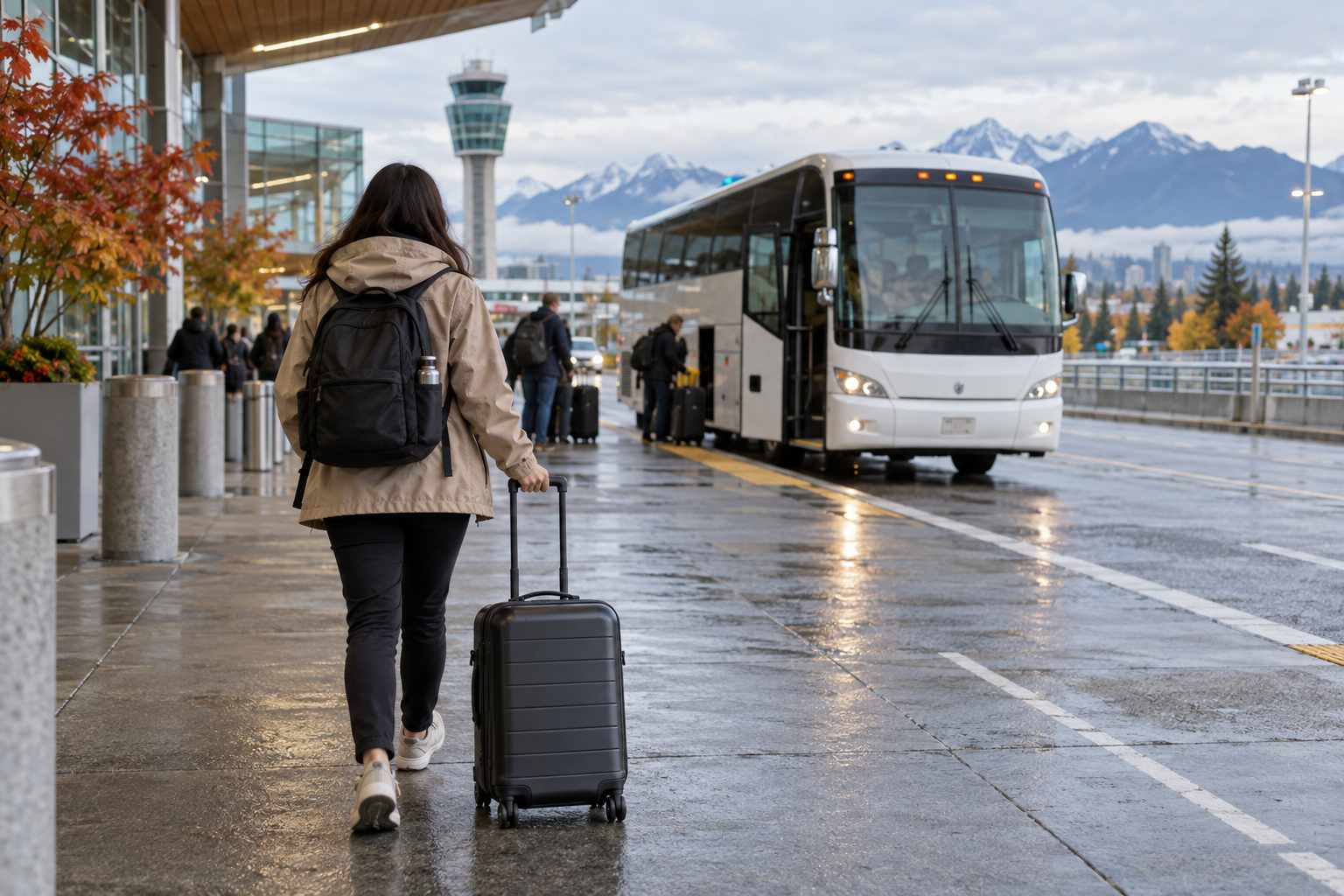
For many visitors, the easiest route to Whistler begins with a scheduled coach rather than a rental-car counter.
The quick answer
- Starting downtown Vancouver: choose a coach departure from downtown. This is the easiest option after a night or two in the city, especially if your hotel is near Burrard Street or the central business district.
- Starting at YVR: reserve a direct airport coach if the timing works. It saves you from taking luggage into the city just to turn around the next morning.
- Landing late: do not book a departure that leaves a narrow margin after landing. If the next coach is too tight, an overnight near the airport or in Vancouver is usually less stressful than gambling on baggage and border delays.
Downtown Vancouver or YVR: choose the pickup that fits the trip
Downtown is the better pickup point when Vancouver is part of the visit, not just a connection. You can leave from a central stop after breakfast, avoid carrying bags through the airport again, and arrive in Whistler with the bulk of the journey behind you.
YVR is the better pickup point when Whistler is the immediate destination. Airport coaches are designed for passengers with luggage, and the direct option avoids a separate Canada Line ride into downtown. The trade-off is timing: international arrivals, checked bags, and a flight delay can make an apparently comfortable connection suddenly tight.
If you arrive on a domestic flight, follow the operator’s current instructions carefully. YVR notes that some coach check-ins are in the International Terminal, which means collecting bags and walking through the terminal complex before heading to the bus bay.
Should you stop in Vancouver before going to Whistler?
There is no wrong answer, but it helps to decide before booking the shuttle. Go straight to Whistler when the mountain is the purpose of the trip, your accommodation is ready, and your flight lands early enough for a comfortable connection. You will arrive settled, avoid repacking, and wake up close to the trails, lifts, or village rather than facing another transfer in the morning.
Spend a night or two in Vancouver first when the flight lands late, you want a gentler first day, or the city is part of the holiday. A downtown hotel gives you a simple arrival evening: drop bags, eat something, take a short walk, and catch a coach the next day. This is often the better choice for families, anyone arriving from a long-haul flight, or travellers whose Whistler accommodation has a late check-in.
The expensive mistake is trying to do both without enough margin: a rushed airport connection, a long coach ride, and a late mountain arrival can turn a good itinerary into a tiring one. If the numbers are close, take the overnight in Vancouver. Whistler will still be there in the morning.
How much time should you leave after landing?
Give yourself more time than the scheduled flight arrival suggests. The aircraft door opening is not the start of the road trip. You still need to get off the plane, collect bags, clear any formalities that apply to your journey, find the correct terminal area, and check in for the coach.
YVR advises leaving about two hours between flight arrival and a Skylynx departure. Treat that as a sensible baseline, not as permission to cut things fine. Add more margin if you are arriving internationally, travelling with children, checking oversized equipment, or visiting during a busy holiday period.
If you miss the last workable coach of the day, do not try to force a complicated late-night transit route to Whistler. Check the operator’s rebooking terms, then make a calm overnight plan and take the next suitable departure. It is a much better start than arriving exhausted and trying to navigate unfamiliar roads after dark.
What the coach trip is like
The road from Vancouver to Whistler follows the Sea-to-Sky corridor. It is a beautiful trip, but it is still a mountain highway: weather, traffic, and construction can change the timing. A coach lets someone else handle the driving while you keep your luggage together and enjoy the view.
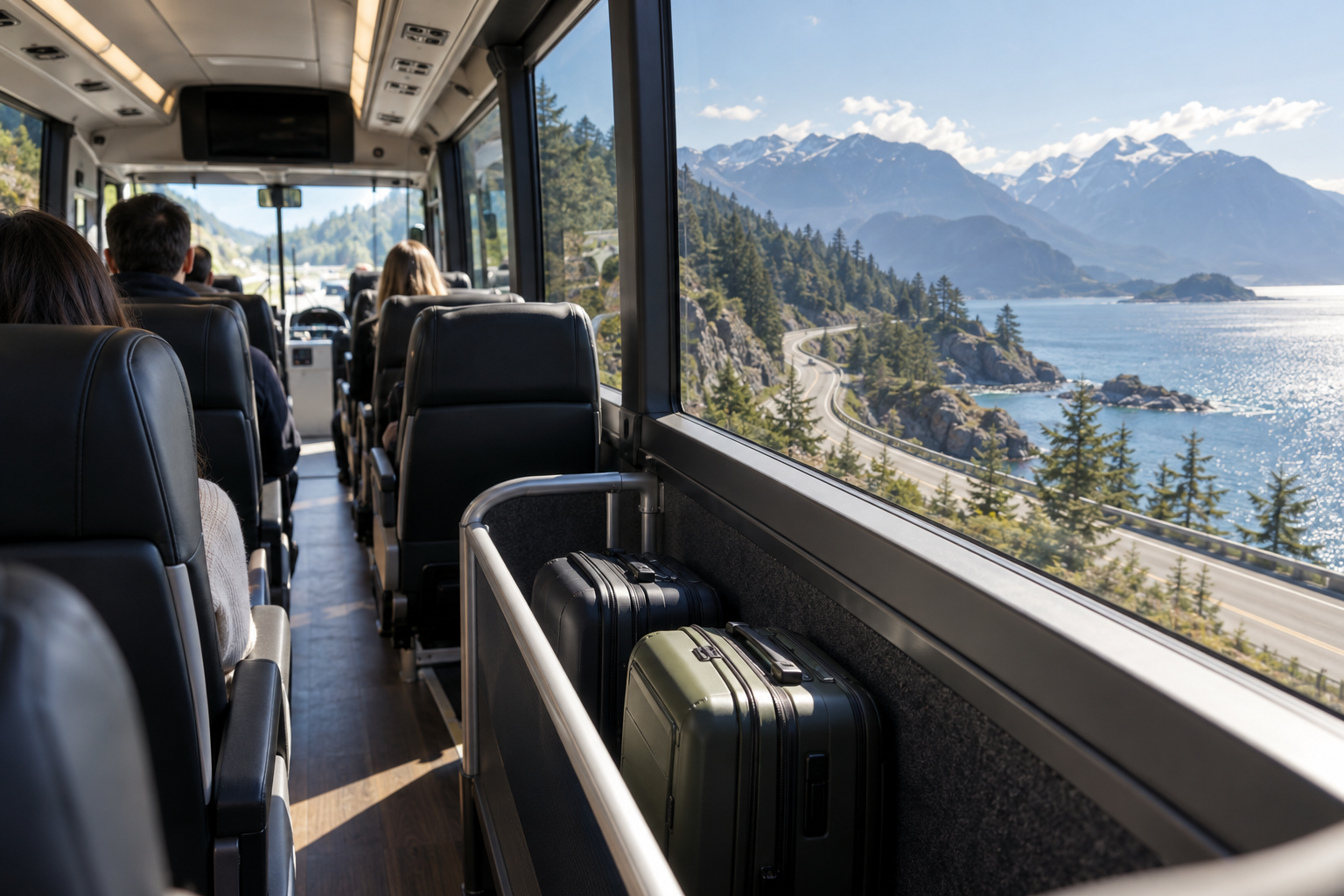
The Sea-to-Sky journey is part of the trip, but leave room for changing road conditions.
Direct airport services and downtown services are not always identical. Some trips continue through Squamish or make downtown stops; others run express. When comparing departures, check four details before booking:
- Your exact pickup point.
- The stated Whistler drop-off.
- The luggage allowance and rules for skis, snowboards, bikes, or oversized cases.
- The operator’s policy if a flight delay affects your arrival.
That small check is more useful than choosing solely on the lowest fare. A shuttle that drops close to your accommodation can save a costly taxi and a cold walk with bags.
Booking details that are easy to miss
Reserve ahead when your trip falls on a weekend, a school break, or the first weeks of ski season. A confirmed seat is useful, but read the confirmation as a route document rather than simply a receipt. Save the pickup address, required check-in time, luggage rules, and operator contact information offline before travel day.
If the booking includes a flight number or arrival field, enter it accurately. It may help an operator understand the shape of the day, but it does not replace leaving a sensible connection buffer. Keep a screenshot of the booking and the pickup map on your phone in case data service is unreliable in the terminal or on the road.
For a downtown pickup, check whether the stop is outside a hotel or on a particular block. Vancouver’s central streets are easy to walk, but a five-minute map estimate can become longer with luggage, rain, or a busy sidewalk. Aim to arrive at the stop early enough that you can identify the coach without a sprint.
Luggage, skis, and the final walk
A normal suitcase is easy on a scheduled coach, but Whistler accommodation is spread between the Village, Upper Village, Creekside, and other areas. Before booking, look up the drop-off point and the final distance to your hotel or rental.
For a short, level walk, a rolling case is no problem. For a late-night arrival, a steep walk, or several bags, arrange the final leg before you board in Vancouver. Winter equipment also deserves a check: coach operators have different space and packaging rules, and a last-minute surprise is not the kind of local colour anyone needs.
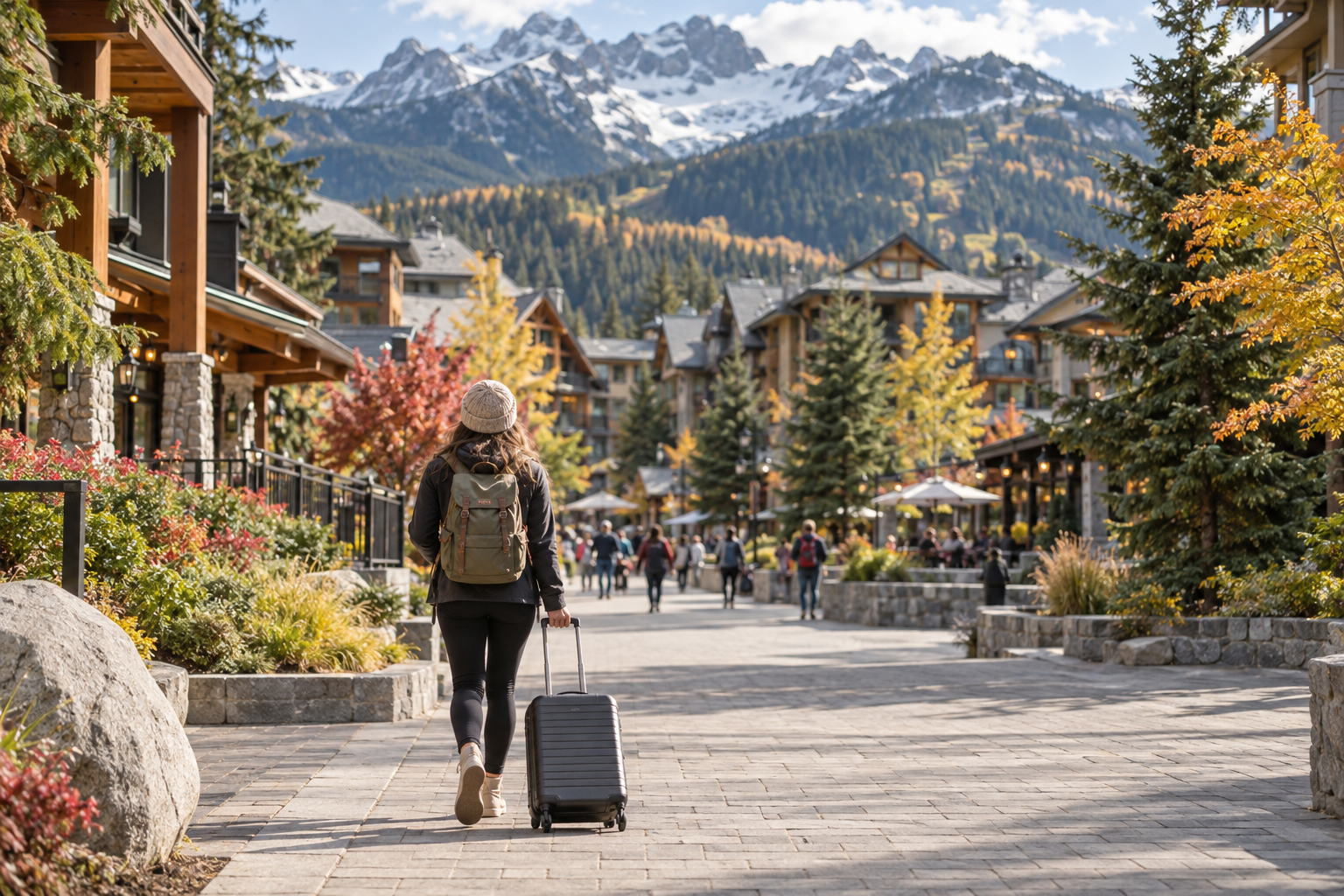
Your last few minutes in Whistler depend on the coach stop and the exact building you have booked.
Is a rental car better?
A rental car can make sense if you are staying outside the village, travelling with a group, or planning several side trips. It also brings parking costs, a mountain-road drive, and seasonal vehicle requirements into the picture. For many first visits, a coach plus walking or local transit is easier.
If you do rent, check the vehicle’s winter-tire policy and the current road conditions before leaving Vancouver. Do not assume a vehicle booked at the airport is prepared for every mountain condition.
What to do once you reach Whistler
Before stepping off the coach, check the address of your accommodation and whether the drop-off is in Whistler Village, Creekside, or another area. Whistler Village is compact enough for many visitors to walk, but a property described as “near Whistler” can still need a local bus or taxi. If you are arriving after dark, carrying skis, or travelling with several people, arrange that last connection before leaving Vancouver.
If you have a free afternoon after arrival, keep the first plan local. A village walk, a grocery stop, or a casual meal gives you time to understand the layout and confirm the next day’s bookings. Save the bigger excursion for after you have slept; it is a more enjoyable use of mountain time than trying to squeeze everything into travel day.
A simple plan that works
- Decide whether you are leaving from downtown Vancouver or YVR.
- Choose a coach with a comfortable arrival buffer, not the closest possible connection.
- Confirm pickup location, Whistler drop-off, and luggage rules.
- Save your hotel address and arrival instructions before boarding.
- Check the live schedule and road conditions again on travel day.
For most people, the Vancouver-to-Whistler trip is easiest when it is treated as one booked journey rather than an improvised chain of airport trains, transfers, and last-minute rides. Pick a comfortable coach time, travel light enough for the final walk, and let the mountains arrive on their own schedule.
Official and practical sources
Last reviewed: September 12, 2026. Coach schedules, fares, luggage rules, and road conditions can change; confirm them before travel.
Travel details change. YVRBlog aims to use official sources and show the review date above. If something has changed, please contact us.