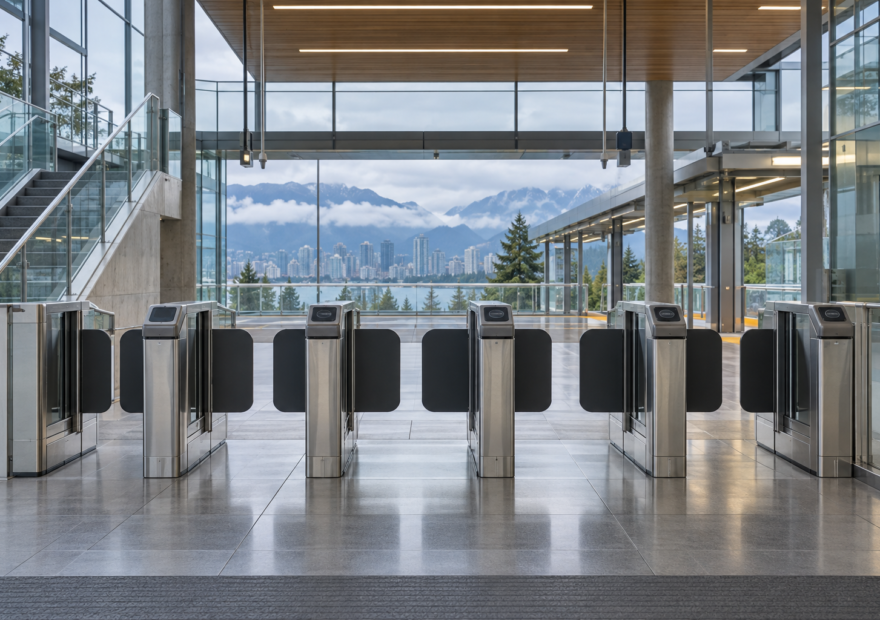
From central Vancouver, getting to UBC is a simple train-and-bus trip: take Canada Line to Broadway-City Hall, then catch the 99 bus west to UBC Exchange. If you have just landed at YVR, take the same train from the airport and make the same transfer. It is a useful daytime route, especially with one manageable suitcase.
The airport station is part of the terminal complex and the train does not need a reservation, but the route works just as well for a hotel, downtown, or another point on Canada Line. The only part worth planning is the last stretch: UBC is a large campus, so save the name of your residence, faculty building, or meeting place before you leave.
The route at a glance
- Reach Broadway-City Hall on the Canada Line; from YVR, board a train toward Waterfront.
- Transfer to a westbound 99 bus marked UBC.
- Get off at UBC Exchange, then walk or take the campus shuttle for the final leg.
This is a good default route because it keeps the transfer simple. It also lands you at the main bus exchange on campus, where you can get your bearings before walking farther in.
Starting downtown or at YVR
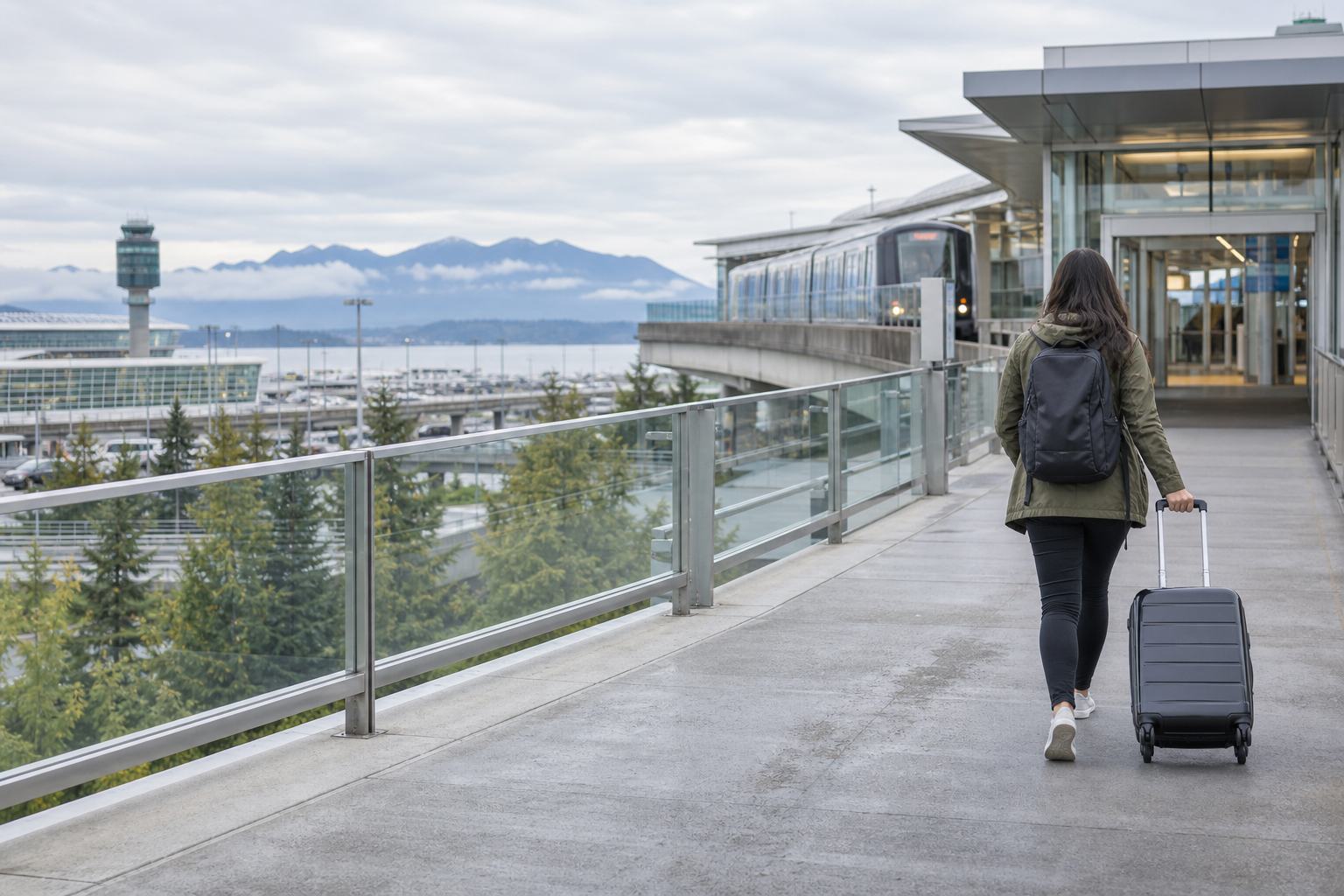
From downtown Vancouver, use the Canada Line to reach Broadway-City Hall. If you are arriving at YVR, follow the airport signs for Canada Line; YVR-Airport Station is connected to the terminal, so there is no shuttle ride or long outdoor walk to start the trip. Buy your fare or tap the same contactless card or device you plan to use for the full journey.
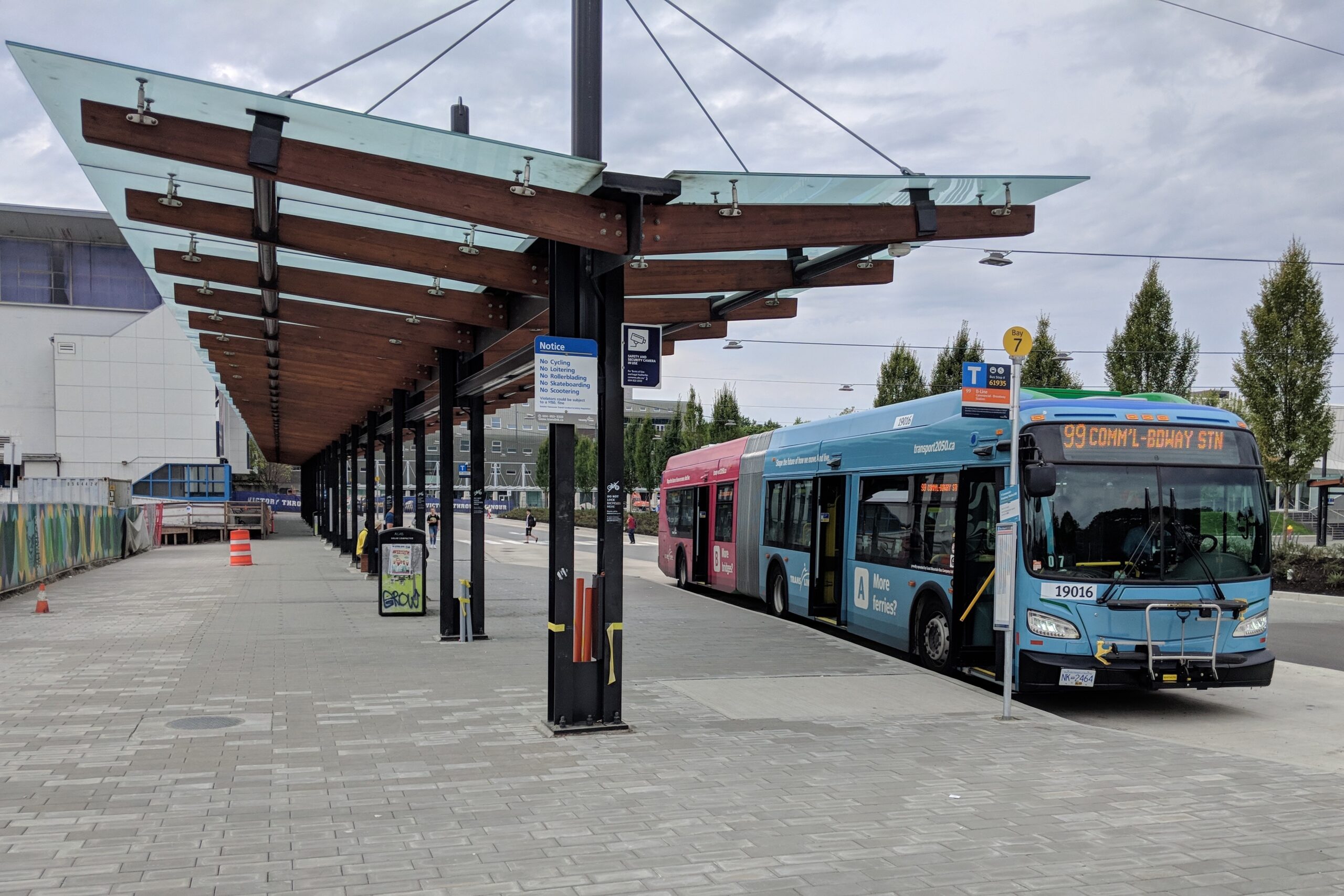
Board the train labelled Waterfront. You will stay on until Broadway-City Hall, not all the way downtown. When you arrive, follow the signs out of the station and check the stop display for the 99 heading to UBC. Bus bays and temporary stops can change, so a quick check of the TransLink Trip Planner on the day is worth the minute it takes.
The 99 follows the Broadway corridor west and finishes at UBC Exchange. It is a frequent, useful route, but it can be busy at class-change times. If you are carrying a large hard-shell case, stand clear of the doors and do not be shy about waiting for the next bus if the one in front of you is already packed.
Other transit options
There are other sensible ways to reach campus. Depending on the time of day and your exact destination, the Canada Line can connect with the 84, 41, or 43 as well. UBC also has direct service on the R4, 44, 84, and 99 from different parts of Vancouver.
For a first visit, I would not overthink those alternatives. The Canada Line and 99 combination is easy to explain, easy to follow, and puts you at the heart of campus transit. Use another route only if the Trip Planner shows a noticeably better connection for your arrival time or building.
What the fare includes
The airport portion of Canada Line has an airport surcharge when you leave YVR. TransLink calls it the AddFare. Once you have paid, your transfer is valid for 90 minutes, so the Canada Line and bus portion normally sit within the same transfer window.
Keep your payment method consistent. If you tap a phone for the train, use that same phone for the bus. Switching from a card to a phone halfway through can make the system treat it as a new journey. Fare rules and prices change from time to time, so check TransLink’s current transfer and AddFare guidance before travelling.
Is a taxi better with luggage?
Sometimes, yes. Transit is usually the more economical choice, but a taxi is kinder to you after a long flight if you have several bags, a child seat, mobility needs, or a late arrival. Taxis wait on the arrivals level at YVR, and the airport publishes taxi information for passengers who want the simplest door-to-door option.
If you are travelling with one backpack or one rolling case, I would still take transit. If you are trying to get a family, skis, or multiple checked bags across campus, a car may be the calmer choice.
When you reach UBC Exchange
UBC Exchange is a proper arrival point, not the front door to every building. The campus is broad, and Main Mall alone runs about 1.2 kilometres from one end to the other. A walk across it can take roughly 15 minutes each way.
Before you leave the exchange, open the campus map and search for the specific building. If your destination is a longer walk away, UBC’s Route 68 runs within the campus and can be useful for the final stretch. The UBC visitor guide has a clear overview of moving around once you arrive.
Choose the route for your actual starting point
The Canada Line and 99 route is a strong default from downtown, Yaletown, Olympic Village, or YVR. It is not automatically the best route from every neighbourhood. If you are already near a Broadway bus, a direct westbound service may be easier than travelling toward a rail station first. If you are in East Vancouver or Burnaby, the fastest choice can also be different.
That is why the destination matters. Enter the building name or street address in the Trip Planner rather than simply typing “UBC.” It can distinguish between a residence, a lecture hall, the hospital, a museum visit, or an appointment near the far edge of campus. A route that reaches UBC Exchange quickly may still leave a long walk at the end.
For an important appointment, aim to reach the exchange early enough to find the final building without watching the clock. Campus signs are good, but the scale of the place can surprise a first-time visitor. A ten-minute buffer is more valuable than trying to save one stop or one transfer.
Late evenings, weather, and accessibility
After dark or in heavy rain, the best route is often the one with the fewest outdoor decisions. Check the live service plan before leaving, especially if you are returning after a concert, lecture, or dinner. If the 99 is crowded or a connection looks thin, waiting for the next service is usually safer than forcing a difficult boarding with luggage.
All SkyTrain stations and regular transit vehicles are designed for accessible travel, but an airport-to-campus journey still includes platforms, a busy bus, and the final campus walk. Travellers using a mobility aid, carrying a stroller, or arriving with several bags should build in time and consider a taxi for the final portion when the practical route becomes too demanding.
A few small things that make the trip smoother
- Put your exact UBC building into the Trip Planner, not just “UBC.”
- If your arrival is late, check service times before you board at the airport.
- Keep a light rain layer within reach. The station-to-bus transfer is short, but Vancouver weather has a sense of timing.
- When the 99 is busy, waiting for one more bus can be more comfortable than squeezing in with luggage.
- Give yourself a buffer if you are heading to a campus appointment, a residence check-in, or a ferry connection afterward.
A travel-day checklist
Before leaving, save the exact building name, your host’s phone number if you have one, and a screenshot of the route. Check whether you need to arrive at a particular entrance rather than simply on campus. If you are meeting someone, agree on a specific landmark instead of “UBC,” which is a very large place to describe in a text message.
For a first visit, the calmest plan is to arrive a little early, use UBC Exchange to orient yourself, and make the final walk without rushing. It is a small choice that makes the whole trip feel easier.
For most visitors, this trip is just a train, one bus, and a final walk. Once you know that Broadway-City Hall is the handoff point, YVR to UBC feels much less like a complicated airport transfer and more like the normal way into Vancouver.
Useful links
- UBC: how to get to campus
- UBC: getting around campus
- TransLink Trip Planner
- TransLink transfers and AddFare
Last reviewed: September 13, 2026.
Timing the trip and the return
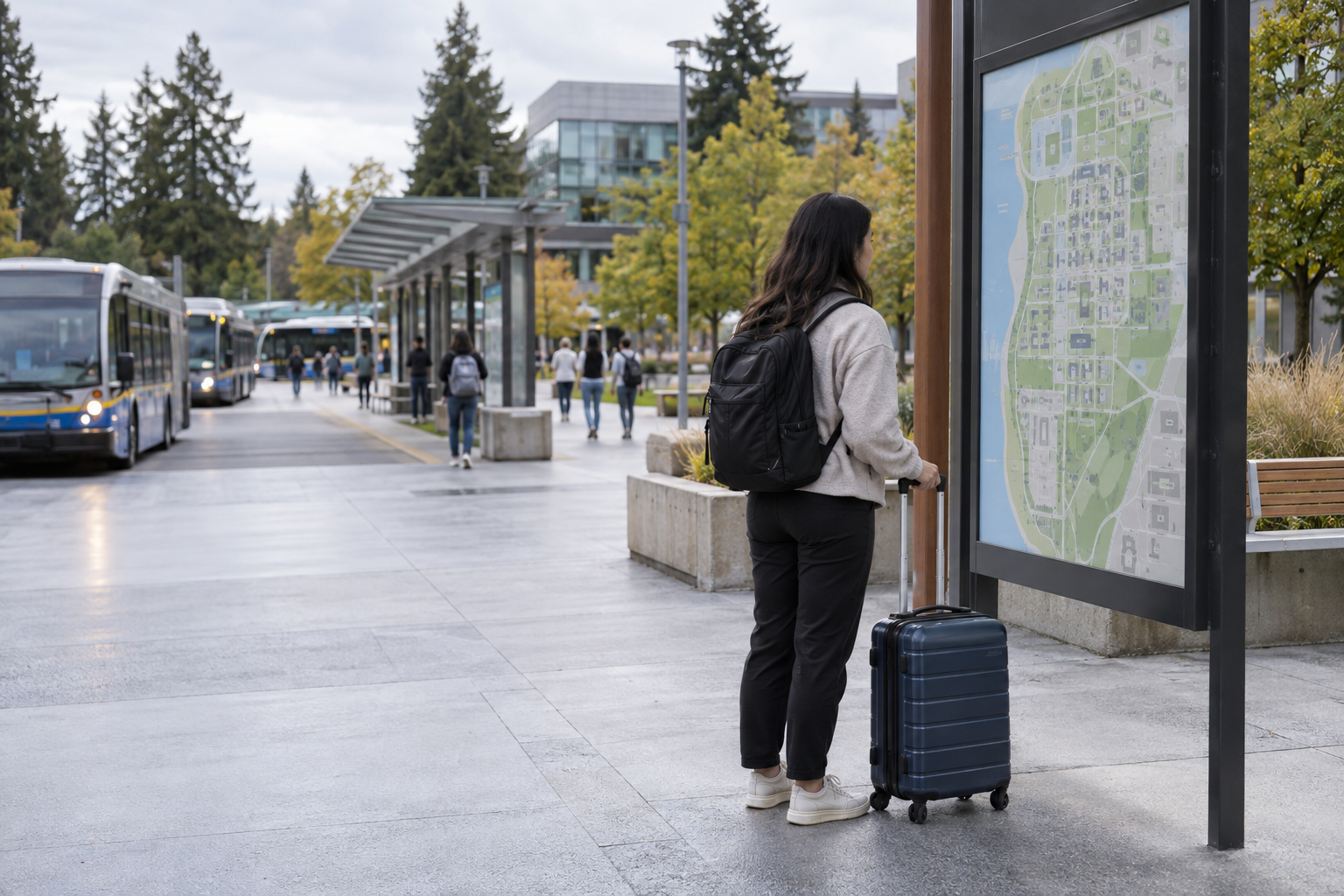
For a daytime campus visit, give yourself extra room around the train-to-bus handoff rather than treating the timetable as a promise. The Canada Line is frequent, but the 99 can be busy when lectures start or finish. If a bus is already full, a short wait for the next one is often easier than trying to board with luggage. A 15-minute buffer at Broadway-City Hall also gives you time to find the correct stop if construction or a temporary bay has moved it.
For the trip back, start from UBC Exchange and confirm the final Canada Line connection before you leave campus. This matters most after an evening event, when a missed bus can turn a straightforward return into a longer wait. If you are flying out that day, leave more time than the map suggests: the transfer, airport AddFare, terminal walk, bag drop, and security all happen after you step off the bus.
A taxi is the sensible fallback if transit service is thin, the weather is miserable, or you are travelling with more than you can comfortably manage on a busy bus. The useful goal is not the cheapest route at all costs; it is arriving at campus or the airport with enough time and energy to start the rest of the day well.
Travel details change. YVRBlog aims to use official sources and show the review date above. If something has changed, please contact us.