How to continue from Canada Place to Pacific Central Station, Tsawwassen or Horseshoe Bay after a Vancouver cruise, with practical SkyTrain, bus, ferry, luggage and timing advice.
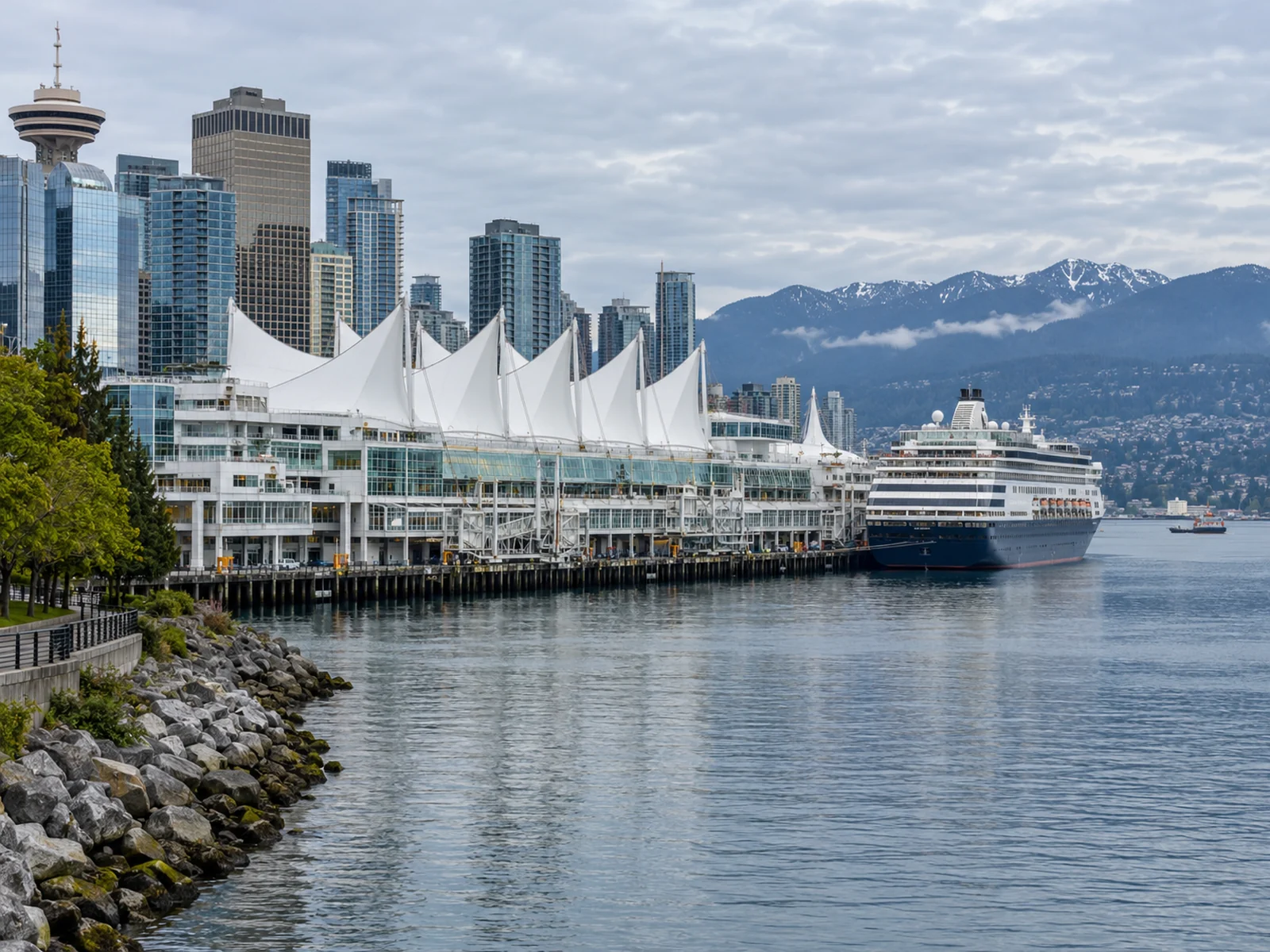
After a cruise, Canada Place may be the start of a second trip. From the waterfront you may need a train at Pacific Central, a bus to Tsawwassen, or a connection to Horseshoe Bay. This guide deals with the parts that matter on the ground: bags, check-in, station entrances, and the time between one ticket and the next.
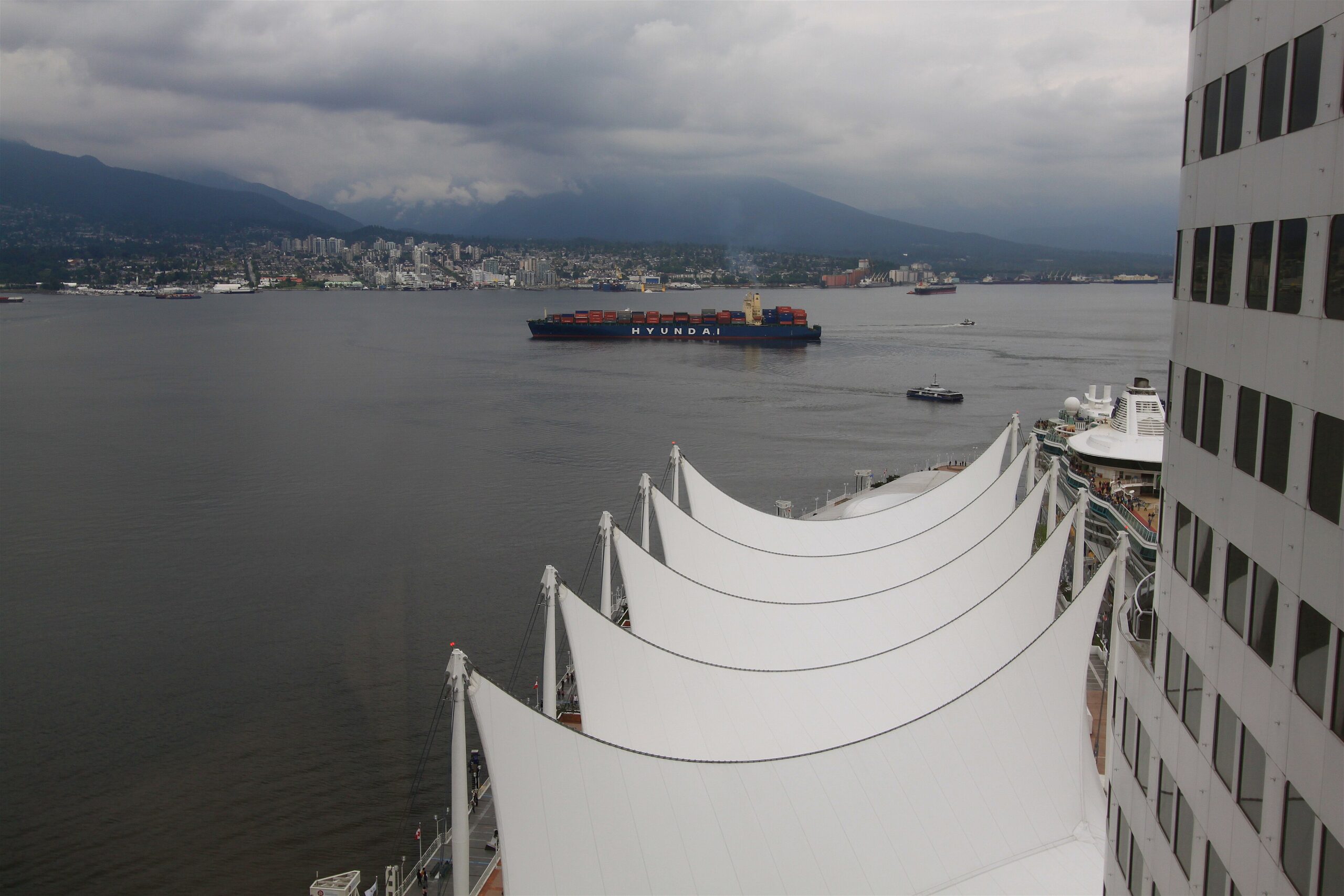
People often arrive in Vancouver for one trip and leave for another. You may finish an Alaska cruise and head for Seattle, Victoria, Whistler, or a hotel before a long-distance departure. You can make these connections without renting a car, but the transfer is rarely just “take the SkyTrain.” The useful choice depends on the terminal, the departure time, your bags, and any check-in step at the far end.
This is the connection article in the Vancouver cruise-planning group. It does not repeat the airport transfer comparison or the embarkation procedure. The question here is simpler: once you are at Canada Place, how do you reach Pacific Central or a BC Ferries terminal without losing a bag, missing check-in, or underestimating the distance?
Start with the exact destination
| Destination | Best first question | Typical practical choice | Main risk |
|---|---|---|---|
| Pacific Central Station | Are you boarding VIA Rail, Amtrak Cascades, an intercity bus or meeting someone? | SkyTrain to Main Street-Science World, then a short walk, or a taxi with heavy luggage. | Station and operator check-in requirements are different from local transit. |
| Tsawwassen ferry terminal | Are you a foot passenger, travelling with a vehicle, or connecting to a reserved sailing? | Canada Line to Bridgeport, then Route 620, or a direct car for a large group. | The ferry terminal is outside the city and the bus is not a substitute for a booked sailing buffer. |
| Horseshoe Bay ferry terminal | Are you travelling to Nanaimo, the Sunshine Coast or another route with a fixed sailing? | Route 250 or 257 from downtown, or a taxi/private vehicle when luggage and timing justify it. | Highway traffic and later-sailing transit availability can change the plan. |
| Downtown hotel before a connection | Can the hotel hold luggage and is the final departure early? | Leave bags at a confirmed hotel or storage point, then travel after the busiest cruise movement. | Assuming a hotel will store bags or that every terminal has the same rules. |
Save the exact departure address from the ticket. “Vancouver ferry” may mean Tsawwassen or Horseshoe Bay. “Vancouver station” may mean Pacific Central, Waterfront, or a downtown bus stop. Those pins are not interchangeable.
Canada Place to Pacific Central
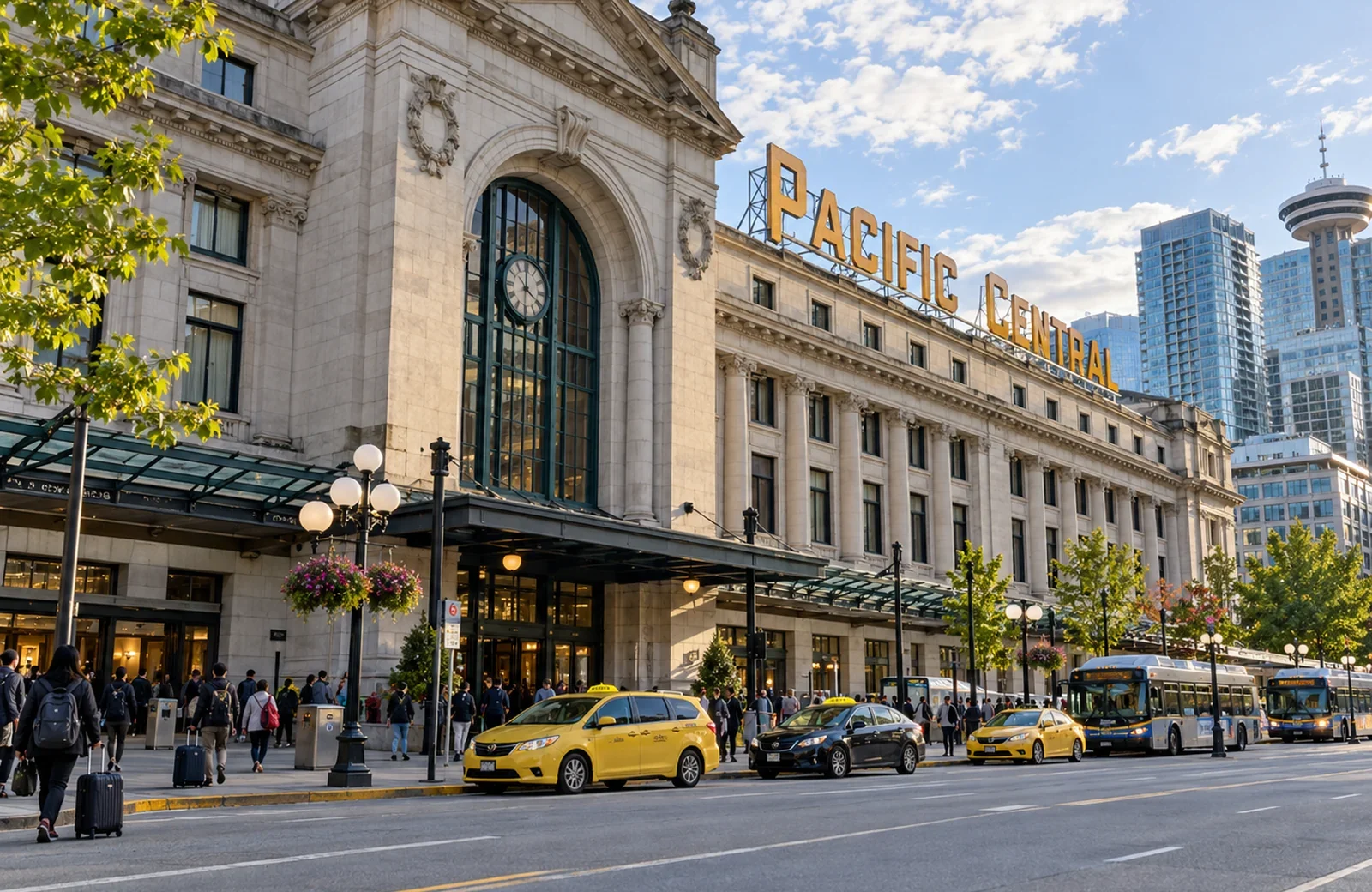
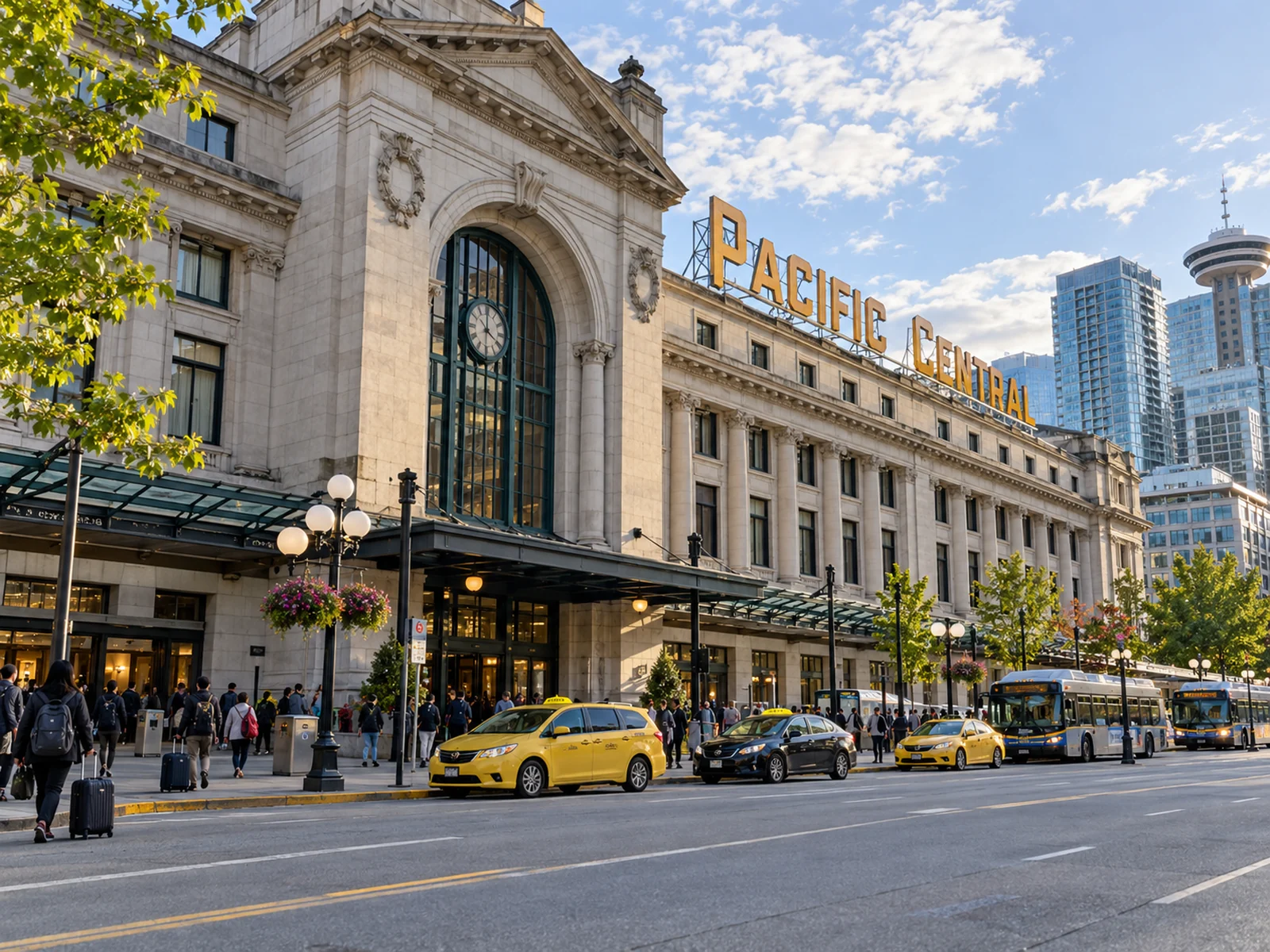
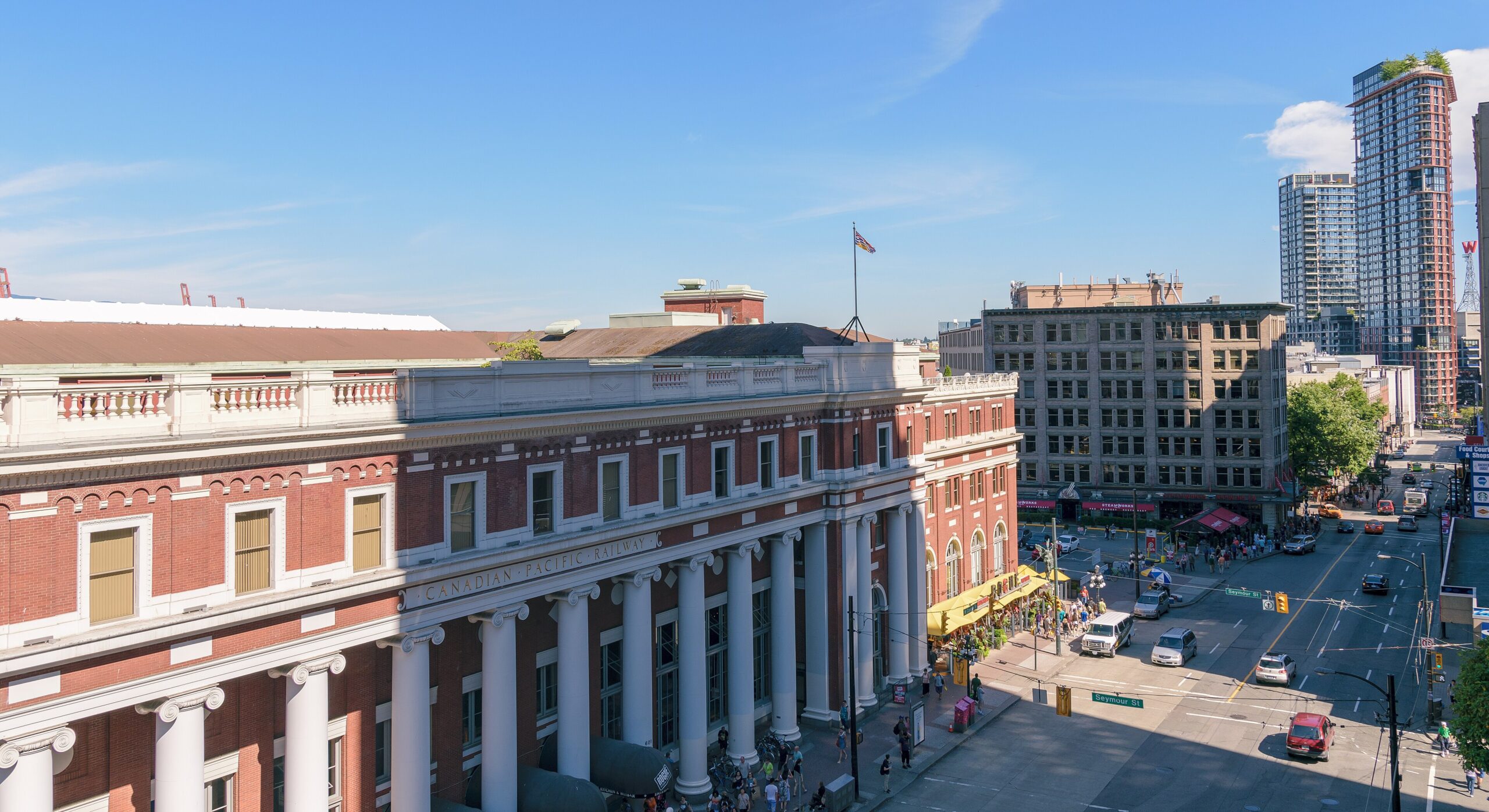
Pacific Central Station is at 1150 Station Street, beside Main Street-Science World. VIA Rail lists it as Vancouver’s station for arrivals and departures, with an accessible platform, wheelchair lift and courtesy wheelchair on request, and Amtrak Cascades also starts there for Seattle and Portland. TransLink describes Main Street-Science World as the SkyTrain station with Pacific Central on one side and Science World on the other. That relationship is useful, but the station is not directly underneath Canada Place.
SkyTrain, if the bags are manageable
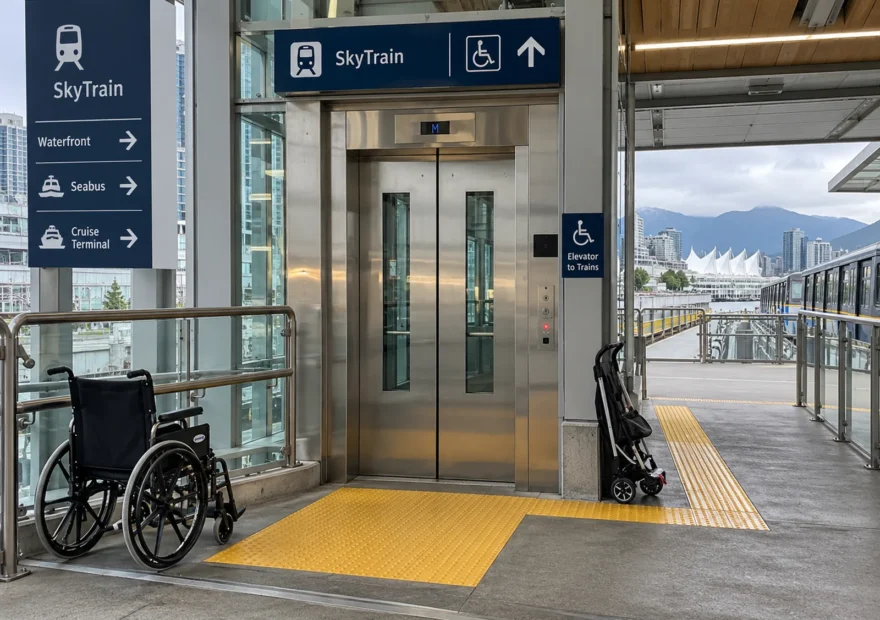
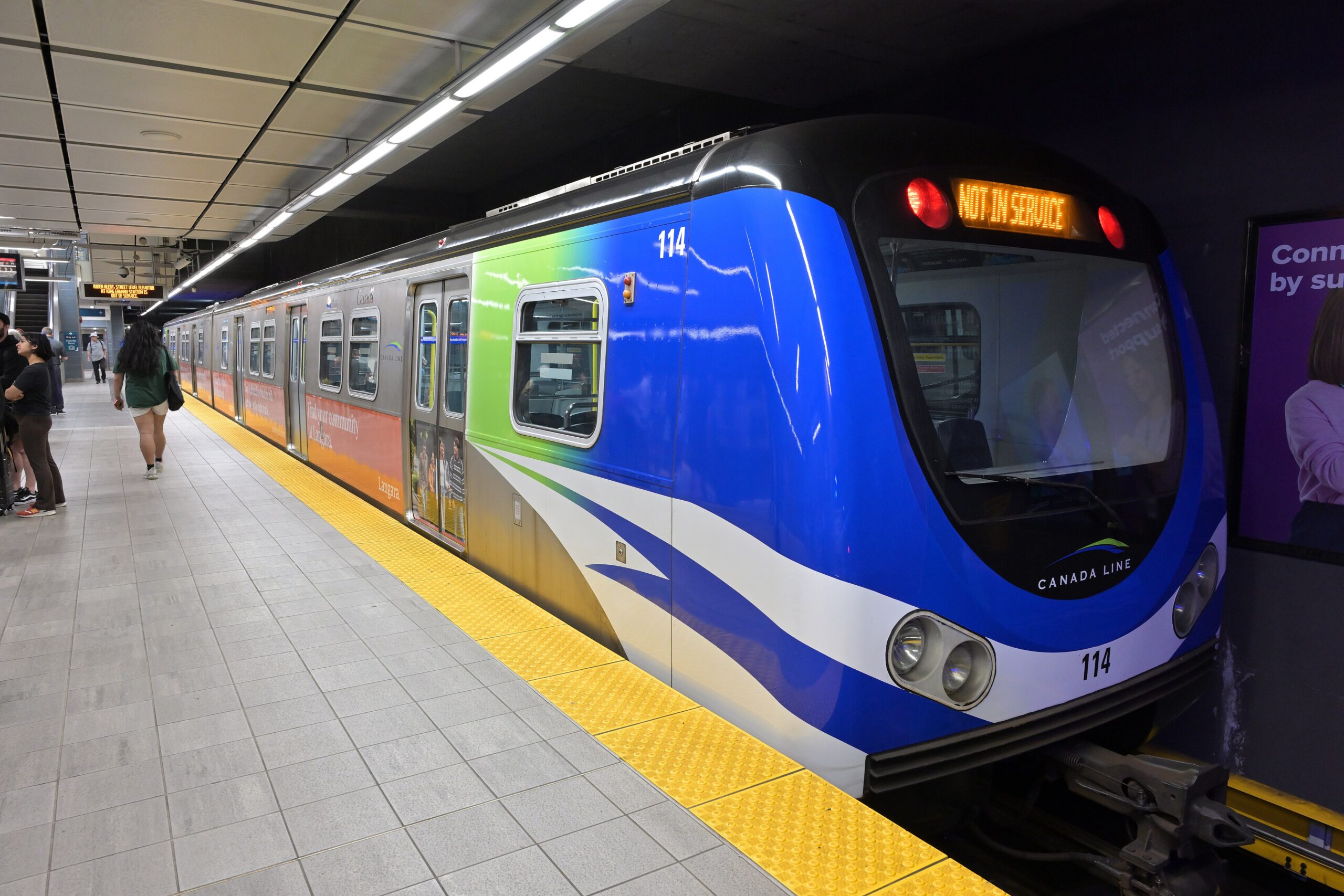
Walk from Canada Place to Waterfront Station, take the Expo Line toward the east, and get off at Main Street-Science World. From there, follow the signs and street route to Pacific Central. The station map shows Pacific Central near the station, but you still cross an outdoor section with bags. Check the current elevator and entrance information if anyone in your group cannot use stairs.
This route is useful when you have a reasonable amount of time, ordinary rolling luggage and a group that can stay together. It avoids a road journey through downtown and lets you travel independently of a taxi queue. It is less attractive when you have several hard cases, a bicycle, a mobility device or a train departure with a strict operator check-in.
Taxi or rideshare for door-to-door travel
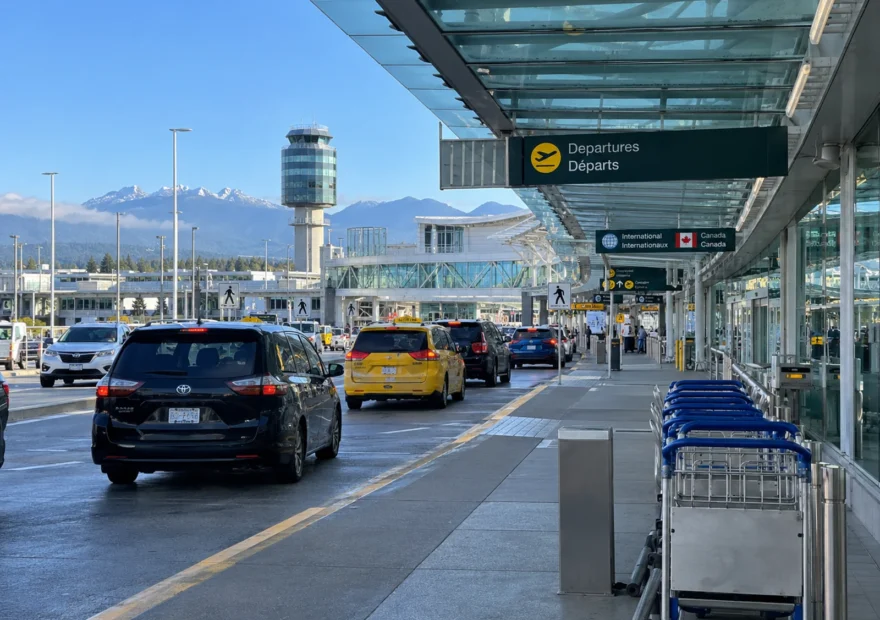
A taxi or rideshare can be sensible if the group is tired after a cruise or if the operator’s check-in window leaves little room for a station walk. Tell the driver “Pacific Central Station, 1150 Station Street,” not simply “the train station.” Have the train or bus operator ready on your phone because the building has more than one curbside area and a driver may ask which entrance you need.
With a rideshare, use the designated pickup area and keep the group together until the vehicle arrives. A vehicle that fits four adults may not fit four adults, four large cases and a stroller. If you need a wheelchair-accessible vehicle or a minivan, arrange that before leaving the ship.
How early should you arrive at Pacific Central?
Use the operator’s instruction, not a general SkyTrain travel estimate. VIA Rail, Amtrak and intercity bus companies have different boarding and baggage procedures. Amtrak Cascades passengers should expect cross-border documentation and customs processing; the operator’s current instructions are the authority. A local train station arrival that would be generous for a commuter can be too late for an international rail departure.
Keep passports, tickets and any declaration information in a small personal bag. Do not put them in luggage that you plan to check or leave with a porter. If one person is collecting tickets while another handles bags, agree on a meeting point inside the station before anyone separates.
Canada Place to Tsawwassen ferry terminal
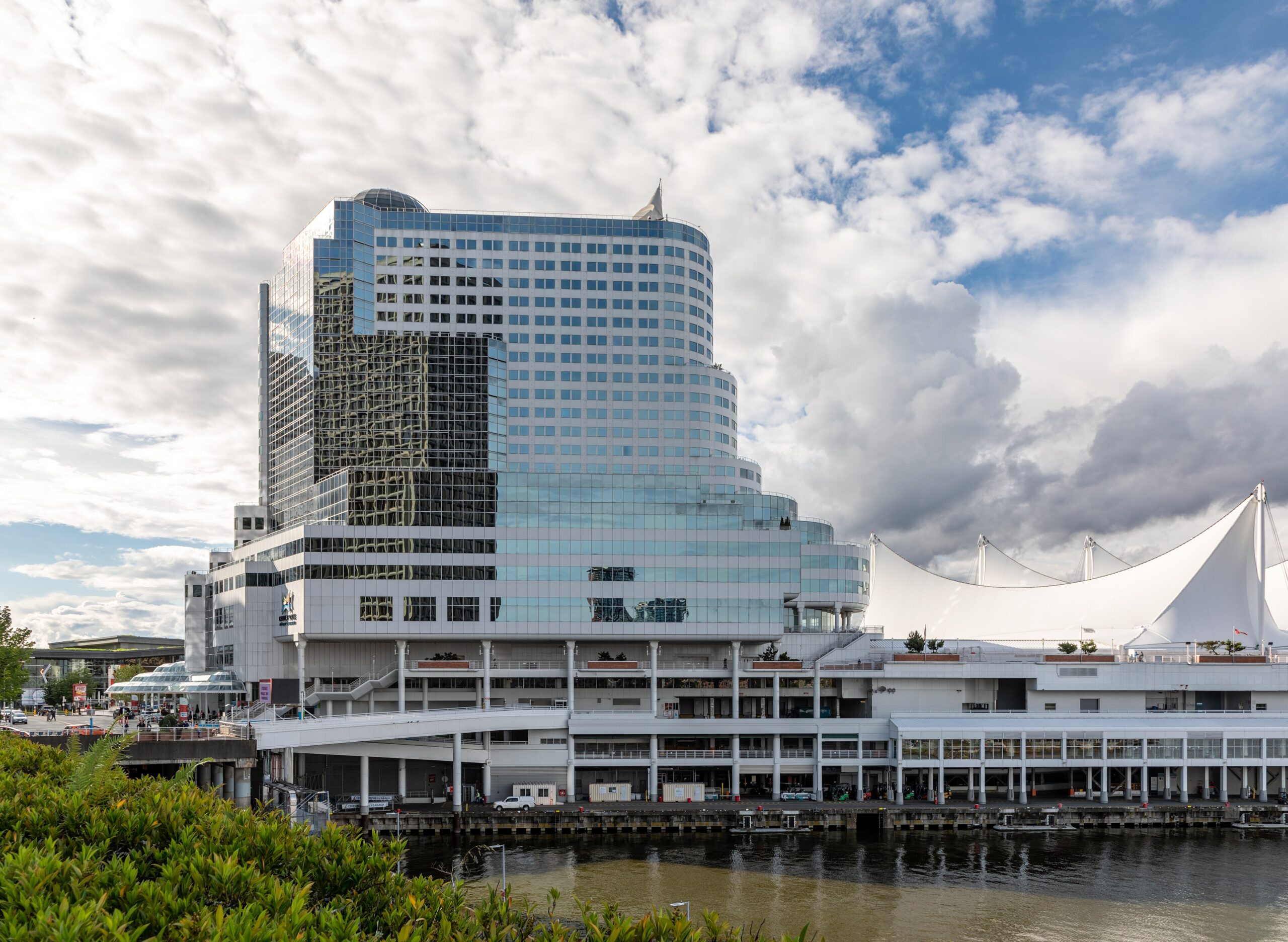
Tsawwassen is the Vancouver terminal for ferries to Victoria, the Southern Gulf Islands and Duke Point on Vancouver Island. It is not in downtown Vancouver. A cruise passenger walking out of Canada Place still has a substantial Metro Vancouver transfer ahead, and the ferry terminal has its own check-in and waiting process.
Public transit: Waterfront to Bridgeport, then Route 620
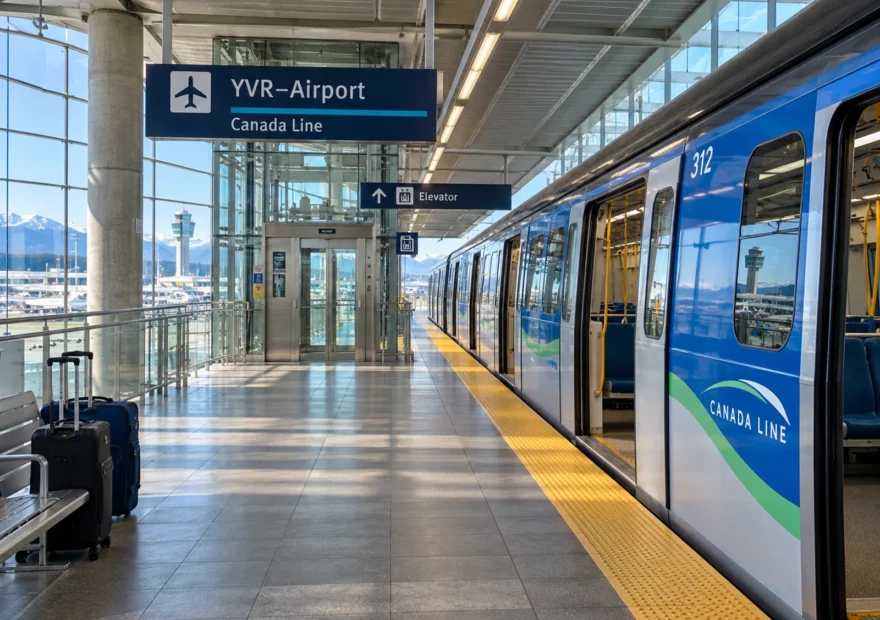
The usual no-car pattern is to reach Bridgeport Station on the Canada Line, then board Route 620 to Tsawwassen Ferry Terminal. The current TransLink timetable identifies Route 620 as the Bridgeport-Tsawwassen Ferry service and lists the ferry terminal as its terminus. Check the live schedule and alerts before you leave Canada Place; a printed timetable is not enough when your sailing is reserved.
At Bridgeport, do not assume every bus in the bay goes to the ferry. Confirm the route number and destination on the display. Route 620 is a regular bus, not a private cruise transfer, so allow time to wait, board with luggage and travel through Richmond and Delta. The route’s connection to the Canada Line is convenient, but the whole trip is only reliable when you add a real buffer before ferry check-in.
If you are travelling as a foot passenger, check the current BC Ferries booking and check-in instructions. BC Ferries says foot passengers can book in advance on several routes and must redeem the booking at a kiosk or with a ticket agent before entering the waiting room at Tsawwassen. That extra step belongs in your schedule.
Direct car or taxi to Tsawwassen
A taxi or pre-arranged vehicle removes the Bridgeport transfer and is often worth considering for a family, a group with cruise luggage or a passenger who cannot manage a bus transfer. It does not remove highway traffic, ferry-terminal queues or the need to check in. Ask for the Tsawwassen ferry terminal, not “the ferry,” and confirm whether the quoted price includes waiting or luggage.
For a reserved sailing, leave earlier than a map’s normal driving time suggests. The route crosses busy regional roads, and the terminal is far enough from downtown that a small delay can turn into a missed sailing. Use the current BC Ferries conditions page or terminal webcam when you are making the final decision.
Canada Place to Horseshoe Bay ferry terminal
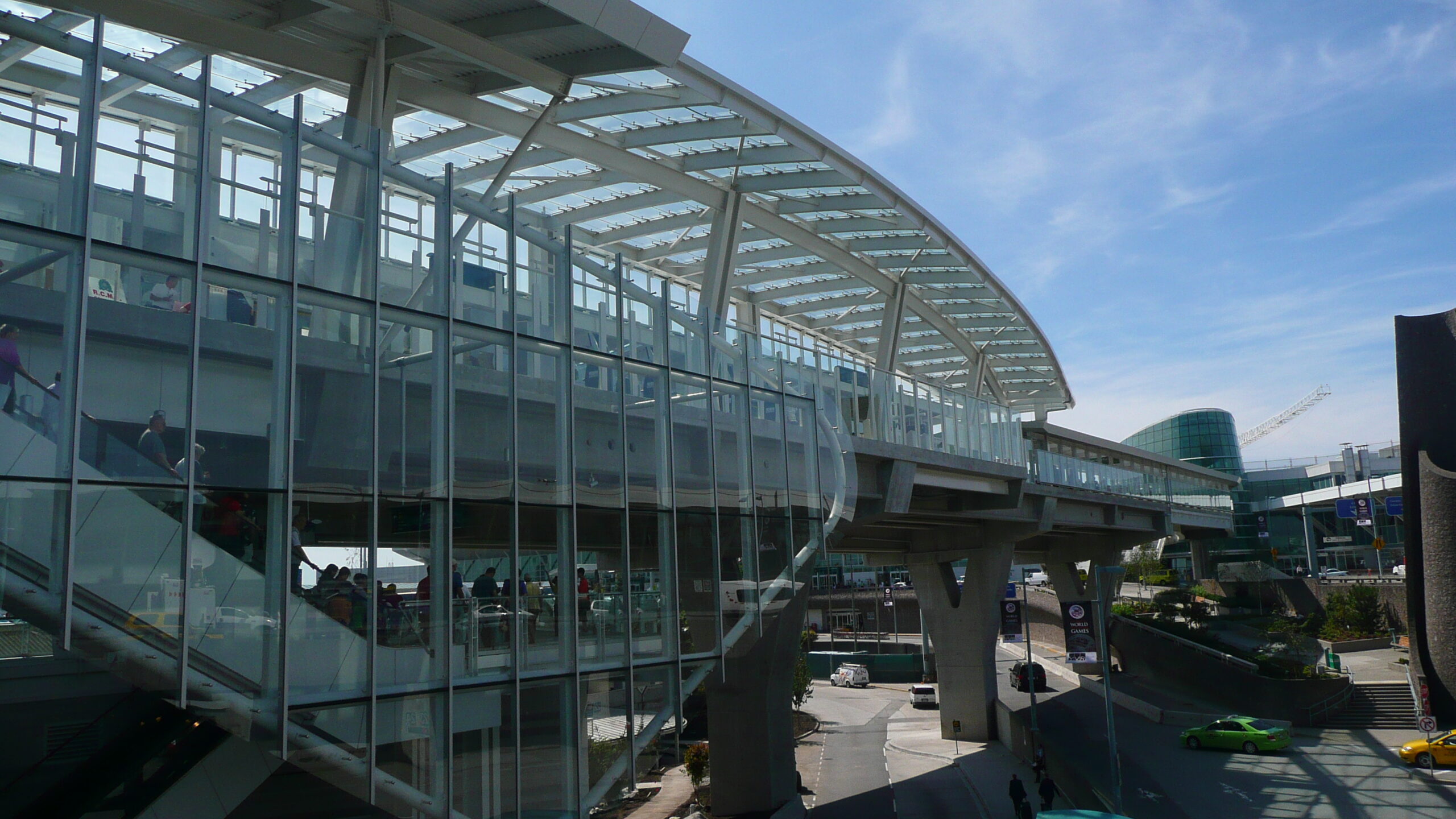
Horseshoe Bay is in West Vancouver at the western end of the Trans-Canada Highway. It serves Nanaimo’s Departure Bay and the Sunshine Coast route to Langdale. This is a different direction from Tsawwassen, and the correct choice depends on your sailing, not on which terminal looks closer on a map.
Route 250 and Route 257 from downtown
TransLink lists Route 257 as the Horseshoe Bay/Vancouver Express and advises passengers connecting to BC Ferries to check sailing schedules and book ahead. Route 250 also connects downtown and Horseshoe Bay. For a cruise passenger starting at Canada Place, use the current TransLink trip planner to find the best downtown stop for your departure time rather than walking to a random bus bay.
The bus can be a good value for one or two travellers with manageable luggage. It is a poor choice when you are treating the scheduled bus time as a guarantee that you will make a reserved sailing. Highway 1 traffic, a slow luggage handoff and a crowded downtown stop all belong in the buffer.
Taxi or private transfer
A direct vehicle is easier when a ferry booking is expensive to miss, especially with children, several bags or a later sailing. The terminal’s official page lists TransLink, West Vancouver Blue Bus, taxis, Lyft and Uber as transportation options. It also warns that public transit may not be available for a later sailing, so check the return direction before booking an evening crossing.
When you are travelling after a cruise
The post-cruise sequence matters more for ferries and trains than it first appears. You cannot begin the transit leg until you have left the ship, completed the terminal process and collected any tagged bags. If your departure is early, ask the cruise line whether self-carry luggage is available for your sailing and whether your group can use it. If your departure is later, tagged luggage may be more comfortable, but it adds a wait before the transfer.
For an afternoon ferry or train, a downtown luggage plan may be better than dragging cases through several transfers. Ask your hotel before checkout whether it will hold bags and until what time. If you use a commercial luggage service, verify its hours, insurance and collection point. Never leave passports, medication, electronics or ferry documents in stored bags.
When you are travelling before a cruise
The reverse connection is often easier because you can choose where to sleep. If you are arriving by VIA Rail, Amtrak or ferry the day before sailing, pick a hotel based on the next morning’s Canada Place plan rather than only the previous day’s arrival. The pre-cruise hotel guide compares the waterfront, Coal Harbour, central downtown and YVR as cruise bases.
If a ferry arrives late in the evening, do not assume you can still catch every downtown connection. Check the final transit departures and have a taxi or hotel pickup fallback. A lower room rate can disappear if the last leg requires a costly late-night vehicle.
Fare, ticket and booking details to settle before departure
- TransLink: use the current trip planner, service alerts and fare instructions for the day of travel. A Compass Card, contactless payment and cash have different practical handling rules.
- BC Ferries: confirm whether you need a vehicle reservation, foot-passenger booking or only a ticket at the terminal. A reservation is not the same as a boarding pass; follow the current redemption instructions.
- VIA Rail: keep the booking accessible and check the operator’s baggage and accessibility rules for your train.
- Amtrak Cascades: allow for cross-border documents and customs procedures, and follow the operator’s current station-arrival instructions.
- Intercity buses: check the exact pickup address. Some services use Pacific Central while others use a nearby downtown stop.
Save each operator’s confirmation separately. A screenshot of a BC Ferries sailing does not tell you where to board a Route 620 bus, and a SkyTrain route does not guarantee that the next bus connection is running normally.
Accessibility and luggage: decide before the curb
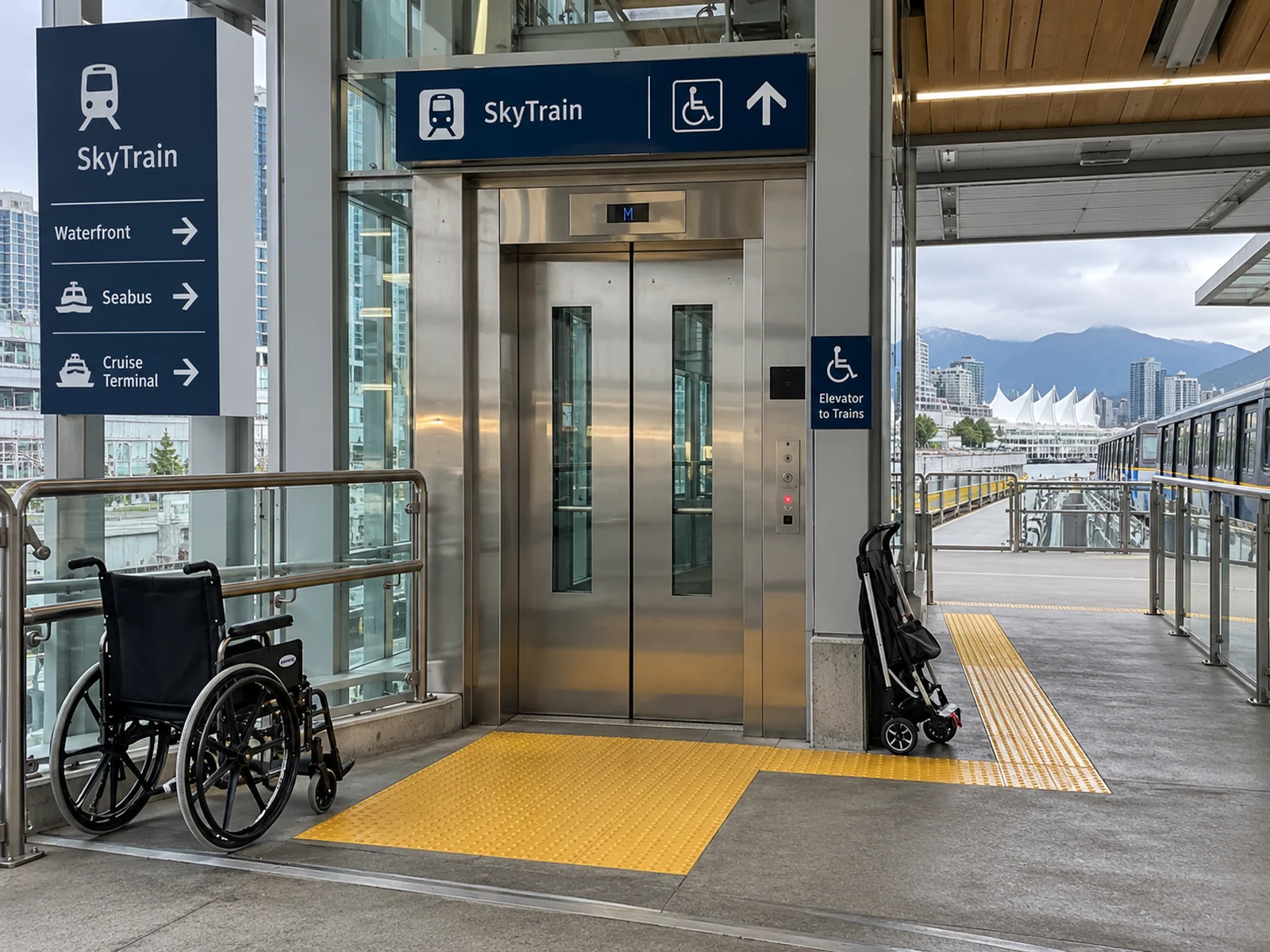
Tell the cruise line, rail operator and ferry operator about assistance needs before the travel day. Pacific Central lists wheelchair assistance and curbside support, but requests may need advance notice (recommended 48 hours). BC Ferries asks for at least 24 hours’ notice to guarantee a boarding wheelchair, by calling 1-888-223-3779. Explain the whole chain to each operator instead of assuming one operator’s assistance follows you to the next; our accessibility and family-luggage guide covers this in more depth.
Measure your luggage in real terms. A suitcase that rolls easily on a hotel lobby floor may be awkward on a station ramp, a bus aisle or the outdoor walk beside Pacific Central. Keep one adult in charge of the passports and tickets, another in charge of the largest bags, and choose one meeting point if the group is separated.
Four connection plans I would actually use
Plan 1: Canada Place to Pacific Central by SkyTrain
Use this for a daytime departure with manageable luggage and a comfortable operator check-in buffer. Walk to Waterfront, take the Expo Line to Main Street-Science World, then walk to the station. Check the station map and service alerts before leaving the terminal.
Plan 2: Canada Place to Pacific Central by taxi
Use this with heavy luggage, mobility needs, children or a fixed rail departure. Give the driver the exact station address and arrive according to the rail or bus operator’s instructions, not according to a local-transit rule of thumb.
Plan 3: Canada Place to Tsawwassen
Use Canada Line to Bridgeport and Route 620 when the group can manage a longer transit chain and the sailing buffer is generous. Use a direct vehicle when missing the reservation would cause a major problem.
Plan 4: Canada Place to Horseshoe Bay
Use Route 250 or 257 when the sailing is comfortably later and the group is travelling light. Use a taxi or private transfer when the sailing is fixed, traffic is uncertain or the return trip will run late.
Final connection check
- Confirm whether the destination is Pacific Central, Tsawwassen or Horseshoe Bay.
- Save the exact station or terminal address.
- Check the operator’s check-in, baggage and reservation instructions.
- Confirm the cruise line’s disembarkation and luggage process.
- Check TransLink alerts and the current route or trip planner.
- For Tsawwassen, verify Route 620 from Bridgeport and the ferry’s booking process.
- For Horseshoe Bay, check Route 250 or 257 and the late-sailing transit warning.
- Arrange luggage storage before checkout; never assume it is included.
- Keep documents, medication and valuables in your personal bag.
- Build a fallback that still works if one train, bus or sailing connection is missed.
For the airport connection after a cruise, see Canada Place to YVR after disembarkation. For the terminal-day procedure, use Canada Place cruise embarkation, and for the full decision map start at the Vancouver cruise planning hub.
The useful question is not “What is the fastest route from Canada Place?” It is “Which connection still works if the ship releases me later, my bags take longer or the first bus is full?” Choose the route that protects the reservation you cannot replace, then verify the live schedule before you leave the waterfront.
Travel details change. YVRBlog aims to use official sources and show the review date above. If something has changed, please contact us.