Planning a Vancouver cruise with a wheelchair, mobility aid, stroller, children or oversized luggage? This practical guide covers Canada Place, Waterfront Station, YVR and BC Ferries handoffs.
A cruise day can go smoothly for most of the group and still be exhausting for the person pushing a wheelchair, steering a stroller, or keeping track of a large piece of equipment. This guide looks at the whole Vancouver connection, from Canada Place to Waterfront Station, YVR, and the BC Ferries terminals, so you can plan the awkward bits before they become a problem.
Accessibility advice often stops at “book an accessible taxi” or “request a wheelchair.” Those are useful starts, but they do not describe the trip. The difficult moment is usually the handoff: getting from the ship to the luggage area, finding the right curb, fitting a chair or stroller into the vehicle, or discovering that the lift you planned to use is out of service. Ferry boarding can change with the ship and the tide too.
I would plan this as a chain of handoffs, not as a single trip from one address to another. Write down who needs help, what equipment is involved, and where each person and bag changes hands. Then ask every operator the same plain questions: Where do we meet? How far is the walk? What is the backup if the lift is unavailable? Who has the device while we move?
Start with the handoffs, not the destination
| Situation | What to arrange first | Most important fallback |
|---|---|---|
| Wheelchair or scooter after a cruise | Tell the cruise line, transfer provider and next operator what device you use and how it folds or powers down. | Keep the device with you until staff confirm where it will be returned. |
| Child in a stroller or car seat | Confirm whether the stroller can reach the curb, bus, station elevator or ferry waiting area. | Carry a small hands-free day bag and keep one adult in charge of documents. |
| Oxygen, medication or medical equipment | Check cruise-line, airline and ferry rules before packing. | Keep essential supplies and written information in personal luggage, never in a tagged suitcase. |
| Large, fragile or unusual luggage | Measure it and ask each operator about storage, baggage acceptance and vehicle capacity. | Book a direct vehicle or an extra night rather than forcing several transfers. |
A step-free entrance does not make the whole route accessible. The entrance may be a long way from the pickup point, a lift may be closed, or the vehicle may have no safe place for the folded chair. Ask for the route your group will actually take, not the route shown in a general accessibility note.
Before sailing, write down the details people will need
Make one short information sheet on your phone and print a copy. Include the passenger’s name, the type of device, its dimensions and weight if you know them, whether it is manual or powered, battery details, and the kind of transfer help needed. Add the cruise booking, flight or ferry reference, hotel address, and an emergency contact. It sounds fussy until you are explaining the same equipment to three different people while everyone is tired.
Use a plain description, not only a model name. “Manual wheelchair, folds, 27 inches wide, passenger can transfer” tells a driver more than a brand does. For a scooter or power chair, add the battery type and charging needs. If the device comes apart, note the heaviest piece and who can lift it without hurting themselves.
Ask for confirmation in writing whenever you can. The cruise line, airline, taxi company, and ferry terminal keep separate records. A request made to one of them does not automatically follow you to the next stop.
Leaving Canada Place without losing the thread
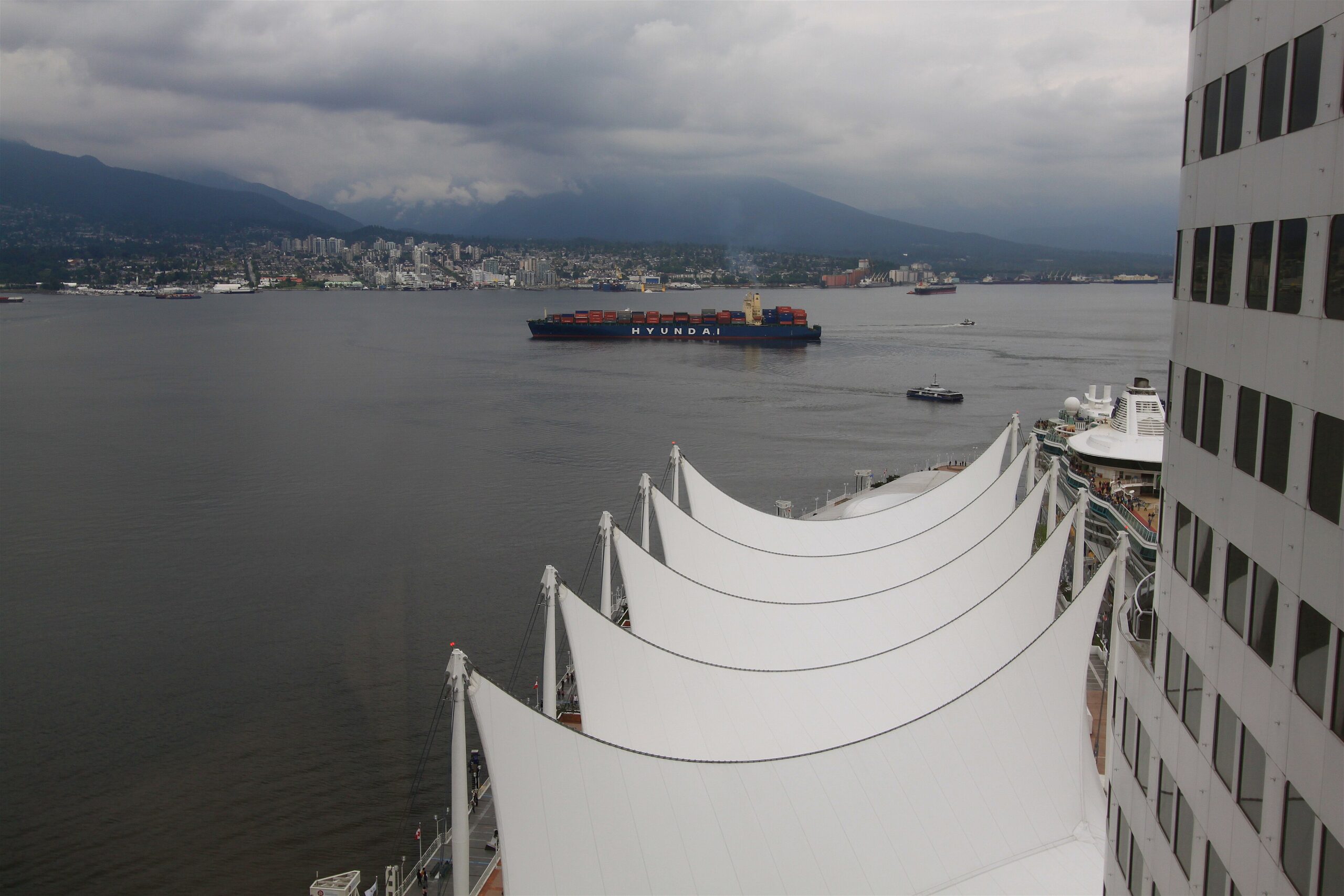
Tell the cruise line about mobility assistance before sailing, then ask again onboard when the disembarkation instructions arrive. Find out where assisted passengers wait, whether staff can help with tagged luggage, and whether a family member can stay beside the passenger throughout the process. You want the plan before the crowd starts moving, not while you are standing in it.

If the chair or scooter is tagged for collection, keep the claim tag and take a quick photo of it. Put medication, passports, electronics, chargers, and one change of clothes in a personal bag. The bag that disappears into the luggage area is not the bag you want for the most tiring part of the morning.
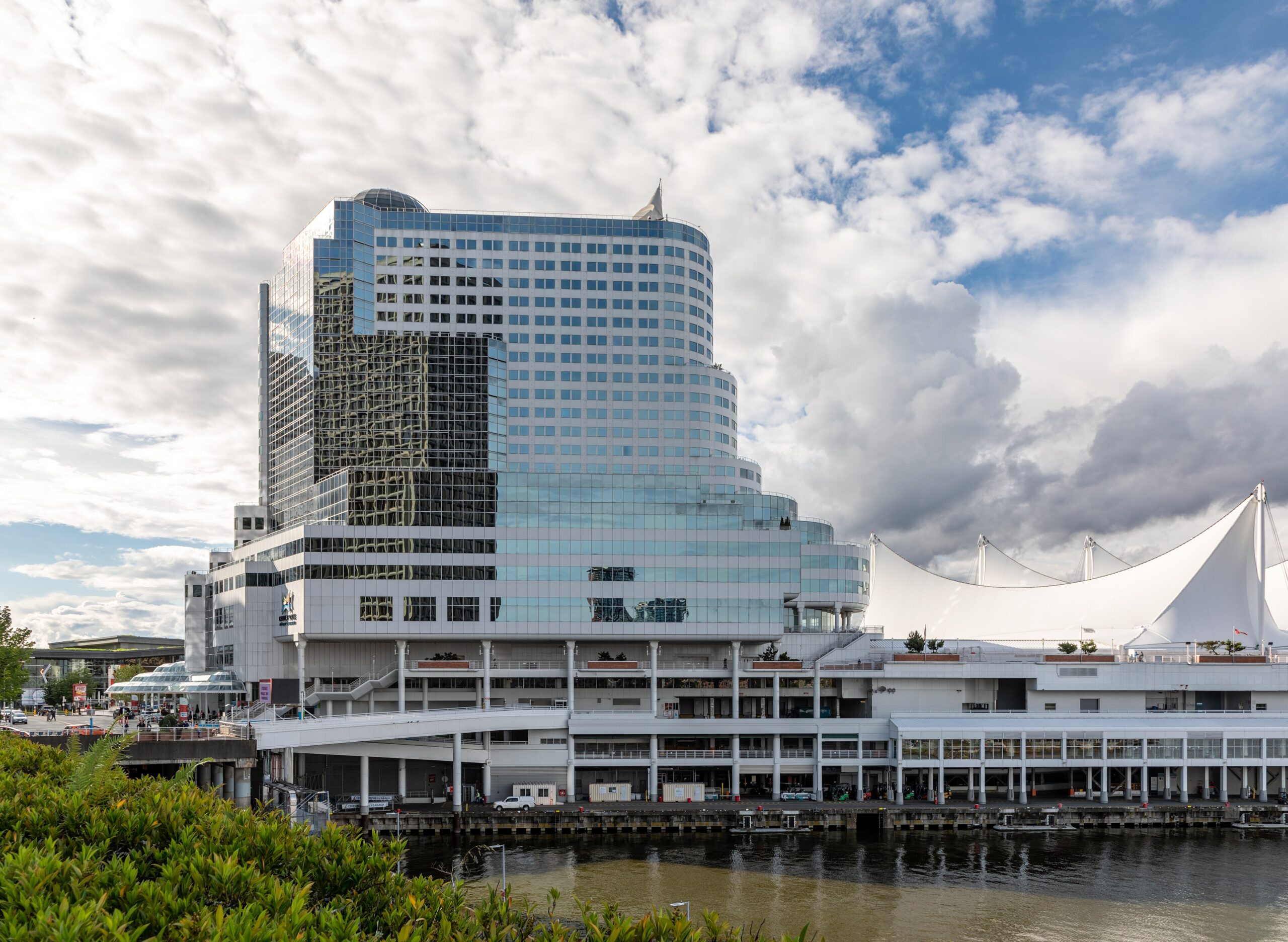
Ask the driver for a real meeting point
“Meet at Canada Place” is not a meeting point. Confirm the curb, level, entrance, and whether the vehicle may wait there. A driver may be allowed to unload but not stand around. If someone needs a ramp or extra time, tell the dispatcher before the vehicle arrives.
A rideshare pickup area may be away from the exit that looks most obvious. For a taxi, confirm that the vehicle can take the folded chair, scooter, or stroller without leaving the passenger squeezed beside it. A group with one mobility device can still need two cars.
Waterfront Station and SkyTrain: allow time to find the right entrance
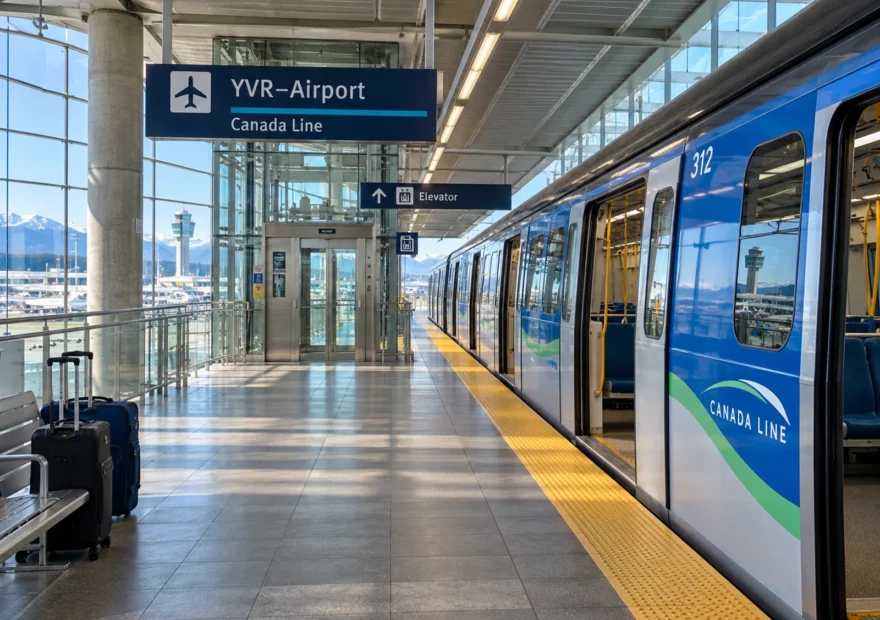
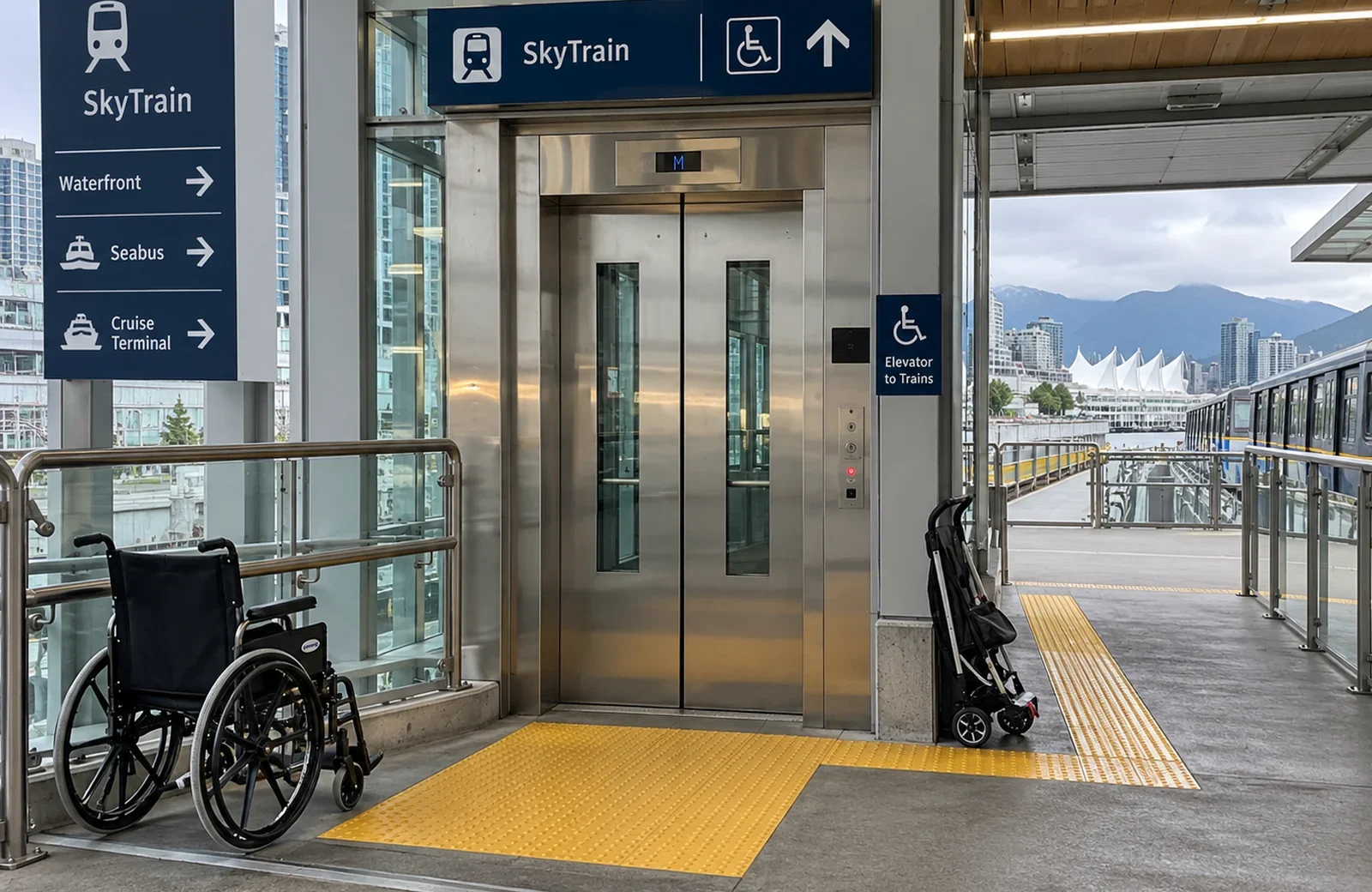
Waterfront Station connects the Canada Line, Expo Line, and buses, but it is a big interchange with several entrances. TransLink says SkyTrain stations have elevators and escalators between entrances and platforms, and it asks riders to check station maps and current alerts. That is not a formality. One closed elevator can turn a short connection into a very different route.
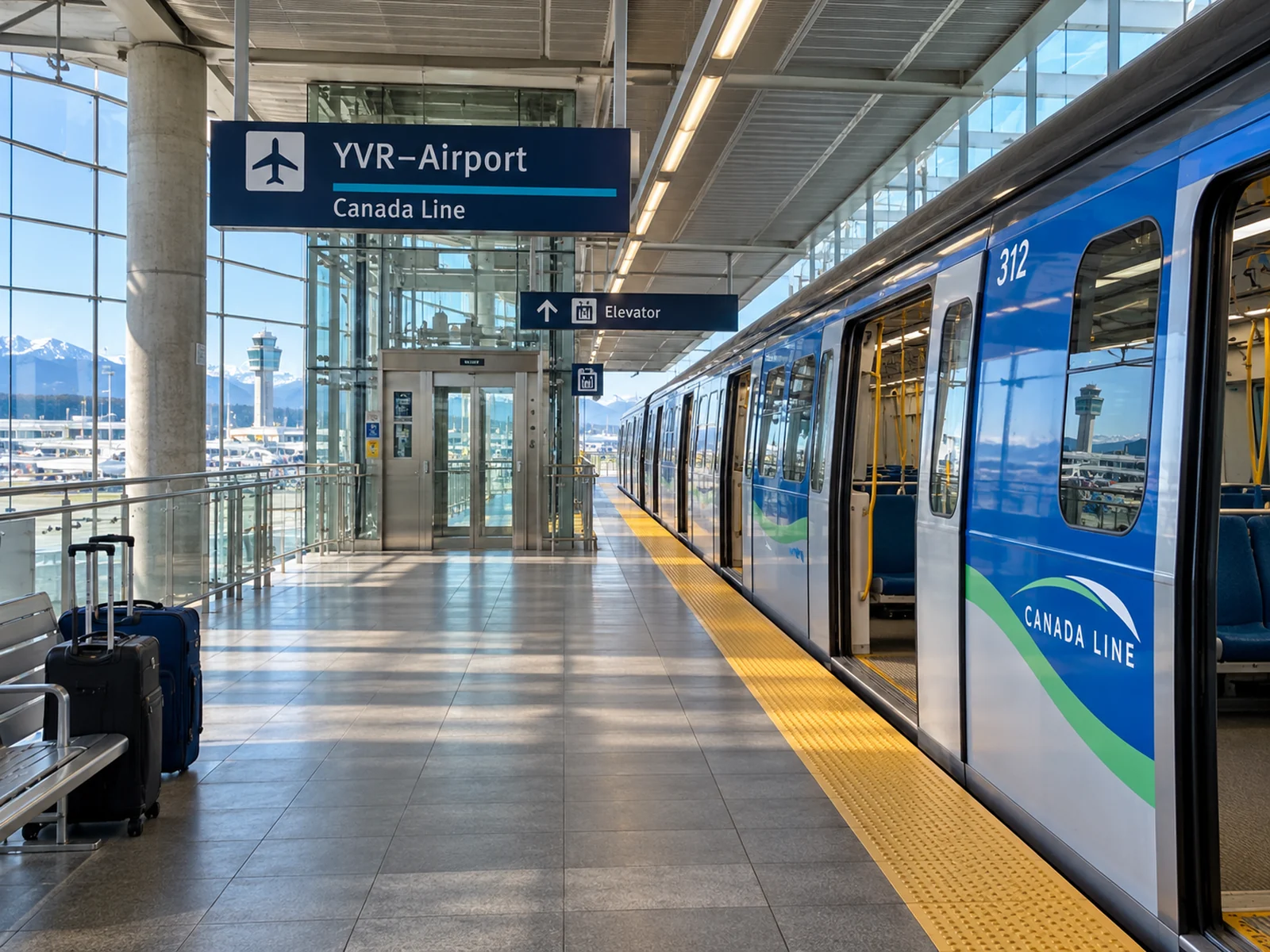

Before anyone goes downstairs, have one adult check the route while another stays with the passenger and bags. Ask an attendant or use the customer information phone if the elevator path is unclear. Splitting up to save a minute usually creates more work when somebody misses a turn or a platform announcement.
On a bus, ask the operator to lower the vehicle or deploy the ramp. TransLink says buses and community shuttles have lifts or ramps at wheelchair-accessible stops when requested. Wait until the ramp is in place and keep the stroller or luggage out of the boarding space.
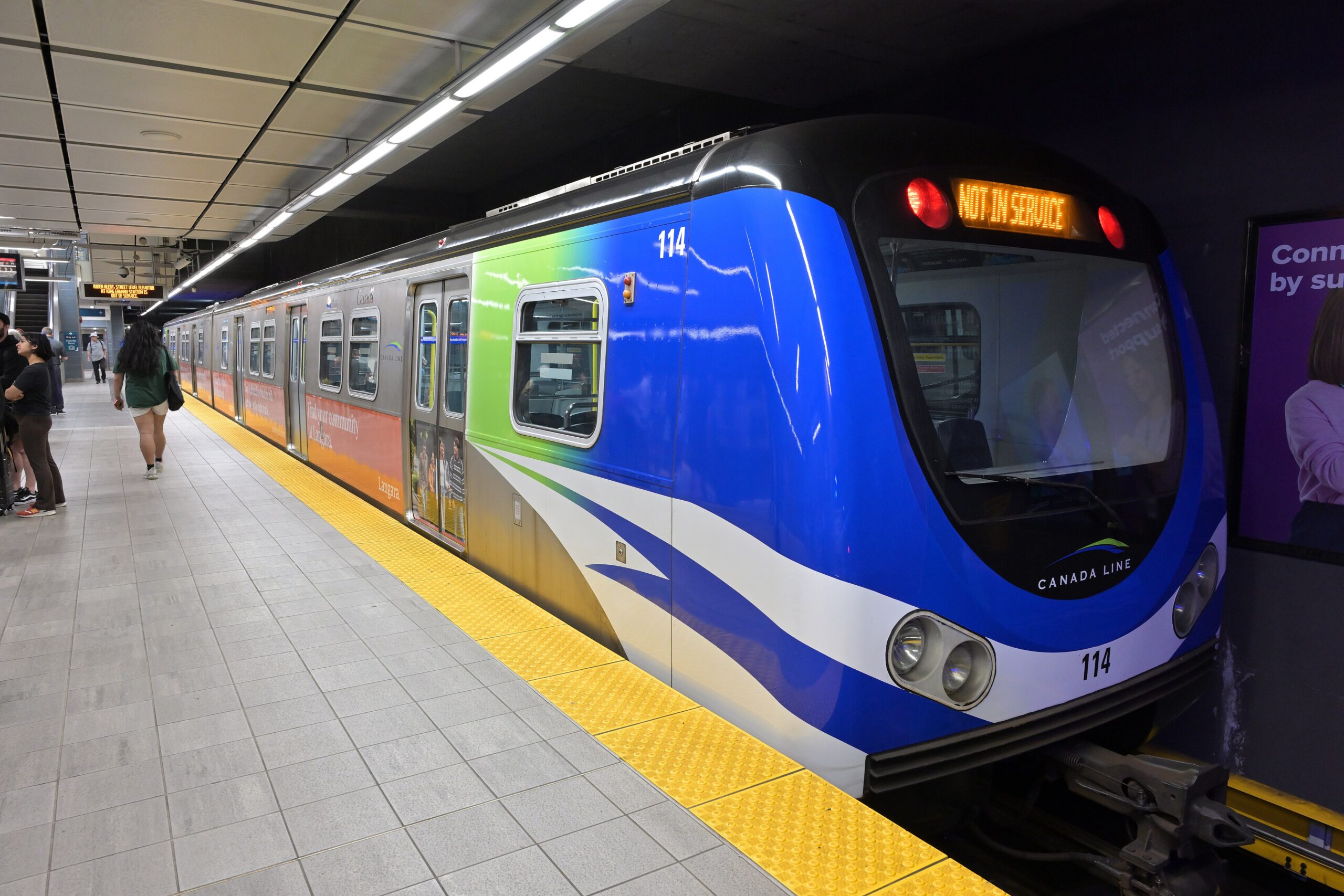
On SkyTrain, use the priority area, but do not expect it to be empty. Set the chair brakes, hold the stroller, and let one person board first if the platform is busy. If the gap or crowd feels wrong, wait for the next train. Missing one train is easier than recovering from a rushed boarding.
YVR: treat airport assistance as its own booking
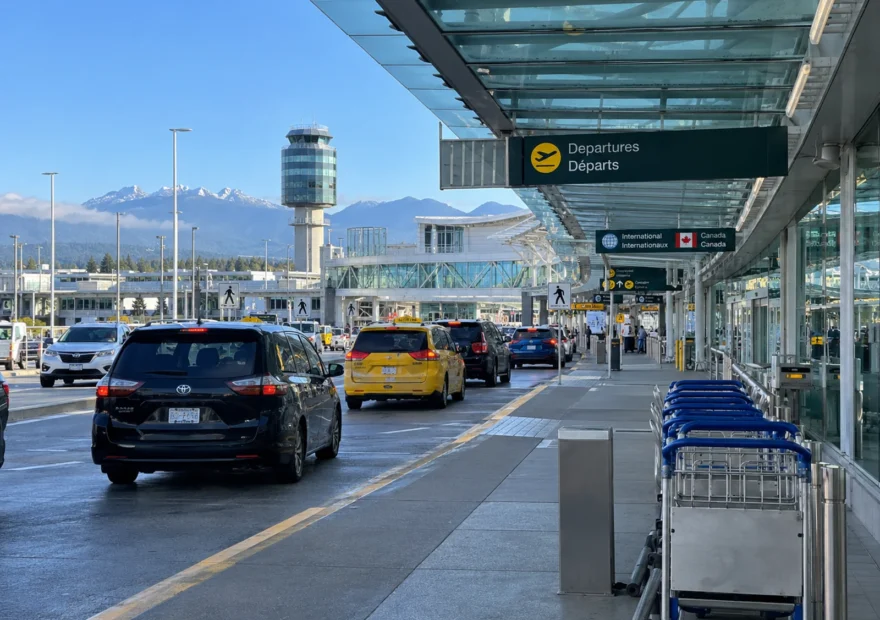
YVR can provide curbside assistance from the outdoor pickup and drop-off areas or from the Canada Line to the indoor check-in areas. YVR advises passengers who need help to or from the gate, or with boarding and deplaning, to tell the airline when arranging the trip, ideally at least 48 hours ahead (curbside assistance can also be pre-arranged through YVR’s accessibility services, or requested on arrival). That request covers the airport. It does not arrange the ride from Canada Place.
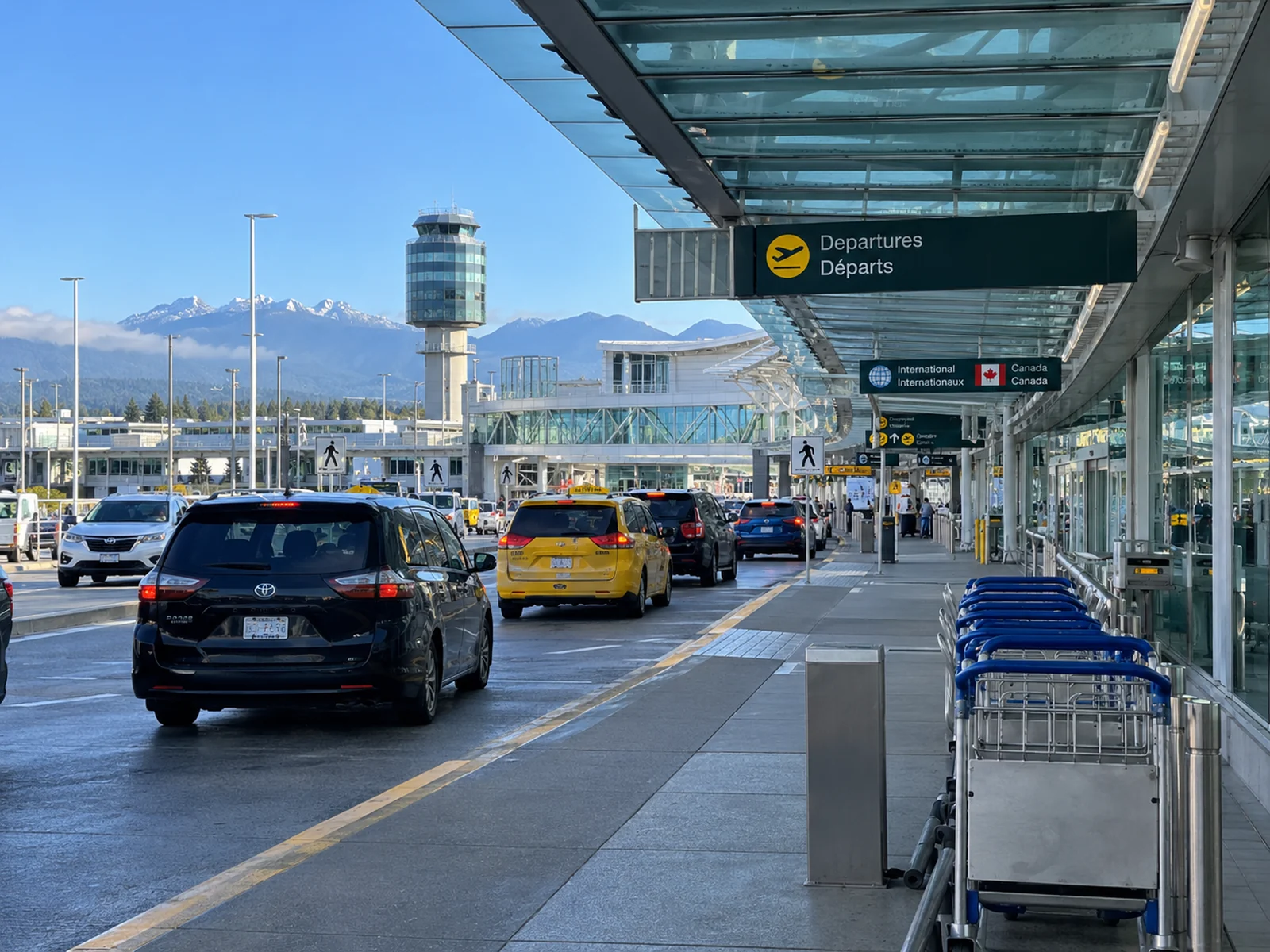
YVR lists the Canada Line, buses, and taxis as accessible ways to reach the airport. Accessible taxis can also be requested from the host or courtesy phone outside Arrivals. If you are coming from a ship, ask the taxi company whether the device fits and whether the passenger stays in their own chair or transfers into the vehicle.

YVR has nursery rooms and changing facilities for families. Passengers with hearing, vision, or sensory needs can ask Customer Care what support is available. YVR also has a Travel Rehearsal Program for eligible travellers who want to practise the airport journey. That can be worthwhile when the airport, rather than the flight, is the part that causes the most worry.
A confirmed assistance request is not a reason to book a tight cruise-to-flight connection. It helps with the airport route, but it does not remove ship disembarkation, luggage collection, airline cutoffs, or security queues.
BC Ferries: explain the need at the terminal
BC Ferries asks passengers with accessibility needs to tell the ticket agent when they arrive. Tsawwassen lists boarding assistance, an elevator, and wheelchairs for boarding, but availability is limited, so call ahead if you need one guaranteed for your sailing. Horseshoe Bay lists boarding assistance, wheelchair access, an elevator, and boarding wheelchairs as well. BC Ferries asks for at least 24 hours’ notice to guarantee a boarding wheelchair, by calling 1-888-223-3779; the same page lists a 50% fare discount for travellers with a BC Ferries Accessible Fare Identification card or a CNIB card.
This matters when you are planning the trip from Canada Place. Even if you take Route 620, Route 250, or Route 257, you still have to get the passenger and device to the ticket area. In a taxi, ask the driver to leave room at the curb. Keep the passenger with you while someone deals with tickets.
BC Ferries notes that boarding can depend on the ship and conditions. At Horseshoe Bay, the tide can affect where a foot passenger who needs elevator access boards. Ask the ticket agent which route is being used that day instead of relying on what happened on an earlier sailing.
Travelling with children: make the busy moments boring
Give each child one small job. One can hold a bright luggage ribbon, another can stay beside the adult carrying passports, and an older child can carry a small day bag. Keep the important documents and irreplaceable bags with an adult. The goal is not a perfect family system. It is fewer things to decide when everyone is tired.
A stroller can be a lifesaver at the terminal and a nuisance on a crowded bus. Find out whether it must be folded and where it can travel. If a child needs a car seat, ask the vehicle provider whether the right seat is supplied or whether you must bring one. A rideshare driver will not necessarily have a suitable restraint.
Keep a small connection kit with the adult managing the transfer: water, snacks, wipes, a spare layer, medication, chargers, a change of clothes, and copies of reservations. Do not put it in a suitcase that may be tagged or stored.
Oversized and fragile luggage need their own plan
Photograph unusual items before leaving the ship. Measure hard cases, sports equipment, and mobility devices, then ask the cruise line, transfer provider, airline, or ferry operator about limits. A vehicle may have enough seats but not enough height in the cargo area. A bus may accept luggage without having a safe place for a long case or folded stroller.
When booking a direct vehicle, send the measurements and ask the company to confirm the vehicle in writing. With transit, decide honestly whether the item can be lifted and kept clear of doors and priority areas. For a flight, check the airline’s mobility-device and oversized-baggage rules well before travel day.
Keep fragile medical or communication equipment with you. If something must be checked, label it with your name, phone number, destination, and a short description of the case. A photo of the equipment can help staff identify it at the baggage area.
Choose the route that leaves you some breathing room
A pre-arranged direct vehicle
This is usually the sensible choice when a passenger needs a particular vehicle, the mobility aid is large, the family has a car seat and stroller, or a missed ferry or flight would be costly. Confirm the pickup point, vehicle type, ramp or lift, waiting time, and cancellation terms. Leave enough time for loading.
SkyTrain and bus, when the route really works
Public transit can be a good value when the stations, elevators, and bus boarding points are confirmed, the group can manage the moves, and the next departure is not tight. Check alerts before leaving Canada Place. A route that worked yesterday may have a lift outage or a construction detour today.
An extra night, if the schedule is doing too much
If the ship arrives early and the next flight or ferry is fixed, an extra hotel night may be the kinder plan. It removes several time-sensitive handoffs from a tired passenger, child, or mobility device. Choose a hotel with confirmed luggage storage and a clear accessible entrance, not simply the one that looks closest on a map.
Notes for different travellers
Manual wheelchair
Record the folded dimensions and weight. Ask whether the cruise line can return the chair at the gangway or terminal, and tell the transfer provider whether the passenger transfers into a vehicle. At stations and ferry terminals, keep the chair with the passenger until staff take responsibility for it.
Power wheelchair or scooter
Provide battery details early. Ask how the cruise line, airline or ferry wants the device powered down and whether removable parts should travel with you. Bring the charger and a photo of the controls. Avoid a connection so tight that a delayed device handoff creates a missed departure.
Family with stroller and car seat
Choose the route with the fewest handoffs. Keep the stroller’s rain cover, child food and car-seat information in one bag. If you need a taxi, specify the number and size of child restraints at booking time.
Traveller with hearing, vision or sensory needs
Ask each operator how it communicates changes. YVR’s current accessibility information includes audio and visual paging, hearing loops at information counters, and accessible check-in kiosks. Keep the flight, ferry, or train details in writing so a staff member can confirm the next step without relying on an announcement.
About 48 hours before travel
- Confirm the cruise line’s assisted-disembarkation and luggage procedure.
- Send device dimensions, battery details and assistance requests to the airline or transfer provider.
- Check TransLink station accessibility and current alerts.
- Call BC Ferries if you need a terminal wheelchair or boarding assistance guaranteed.
- Verify the vehicle’s cargo space, ramp or lift and child-seat arrangement.
- Confirm hotel luggage storage and accessible entrance details.
- Save the next departure’s ticket, terminal address and check-in deadline offline.
On the day
- Keep passports, medication, chargers and essential equipment in personal luggage.
- Photograph luggage tags, mobility devices and fragile cases.
- Tell the first staff member what assistance is needed and where the next handoff occurs.
- Do not leave a passenger or mobility device alone while one person handles tickets.
- Check the elevator, bus and ferry status before committing to the next leg.
- Ask for a slower boarding process when a ramp, lift or transfer requires it.
- Choose the next train or bus only after everyone and every bag is ready.
- Keep a direct-vehicle or extra-night fallback available if the route changes.
For the basic transfer options, see YVR to Canada Place Cruise Terminal. For Pacific Central and ferry connections, use Canada Place to Pacific Central, Tsawwassen and Horseshoe Bay. The wider decision map is in the Vancouver cruise planning hub.
The best plan is usually the one nobody has to improvise. Everyone should know what happens next, every device should have a named handoff, and there should be enough time for a lift outage, a late bag, or a child who needs to stop. Make that room before sailing, then check the live details again on the day.
Travel details change. YVRBlog aims to use official sources and show the review date above. If something has changed, please contact us.