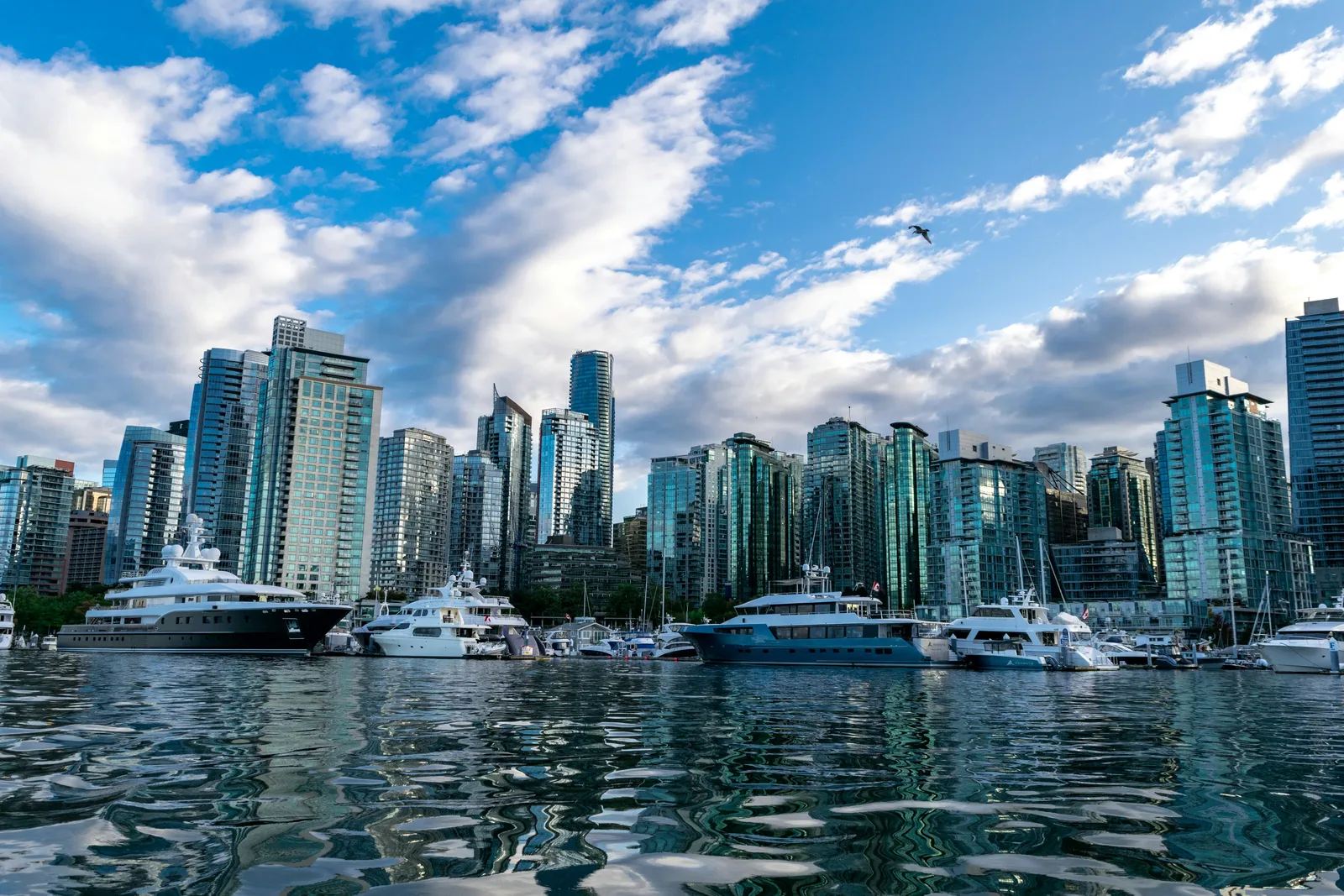
Stand at Jericho Beach on a clear evening and look east. The mountains hold the frame. The water goes flat and silver. And tucked between them, like a city that never quite decided how tall it wanted to grow, sits downtown Vancouver — compact, distinctive, and deeply familiar.
That view is not an accident. It is the result of decades of deliberate policy, fought over by planners, developers, residents, and architects going back to the 1990s. And right now, in the spring of 2026, Vancouver is asking a question it hasn’t seriously asked since 2011: should any of that change?
The City of Vancouver has launched a formal review of its Higher Buildings Policy — the set of rules that governs just how tall downtown towers are actually allowed to go. It’s a planning conversation, yes. But strip away the zoning language and what you get is something more personal than that: a city asking its people what they think their home should look like from the water, from the mountains, from the street.
This article is here to explain what’s actually being discussed, without the hype in either direction.
What Is Vancouver Reviewing?
The Higher Buildings Policy is not a flashy document. It has been quietly doing its job since 1997 — setting the rules for buildings in downtown Vancouver that want to go significantly taller than their standard zoning allows. Think of it as the rulebook for the city’s most ambitious towers.
Under the existing policy, downtown buildings are capped at just under 215 metres tall. The policy also aims to create what planners call a “dome-shaped” skyline — the tallest towers clustered along West Georgia, Burrard, and Granville Streets, stepping down toward the water and the residential edges of the peninsula.
Six buildings have been built under this policy since 1997. Another eight have been approved but haven’t broken ground yet.
The last time anyone looked at this seriously was 2011. Since then, Vancouver has grown considerably, housing demand has intensified, the Granville Entertainment District has been mapped out for revitalization through the 2025 Granville Street Plan, and developers have started asking questions about buildings that would exceed what the current rules allow. The City decided it was time to look again.
Why Are Taller Buildings Being Discussed?
Here is the honest answer: several things are happening at once.
The Granville Street Plan is part of it. City Council approved a framework in 2025 to revitalize the Granville corridor — more foot traffic, more mixed uses, more life on a strip that has struggled for years. Taller buildings in strategic locations could help fund and anchor that revitalization.
Developer interest has grown. According to a recent Postmedia report, at least one developer is already considering a tower that would reach 315 metres — well beyond what current rules allow. A proposed redevelopment of the Hudson’s Bay parkade on West Georgia Street has floated towers exceeding 300 metres. The market is clearly pushing at the edges of existing policy.
Other cities are going taller. Burnaby, just next door, is already planning towers at 863 feet near Lougheed Town Centre. “Supertall” buildings have become conversation in Toronto and New York. Vancouver’s policy hasn’t kept pace with those conversations.
The policy needs updating regardless. Even if nothing dramatic changes, a 2011 document guiding a 2026 city is overdue for a look. The City’s position is that this review is about making the rules clearer and more current — not about tearing up the principles that shaped the skyline people know.
What Could Change Downtown?
This is where it’s important to be careful about what we know versus what’s speculation.
The City has not announced specific height increases. It has not approved any new supertall buildings. What it has done is open a public consultation to gather ideas and perspectives before any draft policy changes are written.
What the review is exploring: whether certain key areas of the downtown peninsula could be appropriate for buildings taller than currently allowed — and what those buildings would need to deliver in return.
The areas most likely to be in focus are places already identified in existing policy as appropriate for gateway buildings and landmark towers: West Georgia Street, Burrard Street, Granville Street, and key entry points into downtown. The review is not proposing to allow tall towers in residential neighbourhoods or areas currently protected from height.
Draft policy options aren’t expected until late 2026 or early 2027. City Council would then hold a public hearing before anything becomes official — which is currently targeted for Spring 2027.
In other words: nothing is decided. Your voice right now, during this consultation phase, is part of what shapes what gets proposed.
Views, Shadows, and Skyline Concerns
Let’s be direct about something, because it’s the question most people actually want answered.
Will this affect mountain views?
The City has been explicit: protected public view corridors — the lines of sight from specific parks and public spaces toward the North Shore mountains — will not be changed as part of this review. Those corridors were updated by Council in July 2024, and the Higher Buildings Policy review will work within them, not around them.
What that means practically is that where taller buildings could be considered is already shaped by where the view corridors allow it. A tower that would block a protected view corridor wouldn’t clear the existing rules regardless of what this review concludes.
That said, a taller skyline would change the experience of the city at the street level and from certain vantage points. Shadows on streets and public spaces, wind at ground level, and the visual texture of the downtown core from Kitsilano or the North Shore would all shift over time if significantly taller buildings get built. The City’s own framing acknowledges this — the potential drawbacks listed in the review include increased pressure on infrastructure, wind and shadows at street level, and questions about who benefits from the density.
None of this is being hidden. It’s part of what the public is being asked to weigh.
Housing, Jobs, Amenities, and “Public Benefits”
Here’s a term you’ll hear throughout this consultation: public benefits.
In Vancouver’s planning framework, when a developer wants to build significantly beyond what standard zoning allows, they don’t just get to build taller for free. They go through the rezoning process, and as part of that, they’re expected to contribute something back — what planners call public benefits. This can mean affordable housing units within or nearby the development, community amenity spaces, childcare facilities, public plazas, or contributions to city infrastructure.
The City is exploring whether allowing taller buildings in certain downtown locations could generate more of these contributions — more housing units overall, more job space, more public amenities. The logic is that a taller building contains more floor space, and more floor space means more room for both private and public uses.
What this does not mean: that tall buildings automatically make housing more affordable. The City’s own materials are careful not to promise this, and it’s worth being equally careful here. More units downtown could contribute to overall housing supply over time, but the direct relationship between tower height and housing affordability is complicated and contested among urban planners and economists. The policy review is not claiming otherwise.
What it is saying is that taller buildings, done well and in the right locations, can contribute more to community needs than shorter ones — provided the policy requires it.
What This Means for Residents
If you live in Metro Vancouver, this review affects the city you’ll be living in for the next 20 to 30 years. The decisions being made now — about where towers can go, how tall they can be, and what they must deliver — will shape the downtown core long after the consultation closes.
A few things worth knowing:
- The consultation is ongoing. Public input gathered now will inform draft policy options presented for further feedback in early 2027. This is not a rubber stamp process — it’s an early-stage conversation.
- Your specific neighbourhood may not be directly affected. The review focuses on the downtown peninsula. If you live in East Van, the North Shore, or the Fraser Valley, the most immediate impact is on how you’ll see and experience downtown over time.
- There’s an Ideas Competition coming. As part of the first phase of engagement, the City plans to hold an international design ideas competition — a brief for which will be informed by the public input gathered in this phase. This is about more than just height numbers; it’s about what well-designed tall buildings in Vancouver could actually look like.
What This Means for Visitors and the Look of the City
Vancouver’s skyline is, genuinely, one of the most photographed in North America. The combination of glass towers, mountain backdrop, and ocean water is not something many cities can replicate, and a lot of what makes it distinctive is the relatively modest and carefully shaped height of the downtown core.
Any significant changes to the Higher Buildings Policy would unfold over years and decades, not overnight. Buildings take time to design, finance, approve, and build. The skyline you see from a plane landing at YVR today is not going to look radically different in five years.
But the conversation happening now is the one that determines what it looks like in fifteen or twenty. That’s worth paying attention to, whether you visit Vancouver once or live here all year.
How to Follow the Consultation
The City of Vancouver is managing the public engagement through its Shape Your City platform. That’s the place to find materials, surveys, and updates as the process moves forward.
Official consultation page: shapeyourcity.ca/higher-buildings
You can also contact the project team directly at higherbuildings@vancouver.ca.
Translated materials are available in Traditional Chinese, Spanish, Punjabi, Vietnamese, Farsi, and Korean. Interpretation at in-person events is available on request.
The timeline at a glance:
- Now through mid-2026: First phase of public engagement — gathering ideas and perspectives.
- Fall 2026 – Winter 2027: City staff draft policy updates based on public input.
- Early 2027: Draft options shared for additional public input.
- Spring 2027: Final policy presented to City Council for consideration at public hearing.
Details may change as the city reviews feedback and the process evolves.
Frequently Asked Questions
Is Vancouver allowing more skyscrapers?
Not yet, and possibly not without conditions. The City is reviewing whether and how its Higher Buildings Policy should be updated — no new height limits have been set, and no specific towers have been approved through this review. Anything that does get approved would need to go through the rezoning process, including public hearings.
Will this affect mountain views from the city?
Protected public view corridors — the lines of sight from designated parks and public spaces toward the North Shore mountains — are not part of this review and will not be changed by it. The City has been explicit that those protections remain in place.
Does taller housing mean cheaper housing?
Not necessarily, and not directly. More units in the downtown area can contribute to overall housing supply over the long term, but tall towers in Vancouver’s downtown market have historically targeted higher price points. The policy review explores whether taller buildings can be required to include more affordable and non-market housing as part of their public benefits package — but no one is promising that towers alone fix affordability. That would be an overstatement the evidence doesn’t support.
Where could taller buildings go?
The review focuses on key areas of the already-dense downtown peninsula — particularly along West Georgia, Burrard, and Granville Streets, and at gateway locations entering downtown. Residential neighbourhoods and areas protected by view corridors are not expected to be in scope.
How can residents give feedback?
Visit shapeyourcity.ca/higher-buildings to access the survey, translated materials, and updates on upcoming engagement opportunities. You can also email higherbuildings@vancouver.ca.
All details in this article reflect the public consultation phase as of late May 2026. The Higher Buildings Policy review is ongoing, and specifics may change as public input is gathered and draft policies are developed. For the most current information, visit the official City of Vancouver consultation page.
Sources
- City of Vancouver — “Help shape the future of tall buildings in downtown Vancouver,” official news release, vancouver.ca (May 2026)
- Shape Your City Vancouver — Higher Buildings Policy Review, shapeyourcity.ca
- Shape Your City Vancouver — Engagement update: “April 2026: Get involved with the Higher Buildings Policy Review!”
- City of Vancouver — Higher Buildings Policy document (March 2026 version), guidelines.vancouver.ca
- CBC News — “Should Vancouver allow taller skyscrapers? Public asked to weigh in,” Simon Little, May 2, 2026
- Daily Hive / Urbanized — “Free entry to Vancouver’s only observation deck for City exhibit on higher buildings,” May 2026
- ConstructConnect / Journal of Commerce — “Going up? City of Vancouver reviewing Higher Buildings Policy,” May 2026
Travel details change. YVRBlog aims to use official sources and show the review date above. If something has changed, please contact us.