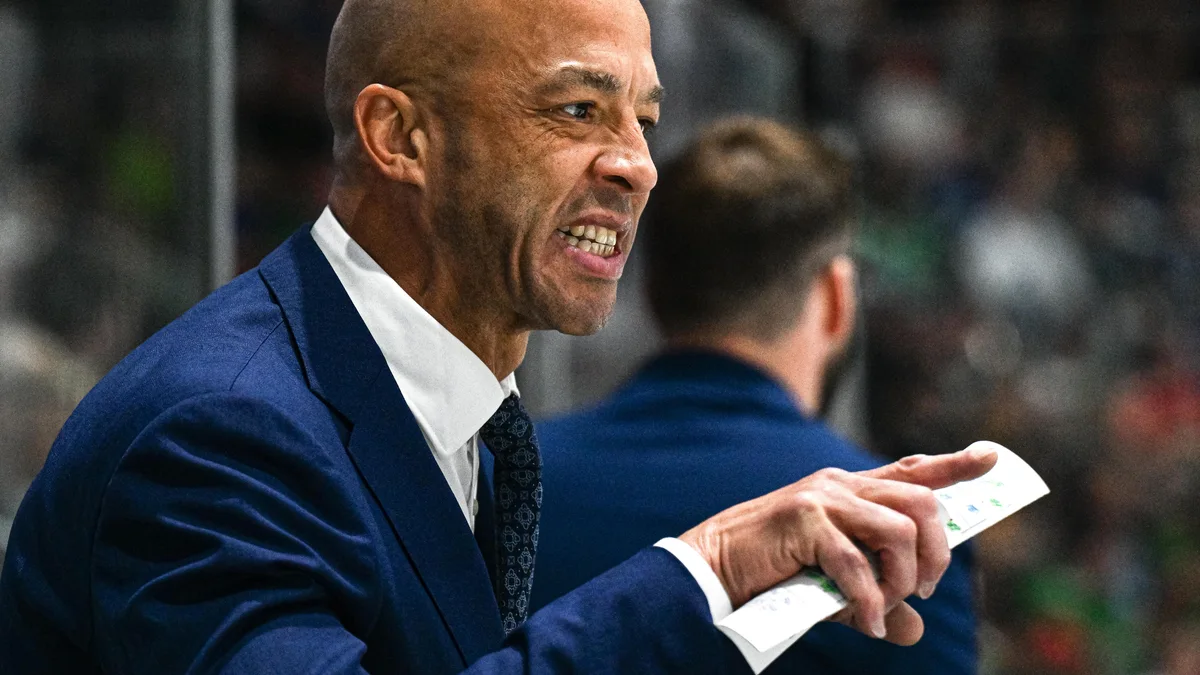
Photo: TheAHL / CC BY 4.0
The Vancouver Canucks posted a 1-on-1 clip with their new head coach and it did not sound like a typical coaching hire announcement. Manny Malhotra did not talk about making the playoffs. He did not promise a turnaround. He talked about attitude, about what the daily work actually looks like, and about what kind of players this franchise is going to build. For fans who have spent the past two years watching the Canucks fall apart in real time, the tone of that clip was the first piece of real information this offseason.
Tone is information. When a new head coach comes in after a 58-point season and the first thing he wants to talk about is culture and daily habits rather than results, it tells you what the organisation thinks actually went wrong.
A familiar name taking over at a fragile moment
Manny Malhotra is not a stranger to this city. The franchise’s 23rd head coach played for the Vancouver Canucks from 2010 to 2013, during the team’s most recent run to the Stanley Cup Final. He was not the highest-profile player on those rosters, but he was one of the most respected. A defensive specialist and face-off centre known for his work in the room, he is the kind of player coaches point to when explaining what professional character looks like in practice.
He is also Punjabi-Canadian, and that matters in Metro Vancouver in a way that goes beyond a footnote. The Lower Mainland has one of the largest Punjabi communities in Canada, concentrated in Surrey, Abbotsford, and the Fraser Valley. The Canucks draw fans from that entire geography. Malhotra’s appointment as what is believed to be the first head coach of South Asian descent in NHL history is a visible change that registers locally in a way it would not in most other NHL cities.
There is also a storyline that adds a layer no one fully anticipated. Malhotra’s son, Caleb, is widely considered one of the best centres available in the 2026 NHL Draft. The Vancouver Canucks hold the third-overall pick, with Round 1 on June 26. Malhotra said at the press conference that his household rule is clear: when talking hockey, his kids choose whether they want to speak to Dad or to the coach. That boundary will be tested publicly if the Canucks select Caleb at third overall.
None of this makes the hire automatically successful. But the familiarity Malhotra carries in Vancouver means fans already have a feeling about him that is based on something real, not just on a press release. That is a better starting point than most coaching hires offer.
The message: privilege, responsibility, and a reset
Shortly after the hire, Malhotra put out a message that used language you do not often hear from a new NHL head coach. The framing was not about systems or special teams or what the power play will look like. The core of it was about what the privilege of being a professional hockey player actually means, and about the responsibility that comes with it.
The Canucks’ own follow-up interview with Malhotra also leaned into that same theme, especially around development, daily improvement, and what he wants from the coaching staff.
In his words from the introductory press conference: the privilege of being an NHL hockey player is all the motivation and all the joy you need to come to the rink every day. The mindset he is building around is “be better than yesterday.” Patience, dedication, daily improvement over immediate gratification.
That language is a direct response to what Jim Rutherford described publicly as a locker room culture that had become “really bad.” Malhotra is not dancing around that. He is naming what kind of reset is required before any tactical work has a chance to matter. His first message was not a vision statement about championships. It was a statement about what kind of people this coaching staff expects to work with. That distinction is worth noting, because it sets the terms for how this season should be watched.
Why Ryan Johnson keeps talking about structure
General manager Ryan Johnson has used the word structure in almost every public statement since taking over. It is worth understanding what he means by it, because it shapes what fans will actually see on the ice.
Johnson said directly: “It’s very clear, I want him to implement what I know he does well and that’s structure within a game in three zones, absolute certainty from players what’s expected of them.” The goal is eliminating ambiguity. Players should not have to guess what the right play is in any zone. The system has a clear answer, and the job of practice is to make that answer automatic.
The other thing Johnson keeps returning to is this: “It’s not the 7 p.m. on Friday nights, it’s the 8 a.m. on Monday and the focus and attention on that. The games become easy.” That is a deliberate reframe of what fans typically evaluate. The scoreboard on game nights is a lagging indicator. The culture at 8 a.m. on a Monday is the leading one.
What this means for fans watching next season: the Canucks will probably lose games, some of them badly, while this structure takes hold. The question is not whether the team wins immediately. The question is whether they compete with coherence, whether they defend with intention, and whether the young players on the roster are visibly developing inside a system that gives them clarity. That is what a Malhotra-Johnson team looks like when it is working, based on what it produced in Abbotsford.
The Abbotsford connection matters
Both Manny Malhotra and Ryan Johnson built their coaching and management careers inside the Canucks’ own development system, specifically in Abbotsford. Johnson ran the Abbotsford Canucks as GM for five seasons. Malhotra coached the team in 2024-25, his first season as head coach. Together they ran an AHL team that won the Calder Cup.
That matters for two reasons. First, it is not a symbolic credential. A Calder Cup is a championship, and it was won with players who went through the Canucks’ pipeline. The development approach worked at that level. Second, it means the GM and head coach already know how to work together. They established that working relationship in Abbotsford under real pressure, and produced something that won.
For local BC hockey fans, the Abbotsford connection adds something else. The Abbotsford Canucks are a Fraser Valley team, drawing fans from Abbotsford, Chilliwack, Mission, and the surrounding area. The championship those fans watched in 2025 was built by the same people now running the NHL club. The development pipeline connecting Abbotsford to Rogers Arena is not theoretical. It has produced results already.
Players who came through that Abbotsford environment are now arriving at the NHL level with a shared understanding of what Malhotra expects. They have already been inside the system. That continuity is an underrated advantage in a rebuild.
What Canucks fans should watch next
The hire is done. The press conference is over. Here is where to actually put your attention.
Coaching staff. Malhotra’s assistant hires will tell you how he plans to fill gaps in his own NHL experience. A first-time NHL head coach’s staff reveals priorities. Watch for who handles penalty kill, who handles the power play, and whether anyone on the bench has logged significant NHL head coaching time.
The June 26-27 draft. The Canucks have ten picks, including four in the top 41. The third-overall pick and the Caleb Malhotra question will dominate the conversation, but picks four through ten matter as much for the long-term build. Watch what kind of player Ryan Johnson targets: size, skating, position, offensive upside versus defensive detail.
Pettersson and the veteran decisions. Management has indicated openness to moving players whose contracts do not fit the rebuild timeline. Whether Elias Pettersson is part of the next era or part of the next major trade is the most consequential roster question facing the franchise.
Training camp tone. The 8 a.m. Monday culture Johnson and Malhotra keep referencing will be on display at training camp in September. Watch how players respond, who earns ice time early, and whether the development language translates into visible changes in how the team defends and competes in the preseason.
Free agency. How Johnson uses the cap space he now has will signal whether this is a pure rebuild or a strategic hybrid. Adding one or two veteran players who fit Malhotra’s culture can accelerate development without compromising the long-term direction.
Bottom line
In Vancouver, a Canucks coaching hire carries weight beyond hockey strategy. The connection between this franchise and this city means the culture of the dressing room is always a public concern.
Jim Rutherford described the locker room as really bad. A 58-point season followed a Presidents’ Trophy-winning team. Vancouver traded Quinn Hughes to Minnesota. The organisation needed more than a new head coach. It needed a reset in what the dressing room believes about itself, what the daily work looks like, and what kind of people are being asked to show up at 8 a.m. on Mondays.
Manny Malhotra’s first message to this city was about privilege and responsibility, not promises. Ryan Johnson’s first message was about structure and unglamorous daily work. After Jim Rutherford moved into an advisory role, Daniel and Henrik Sedin were appointed co-presidents of hockey operations. They bring genuine fan trust and deep knowledge of what this franchise is capable of building.
The foundational pieces for a rebuild are in place. Whether they produce something worth watching in three years is the actual question. For now, the message is right. And in Vancouver, after two years of watching this franchise come apart, a message that sounds honest rather than promotional is itself a change worth noticing.
Travel details change. YVRBlog aims to use official sources and show the review date above. If something has changed, please contact us.