Oakridge Park's Time Out Market opens this week with 18 kitchens under one roof, including Via Tevere, Heritage Asian Eatery, DownLow Chicken, and Mee Bar. Here's who's worth finding first and when to go.
Time Out Market Oakridge is the food anchor of the Oakridge Park development at Cambie and 41st, the largest retail and public space opening Vancouver has had in years. The market spans roughly 51,000 square feet, with around 18 kitchens, three bars, close to 1,000 seats across two levels, and a licensed patio overlooking a public park. It is the Vancouver location of the Time Out Market chain, which began in Lisbon and now operates in several cities worldwide. For people who have been chasing specific food across the region for years, a roster of established kitchens in one building on the Canada Line is a genuine convenience. For visitors who do not know the local scene, it is a reasonable shortcut to some of the better cooking in the city, without the geography.
That last word matters. Vancouver is a city where the strongest food sits in clusters spread far apart, and where getting from Richmond to Commercial Drive to a North Shore market on the same evening is not a casual undertaking. The pitch of a food hall is that it removes that problem for one meal, with the trade-off being scale: smaller menus, counter service, and a different kind of evening than a sit-down restaurant. This guide covers what the market is, where it sits, how to get there, the kitchens worth knowing about, when to go, the common mistakes to avoid, and how it compares to the rest of the food landscape in Metro Vancouver.
Where It Sits Inside Oakridge Park
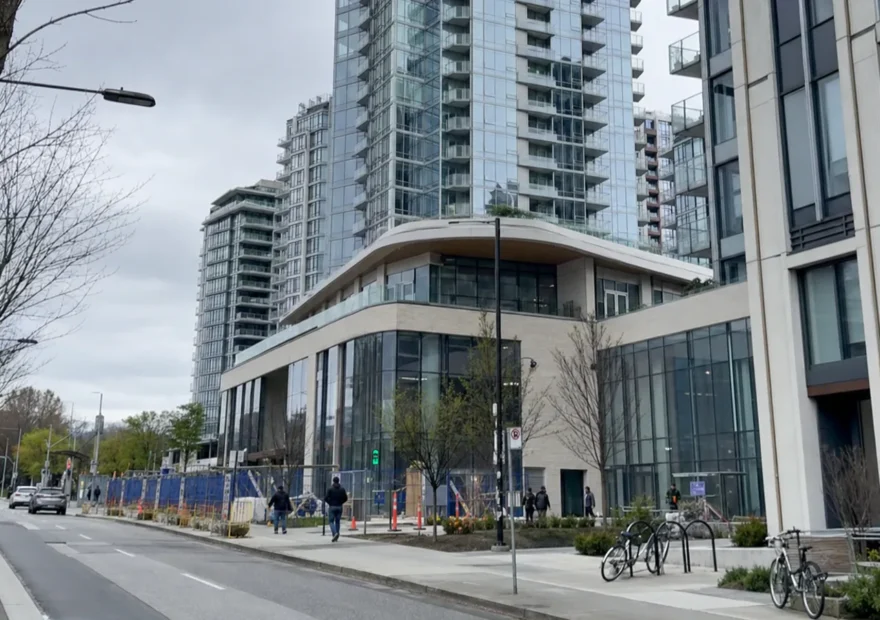
The address is 650 West 41st Avenue, on the same site as the former Oakridge Centre mall, at the corner of Cambie Street and 41st Avenue. Time Out Market is one piece of the wider Oakridge Park complex, which combines retail, restaurants, public space, a community centre, and residential towers above. For the bigger picture of the whole development, including stores, parking layout, and the public park itself, the Oakridge Park opening guide covers the rest of the site.
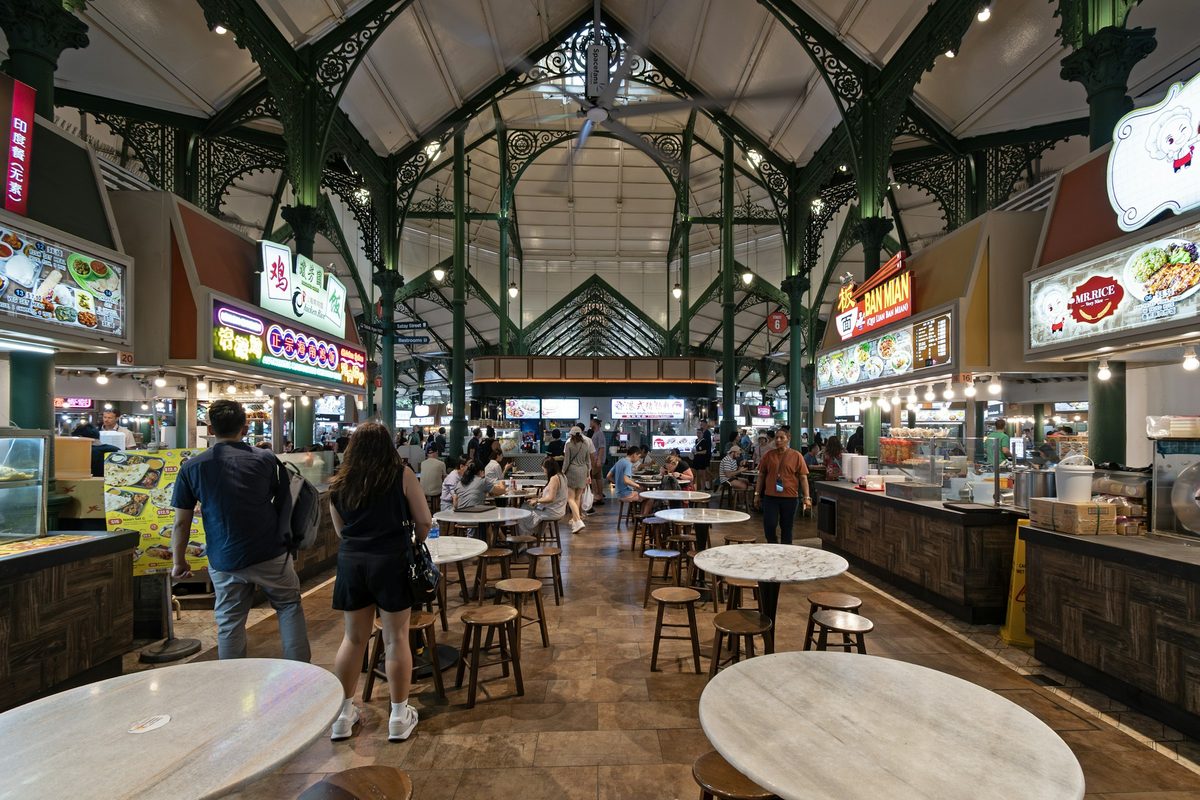
The food hall itself is laid out across two levels with a central seating core, a perimeter ring of kitchens, and bars at three positions across the floor plan. The licensed patio sits on the side that faces the park, which makes it the most pleasant section of the room on a warm day. The layout is designed for ordering at multiple counters and returning to a shared table, and finding a seat is generally easier than at a single popular restaurant on a Saturday night.
The format will be familiar to anyone who has visited a Time Out Market elsewhere, with the lineup built around Vancouver operators rather than imported brands.
Who This Place Actually Suits
Time Out Market Oakridge works well for several specific kinds of visitors.
It works for groups where everyone wants something different and no one wants to argue about a single restaurant. It works for families because the kitchens cover a wide range of cuisines and price points without committing to a long sit-down meal. It works for casual lunches where the format suits the hour, and for early-evening drinks where the patio and the bar program become the centre of the visit rather than the kitchens themselves.
It is also a reasonable place to introduce out-of-town guests to Vancouver food in one stop. For visitors with three days in the city, a Canada Line ride and one meal here cover several local kitchens at once. For visitors with a full week, the Richmond food districts and Commercial Drive both reward more time than a food hall can offer.
It is not the right choice for a destination-dining evening where the room itself is part of the experience, or where menu progression and table service matter as much as the food. For that kind of meal, a full-service restaurant somewhere else in the city is the better choice. The market is best understood as casual rather than formal, even when the kitchens inside it are serious about what they do.
How to Get There
Transit is the practical answer. The Canada Line stops directly at Oakridge–41st Station, with an underground path to the building; the walk takes under five minutes from the platform. From downtown, the trip is around 17 minutes from Waterfront and closer to 13 from Vancouver City Centre. From YVR, the same Canada Line runs directly into the city. The airport to downtown transit guide covers current fares and shoulder-hour timings, and TransLink publishes service notes.
If you drive, parking is available on the Oakridge Park lots. The development has offered free parking for the first three hours via the 44th and 45th Avenue entrances, which is the most reliable approach for a casual visit. Plan to be patient on weekends and busy evenings, when the broader mall fills the lots quickly. Confirm current parking terms on the official Oakridge Park site before relying on a specific rate.
Walking is also reasonable from nearby neighbourhoods. The market sits roughly 20 minutes on foot from the southern edge of Queen Elizabeth Park, a short walk from Cambie Village to the north, and close to the Marpole boundary to the south. The Cambie corridor itself runs as a mostly-protected cycling route between False Creek and Marine Drive, with bike parking on site.
The Kitchens Worth Finding First
The roster of kitchens has shifted over time as operators have moved in and out, which is normal for a food hall in its first year. Check the Time Out Market Vancouver site for the current lineup before you go. As of writing, the following kitchens are the ones worth knowing about.
Via Tevere
Via Tevere runs the most respected Neapolitan pizza operation in Vancouver. The Commercial Drive original is certified by the Associazione Verace Pizza Napoletana, a designation that reflects specific standards around dough, oven temperature, and ingredient sourcing rather than marketing. The Oakridge counter operates inside a food hall rather than a full restaurant, but the elements that make the pizza work are portable: the dough recipe, the oven, and the people running the station. If you have not eaten the original on the Drive, the Oakridge version is an accessible introduction.
Heritage Asian Eatery
Heritage built its following at its downtown Financial District location, where office workers have eaten char siu and roast duck rice at their desks for years. The Oakridge counter is the first time the city’s west side has easy access to what Heritage does. The roast duck rice is the order most people end up making a habit of, and the kitchen handles volume well.
Mee Bar
Mee Bar is the most interesting kitchen in the building for anyone who has not had Cambodian food in Vancouver before. Chef Nhung Nguyen runs the operation. The menu covers Mee Kola, a rice noodle bowl built around charcoal-grilled meat and seafood; Nom Banh Chok, a traditional Cambodian curry broth over noodles; and Cambodian-style chicken wings. A food hall is a reasonable context for trying something unfamiliar, since the commitment is one dish rather than a full table.
DownLow Chicken
DownLow Chicken has been building a Vancouver following since the East Side counter days. Nashville-style hot chicken, done carefully, with a heat scale the staff actually respects when you order. The Oakridge counter is the most accessible location DL Chicken has run.
Kishimoto
Kishimoto is a Commercial Drive sushi institution that has held a steady reputation for years on consistency and ingredient quality rather than promotion. The food-hall setting is a different room than the original, but the product holds steady. For a quick lunch in the market, it remains one of the more reliable choices.
MaKaam
MaKaam comes from Nutcha Phanthoupheng, who also runs Baan Lao on Fraser Street, one of the quieter, consistently strong Thai operations in the city. The food-hall counterpart deserves attention from anyone who has eaten at Baan Lao.
Feenie’s
Feenie’s brings back the Rob Feenie name in a casual format, built for quick comfort dishes rather than fine dining. Vendor lineups in a food hall can change with time, so the current Feenie’s menu is best confirmed on the official site before planning a visit around it.
The roster also includes additional concepts that move in and out. Any vendor count or lineup specifics will shift over the life of the market. The official market site is the right place to confirm the current lineup before planning a visit around a specific kitchen.
The Bars and the Patio
Three bars sit across the floor plan: a cocktail-led bar with seasonal house drinks, a wine-forward bar carrying British Columbia bottles alongside European selections, and a main floor bar for beer and casual cocktails to go with a plate from one of the kitchens.
The licensed patio is where most people end up once they have food and a drink in hand. It sits on the park side of the building, faces a public green space, and is pet-friendly. On a warm afternoon or evening, the patio is generally the reason to stay longer than planned. On a cold or wet day, the interior seating around the central core is the better choice.
What a Food Hall Actually Does Well, and Where It Falls Short
A food hall is not a restaurant, even when the kitchens inside it are run by serious operators. Setting expectations correctly is the difference between a satisfying visit and a frustrating one.
What the format does well: it removes the geography problem. You can eat from four kitchens that would otherwise require four neighbourhoods. It lowers the commitment for trying something unfamiliar, since the price of curiosity is one dish rather than a whole meal. It works for groups where everyone has a different preference, since each person can order separately and meet at the table. It runs well at lunch, where the counter format suits a 45-minute window, and it handles a casual evening where a meal and a drink at the bar are the plan rather than a long sit-down.
What the format does not do: it does not run a multi-course meal at the same pace as a full restaurant. Dishes that need to arrive immediately from the kitchen can lose a step on the walk back to a table. There is no bread service, no wine pairing, and none of the attentions of a host or a sommelier. The room is louder than most restaurants and the lighting is brighter. None of that is a problem if you treat the visit as casual. All of it becomes one if you expect a destination-dining evening.
The kitchens are good, in some cases excellent. The room around them is a food hall. Both things are true at once, and the visit works best when both are accepted.
When to Go
Weekday lunches are quieter than weekend afternoons. Tuesday or Wednesday around noon is generally the easiest window to try multiple kitchens without queuing at each one. Saturday between roughly 12:30 and 7:30 is the busy stretch, with lines forming at the kitchens that have had the most press. If you want one specific kitchen and a quick seat, the early lunch slot is the dependable option.
Evenings shift the centre of gravity to the bars. The cocktail bar fills first, the patio holds longer in good weather, and the main floor bar handles spillover. For a quiet drink before a meal, arriving by 5:30 helps. After 7:30 on a weekend, expect to wait or stand.
The market publishes its hours on the official site, and those hours can change around holidays or special events. Reservations are not generally part of the model; the floor runs on walk-ins.
Common Mistakes to Avoid
Arriving on a Saturday afternoon and insisting on a seat at Via Tevere or Heritage at peak service is the most common one. Both counters run at capacity on weekends; the best experience goes to visitors who come off-peak or stay flexible about which kitchen they eat at first.
Underestimating travel time on a major event evening is the second. The Canada Line is reliable but gets crowded on big-event days. If a BC Place game, a major concert, or a city-wide event is on the calendar, leave more time than usual.
Treating the market as a single-restaurant evening is the third. The format rewards moving between counters; order from at least two kitchens and share.
Driving on a busy evening without checking parking is the fourth. The lots fill on Friday and Saturday nights, and the difference between a quick walk in from the train and a 15-minute search for a stall is significant. Skipping the patio in good weather is the fifth: the park-facing seating is one of the better casual outdoor spaces on the Cambie corridor between May and September, and it is the main reason to stay longer than planned.
How It Compares to Other Vancouver Food Places
Granville Island Public Market is the closest historical comparison, and it is a different experience. Granville Island runs as a working market with produce, butchers, fish, flowers, and a smaller prepared-food section, with an open-air, water-adjacent atmosphere oriented toward shopping as much as eating. For the full route, including the ferry across False Creek, see the Kitsilano and Granville Island ferry-route guide. As a casual lunch stop combined with a walk, Granville Island works well; as a multi-kitchen tasting in one room, it does not.
Lonsdale Quay Market on the North Shore is smaller and lower-key, and pairs naturally with a SeaBus ride and a Burrard Inlet walk. The North Shore guide covers the wider area.
Time Out Market sits in a different category from district eating. For depth in one cuisine, the Asian food districts of Richmond go deeper than any food hall can match. Commercial Drive runs longer as a single walking route. Oakridge is the shortest and densest format, which is both its appeal and its limit. For the regional picture, the Metro Vancouver food and drink guide is the broader piece.
The Oakridge and Cambie Context Around It
The Canada Line opened the Cambie corridor to fast transit from downtown and the airport, and the residential build-out around 41st has added density and street-level retail. The stretch between roughly 25th and 49th Avenues is now a walkable corridor with cafés, smaller restaurants, parks, and shops, with Oakridge Park as the southern anchor.
Queen Elizabeth Park sits roughly 20 minutes on foot to the north and is one of the higher elevation points in the city, with views back toward downtown on a clear day. South of 41st, Marpole takes over with its own quieter mix of restaurants and shops closer to the river. The Cambie corridor and Queen Elizabeth Park combine into a reasonable half-day route, with Oakridge Park as the food and shopping anchor and Queen Elizabeth Park as the walking destination before or after.
FAQ
Is Time Out Market Oakridge worth visiting from outside Vancouver?
For visitors with limited time and a Canada Line transit pass, the market is a reasonable way to sample several Vancouver kitchens in one stop. For visitors with a full week in the region, it is a useful stop but not the deepest single food experience the city offers.
Is the market family-friendly?
Yes. Everyone can order from a different kitchen and meet at the same table, the patio is pet-friendly, and highchairs are typically available. Menus vary in how kid-oriented they are kitchen by kitchen.
Are reservations possible?
The market itself runs on walk-in counter service. Some sit-down operations elsewhere within the broader Oakridge Park development may take reservations separately. For groups larger than six, arriving outside peak hours is the practical approach.
Where is the closest SkyTrain station?
Oakridge–41st on the Canada Line is directly connected by an underground passage to the building. The market is licensed; alcohol service follows provincial rules and the venue’s published schedule, so confirm on the official site if planning around a specific drink time.
Is there parking on site?
Yes. Free parking for the first three hours has been available via the 44th and 45th Avenue entrances. Parking terms can change; confirm current rates on the official Oakridge Park site before relying on a specific rate.
Is the patio dog-friendly?
Yes. Dogs on leash are welcome on the patio, not inside the food hall itself.
Is the market accessible?
Yes. The building is step-free, with elevators between levels, accessible seating throughout, and elevator access from the Canada Line platform to the underground passage that connects to the market.
When are the quietest times to visit?
Tuesday and Wednesday lunches around noon are generally the easiest. Weekday evenings before 6:00 are also workable. Weekends between 12:30 and 7:30 are the busiest stretch.
Closing
Time Out Market Oakridge is one of the more interesting food openings the city has had in recent years, and the Canada Line connection makes it accessible from across the region. The value is the same for visitors and locals: several established Vancouver kitchens in one room, casual counter service, a real bar program, and a park-facing patio that holds up on the right kind of afternoon. The format rewards repeat visits. For city-level tourism context, Destination Vancouver is the official source.
Travel details change. YVRBlog aims to use official sources and show the review date above. If something has changed, please contact us.