Vancouver is hosting World Cup matches for the first time at the men’s level. It’s a city that most international visitors have heard of — mountains, ocean, Pacific Rim food culture — but the reality on the ground takes some orientation to get right. This is the guide for first-timers who have a match ticket and a few days in the city.
Airport to City: The Canada Line
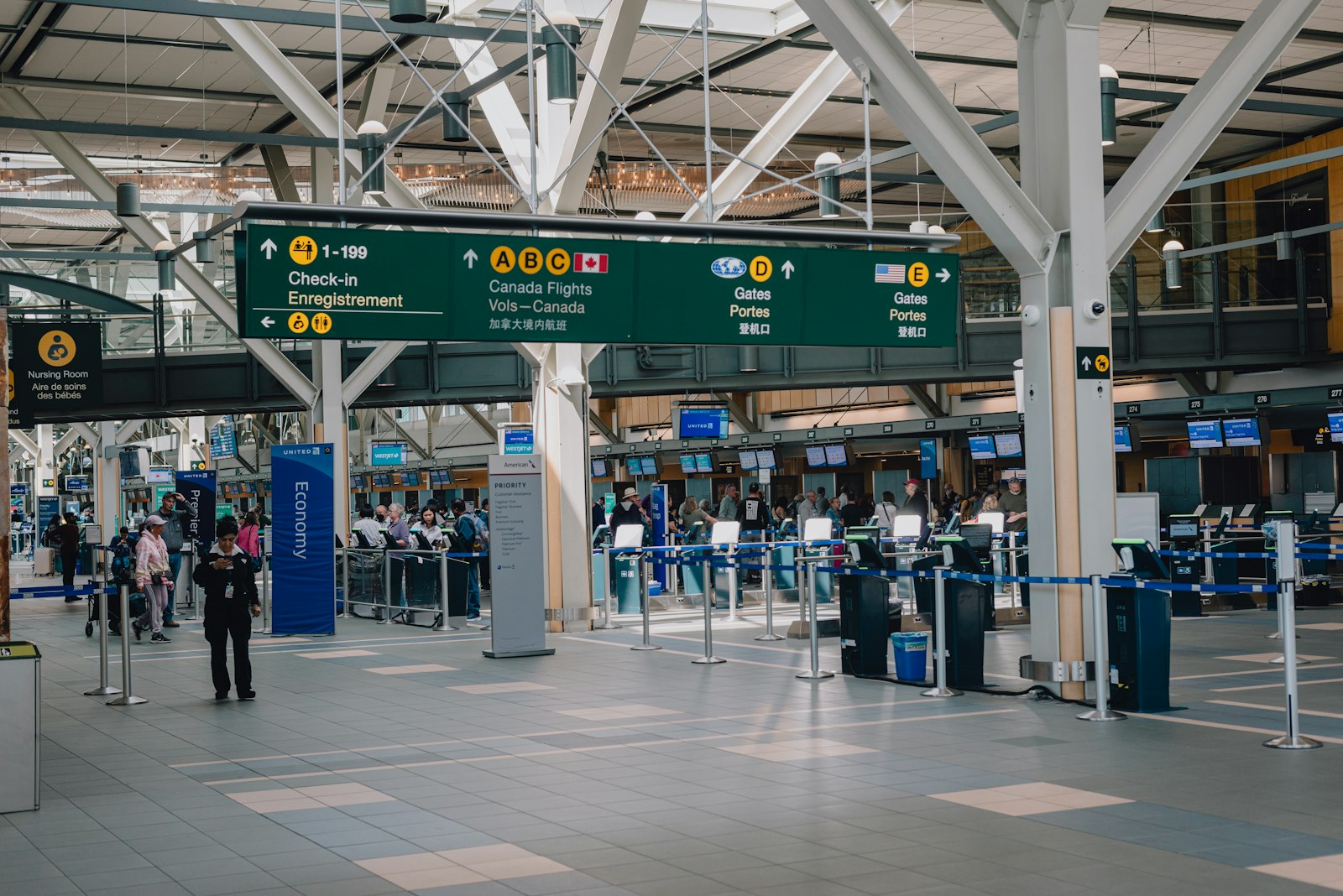
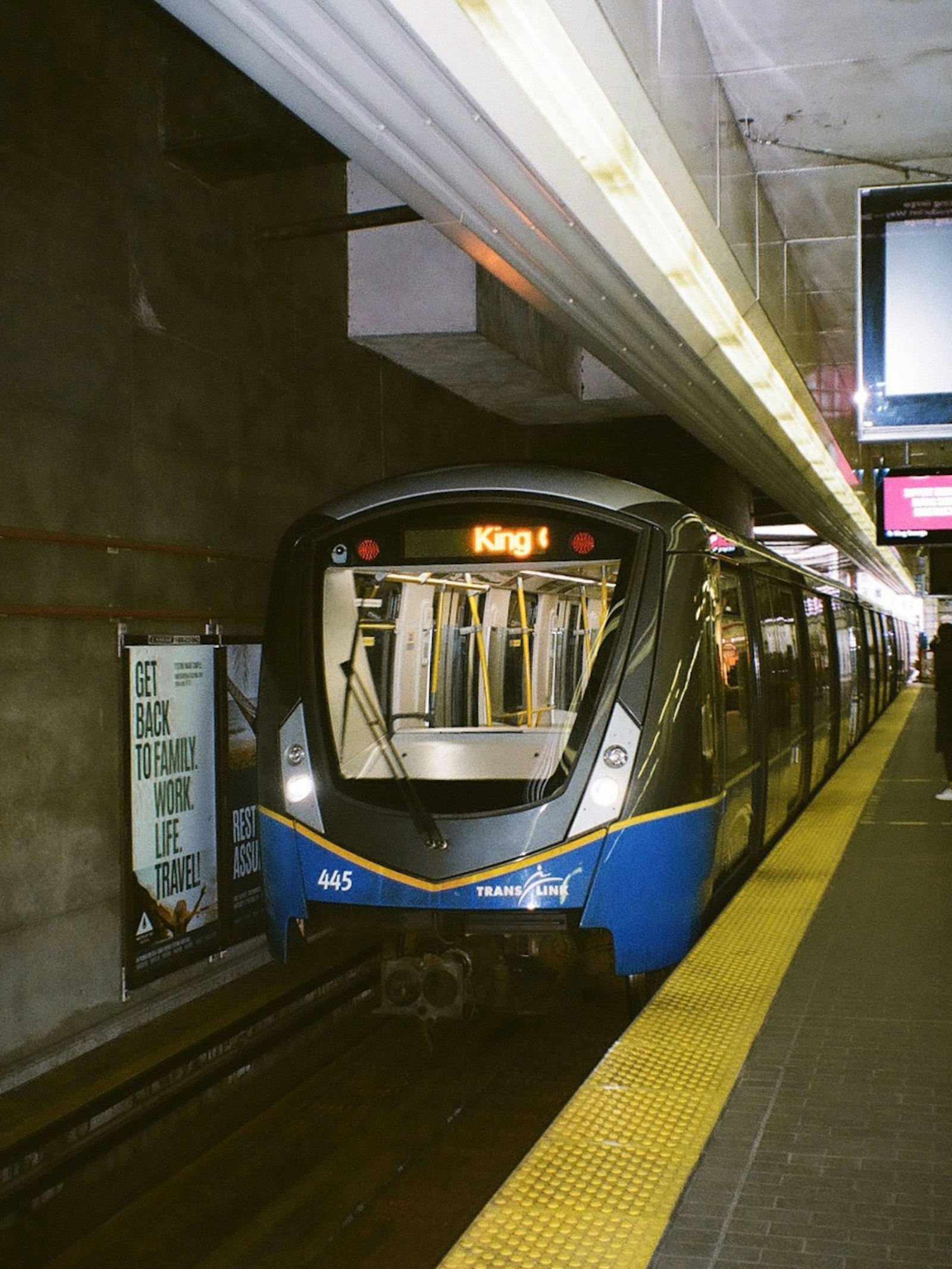
YVR (Vancouver International Airport) is on Sea Island in Richmond, connected to the city by the Canada Line SkyTrain. Trains run frequently from the airport terminal to downtown Vancouver (check the TransLink schedule for current times). The ride to Waterfront Station (downtown end of the line) takes approximately 25-30 minutes. Cost is a single-zone fare on a Compass Card (purchased at the airport station — get one on arrival, it’s reusable and faster than buying single tickets; check TransLink’s site for current fares as prices change).
Taxis and rideshares (Uber, Lyft) from the airport to downtown typically cost $35-50+ CAD depending on traffic and surge pricing — confirm the fare estimate before booking. Reasonable if you have significant luggage. The Canada Line is simpler for most arrivals.
How the City Is Laid Out
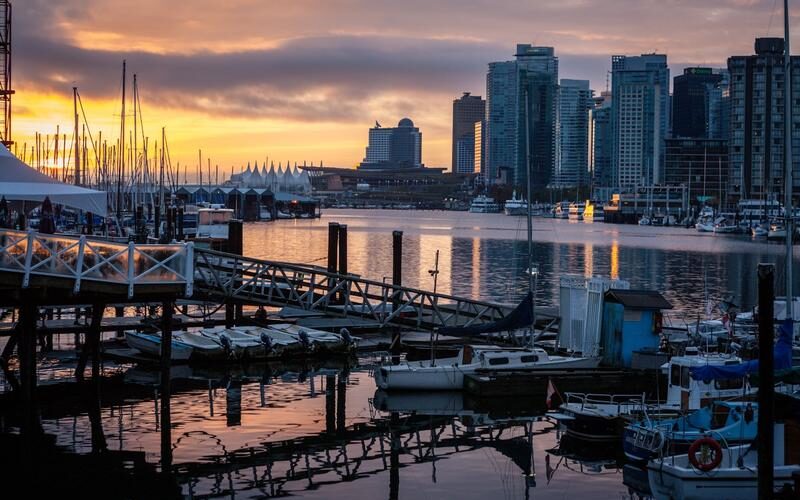
Vancouver proper sits on a peninsula bounded by English Bay to the west, Burrard Inlet to the north, and False Creek to the south. The downtown core is at the tip of this peninsula. BC Place is on the south edge of downtown at the east end of False Creek. Stanley Park is at the northwest tip.
Across Burrard Inlet to the north (accessible by SeaBus or Lions Gate Bridge) is North Vancouver and West Vancouver — the mountain side. Across the inlet to the east is Burnaby, then Coquitlam, Port Moody. South of Vancouver (accessible by Canada Line) is Richmond. The region spreads further east through Surrey, Langley, Maple Ridge — commuter territory that most visitors won’t need.
The SkyTrain connects the airport, downtown, Burnaby, New Westminster, Surrey, Richmond, and Coquitlam. It’s clean, frequent, and predictable. Using it is both cheaper and faster than driving for most city movement during the tournament.
Currency, Cost, and Practical Basics
Currency is Canadian dollars (CAD). Expect roughly: coffee $4-6 CAD, pub meal $20-30 CAD, mid-range restaurant dinner $50-80 CAD per person with drinks. SkyTrain fares vary by zone — check TransLink’s current fare schedule before travelling. Credit cards are accepted everywhere. Tipping at restaurants is expected: 15-20% is standard, 18-20% is generous.
Tap water from the tap is safe and good — Vancouver’s water comes from three mountain reservoirs and is consistently clean. No need to buy bottled water for daily consumption.
The city is relatively safe by international standards. Standard urban awareness applies; avoid leaving valuables visible in parked cars; the Downtown Eastside area (east of Gastown toward the Carnegie Centre) has visible street-level poverty and drug use — visitors who walk east past Carrall Street should be aware of the neighbourhood character without treating it as inherently dangerous to transit through.
Food: Where to Eat and What to Eat
Vancouver’s food culture is defined by its Pacific Rim position. Chinese, Japanese, Korean, Vietnamese, Indian, and Taiwanese food are all represented at a level that is genuinely competitive with major Asian cities — not a tourist approximation. The best food in the city is often in the suburbs: Richmond for Chinese food (specifically the Aberdeen Centre area, Canada Line to Aberdeen station), Surrey for South Asian cuisine.
In the downtown area: Gastown has good modern Pacific Northwest cooking. Chinatown (adjacent to BC Place) has cheap noodles, dim sum, and bakeries. The West End along Davie and Denman has casual international options — Japanese, Vietnamese, pizza — that work for quick meals between activities.
Salmon is the local protein worth ordering — wild Pacific salmon from BC is genuinely different from farmed or Atlantic salmon. Spot prawns (May-July season) from the local fleet are the other specific local product worth trying when available. Granville Island Public Market is the best place to find both.
What to Do Between Matches
Stanley Park: 400 hectares of forested park on the northwest tip of the downtown peninsula. The 9km seawall loop is the iconic walk — flat, waterfront, accessible from anywhere in downtown. Free to enter.
Granville Island: a small peninsula under the Granville Bridge with a public market, artist studios, and the first BC craft brewery (Granville Island Brewing). Accessible by small ferry from downtown (Aquabus from Hornby Street dock, ~6 minutes). Best on weekday mornings when the market is less crowded.
Gastown: the original commercial district — cobblestone streets, 1880s heritage architecture, good restaurants, a steam clock that whistles on the quarter hour. 15-minute walk from downtown, walking distance from BC Place. Worth an hour of wandering.
North Shore mountains: Grouse Mountain has a gondola to the 1,231m summit with views over the city. Cypress Mountain has hiking accessible without lift tickets. Lynn Canyon is free and has a suspension bridge and swimming holes. All accessible by transit from downtown — SeaBus to North Vancouver, then bus.
Weather in June and Early July
Vancouver in late June and early July is generally warm and dry. Average highs are 20-24°C, with longer days (sunset around 9:15pm at solstice). Rain is possible — the city doesn’t have a full dry season like Southern California — but prolonged rainy stretches in June/July are unusual. A light jacket is always worth having for evenings. The late matches at 8-9pm PT can be cool by match end.
The city is genuinely at its best in this window. The mountains are clear on most days, the patios are full, and the days are long enough that a full evening is available after even a 3pm kickoff. For visiting football fans, there are worse places to be in the world this summer.
YVRBlog is an independent local guide and is not affiliated with FIFA, the FIFA World Cup, BC Place, the City of Vancouver, or any official event organizer. Always check official sources before making plans.