Burke Mountain trails, Rocky Point Park along the inlet, and Port Coquitlam's PoCo Trail — the eastern edge of Metro Vancouver at its best.
The Tri-Cities — Coquitlam, Port Coquitlam, and Port Moody — are often treated as one block on the eastern edge of Metro Vancouver, which is a bit lazy. They’re actually three distinct places that happen to share geography and a SkyTrain line. Here’s what’s actually worth your time in each, without the fluff.
Port Moody: Rocky Point, the Shoreline Trail, and Brewers Row
Of the three cities, Port Moody is the one that pulls people in from across the region, and it does it with a compact strip of waterfront and main street near the SkyTrain. Most of what makes it worth the trip sits within a fifteen-minute walk: Rocky Point Park on the inlet, the Shoreline Trail along the water, and the cluster of restaurants, cafés, and breweries on Murray Street.
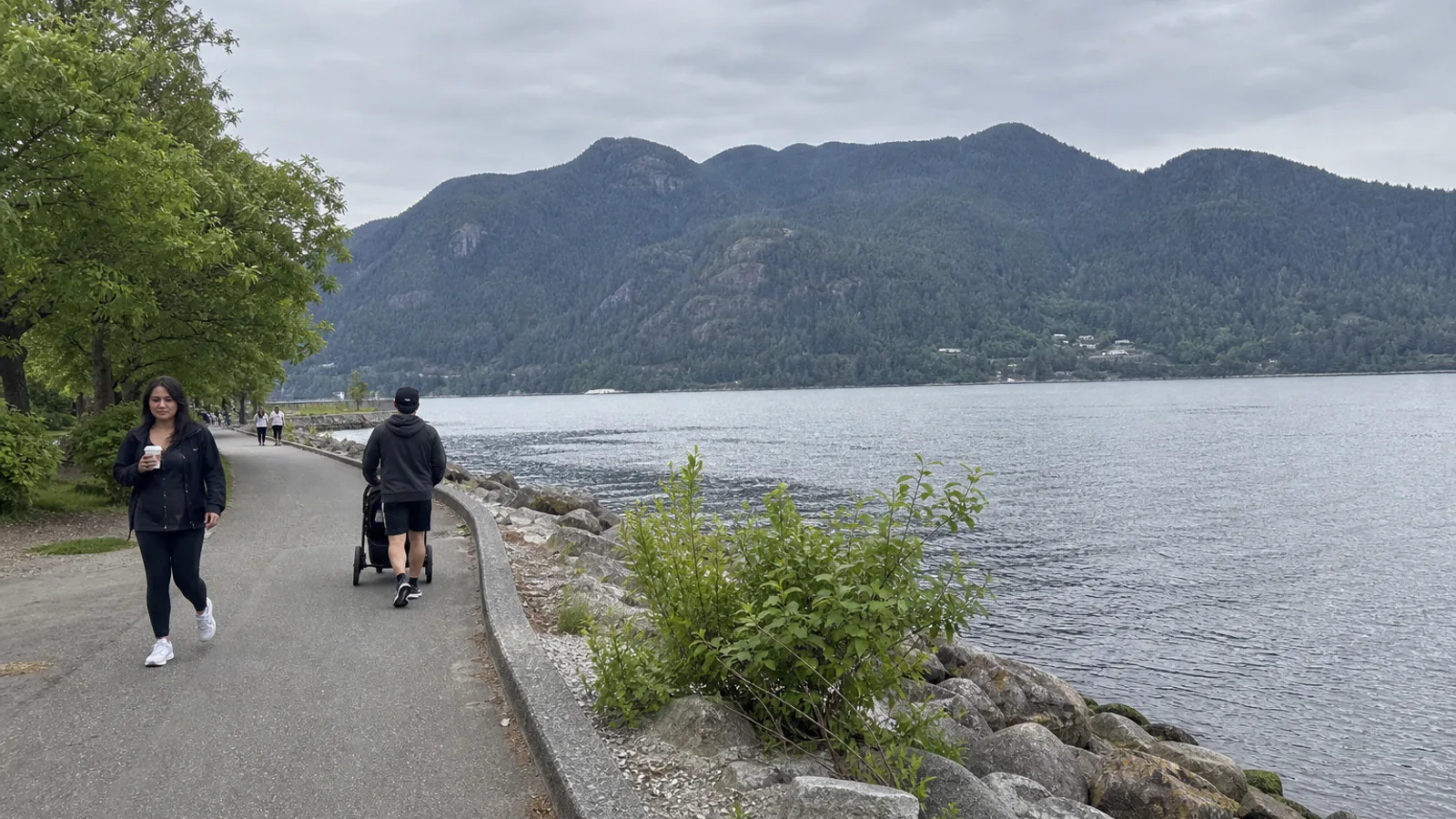
Rocky Point Park sits at the east end of Burrard Inlet, with views across to Belcarra and Indian Arm. There’s a fishing pier, a kayak and paddleboard launch in summer, and a spray park and playground that make it a straightforward stop with kids. Low tide is the underrated version — the mudflats draw shorebirds and the exposed shoreline opens the whole space up. From the park, the Shoreline Trail runs along the inlet toward Old Orchard Park: flat, partly forested, with mountain views across the water and the occasional heron in the shallows. It’s one of the easier walks in the region and the main reason to come even if you never set foot in a tasting room.
Brewers Row on Murray Street is the other half of Port Moody’s reputation — a cluster of breweries, including Moody Ales, Yellow Dog, Twin Sails, Parkside, and Northpaw, close enough together to walk between. Locals treat it as a neighbourhood amenity rather than a tourist attraction, and the tasting rooms vary enough to suit different groups: some are more food-forward, while others are smaller or rely on nearby food trucks. It works best as part of an afternoon rather than the whole point of one.
The Murray Street and St. Johns corridor has filled in around that foot traffic with independent restaurants, cafés, and specialty food shops, which makes it a pleasant main street to wander even on a quiet weekday — and an easy place to eat whether or not beer is part of the plan. A practical sequence for a sunny afternoon: walk the Shoreline Trail, reach Rocky Point for the inlet view as the light drops, then double back to Murray Street for dinner or a drink. Late spring and early fall are the sweet spot — fewer crowds than midsummer, and the inlet light through September and October is some of the best of the year.
Moody Centre SkyTrain station is on the Millennium Line, about 40 to 45 minutes from downtown Vancouver with a transfer to the Expo Line at Commercial–Broadway — close enough to the park and the breweries that you can leave the car at home. Inlet Centre, one stop east, reaches some of the same area, and there are bus connections from Phibbs Exchange if you’re coming from the North Shore. Parking near Rocky Point fills fast on warm weekends, so transit is often the easier call anyway.
Coquitlam: Burke Mountain and the Main Strip
Minnekhada Regional Park is the first thing to know about Coquitlam — 213 hectares of trails, marshland, and ridge walks above Pitt River with views east to the mountains. It’s a BC Parks gem that somehow stays under the radar. The lodge trail loop is about 6km and well-marked.
The Burke Mountain area is developing fast with new trails being built as the neighbourhood grows. The existing trail network is already solid — Woodland Walk is family-friendly, while the upper sections toward the summit get more serious. Check BC Trails for current conditions before heading up.
Downtown Coquitlam along Austin Avenue and Lougheed Highway has the commercial infrastructure you’d expect — major malls, grocery anchors, chain restaurants. Coquitlam Centre is the main mall. For better food, the area around Lincoln and Pinetree has grown into a real walkable patch with Korean restaurants, independent cafés, and a few spots worth sitting down in.
Port Coquitlam: The Underrated One
PoCo (as locals call it) doesn’t get much attention, which honestly keeps it pleasant. The Traboulay PoCo Trail is a 25km loop trail around the entire city — flat, well-maintained, partly paved, and largely follows the Coquitlam and Pitt rivers. You can do sections of it rather than the full loop. The stretch along the Pitt River through Pitt River Regional Greenway is particularly good.
The Port Coquitlam Heritage and Cultural Centre on McAllister has local history exhibits. Gates Park on the Coquitlam River is a reliable family spot with good river access. The PoCo Trail is really the reason to come though — it’s a legitimate recreational asset that most people outside the area have never heard of.
Getting Between the Three
The Evergreen Extension of the Millennium Line runs through all three cities. Moody Centre, Inlet Centre, Coquitlam Central, Lincoln, Burquitlam are the main stations worth knowing. Port Coquitlam is the only one not directly on SkyTrain — it’s served by West Coast Express (commuter rail to Vancouver) and bus connections from Coquitlam Central.
Driving between the three is quick — it’s tight geography. The challenge is parking near the popular spots in summer, particularly at Rocky Point. Go early or take transit if that’s your destination.
Where to Eat Across the Tri-Cities
- Port Moody, Murray Street area — the brewery strip, plus a few solid restaurants near the SkyTrain
- Coquitlam, Lincoln area — Korean restaurants, ramen, cafés — better than its reputation suggests
- Coquitlam, Lougheed strip — dense with options, mostly Asian cuisine, good value
- Port Coquitlam, Shaughnessy strip — the main commercial stretch with a decent range of local spots
Who the Tri-Cities Are Good For
Honestly? The Tri-Cities are great if you want outdoor access without the Whistler drive, beer without the Vancouver prices, and a bit of regional character that Metro Vancouver’s west side has mostly paved over. It’s not a day trip that competes with Squamish or the Island — it’s a day trip for people who want to see how Metro Vancouver actually lives outside the city limits.
If you want to go deeper on Coquitlam specifically: the Coquitlam neighbourhood guide covers Burke Mountain, Minnekhada, and the main strips in more detail.
Travel details change. YVRBlog aims to use official sources and show the review date above. If something has changed, please contact us.