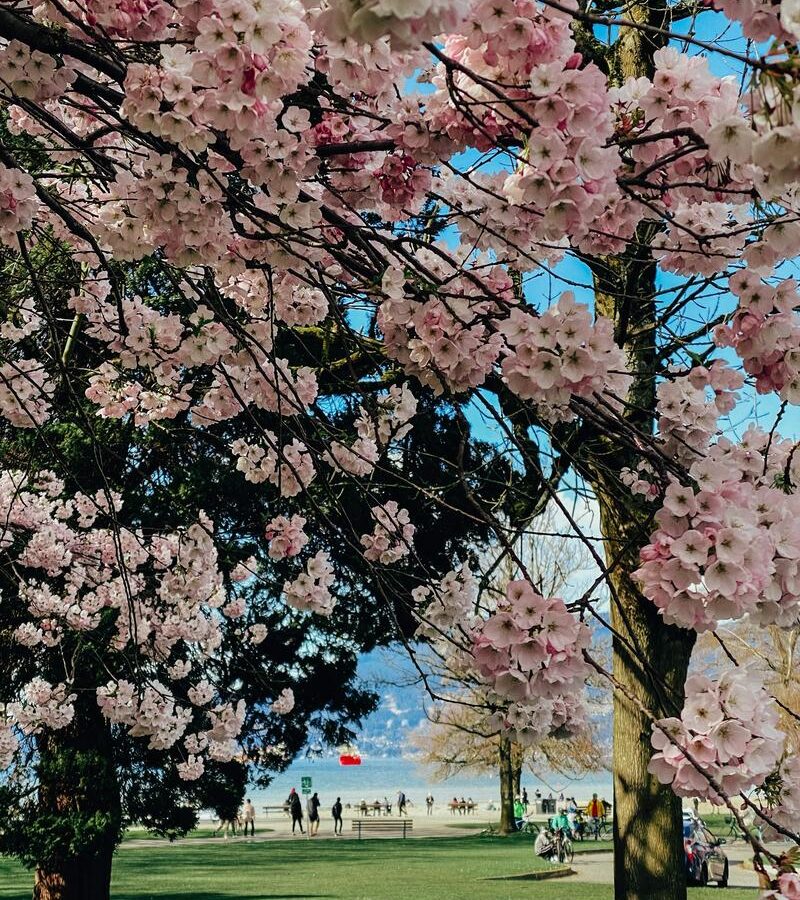
Metro Vancouver’s parks are genuinely better in spring than in summer — and most people miss it by waiting for the warmer months. The cherry blossoms peak in April, the rhododendrons in May. The trails are wet but passable. The crowds are a fraction of what they’ll be. And the particular quality of green that the Pacific Northwest produces in spring — saturated, almost electric, from soil moisture and new growth — makes any forested walk feel different from the rest of the year. These are the parks that earn their reputation specifically in spring.
Garry Point Park, Steveston: Spring on the Delta
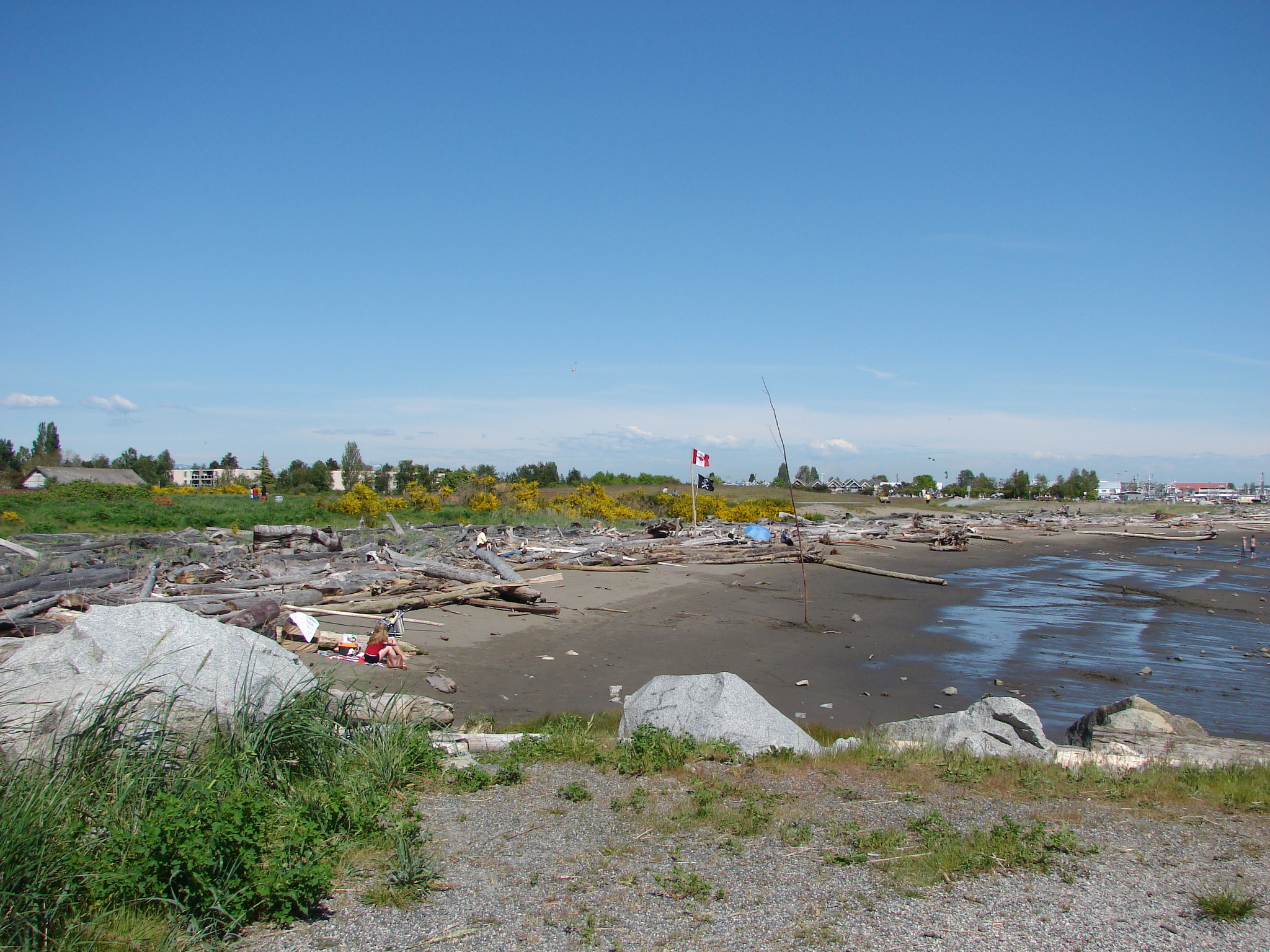
Garry Point Park at the far southwestern tip of Richmond is the spring park recommendation that most people outside Steveston have never acted on. The park sits at the mouth of the Fraser River where it meets the Strait of Georgia — the view west is of the Gulf Islands on clear days, with nothing between you and the horizon but water. In spring the Japanese garden at the park’s entrance is at its best, the kite-flyers who use the open grass are back, and the fishing boats that work the Fraser mouth are visible from the waterfront.
The spring light at Garry Point in late afternoon is the particular reward — facing west with the water and the islands and the sun going down, it’s a genuinely dramatic place to end a day. Get here by taking the Canada Line to Bridgeport, then bus 410 to Steveston, then walking south through the village to the park.
Queen Elizabeth Park: The Quarry Garden in Bloom
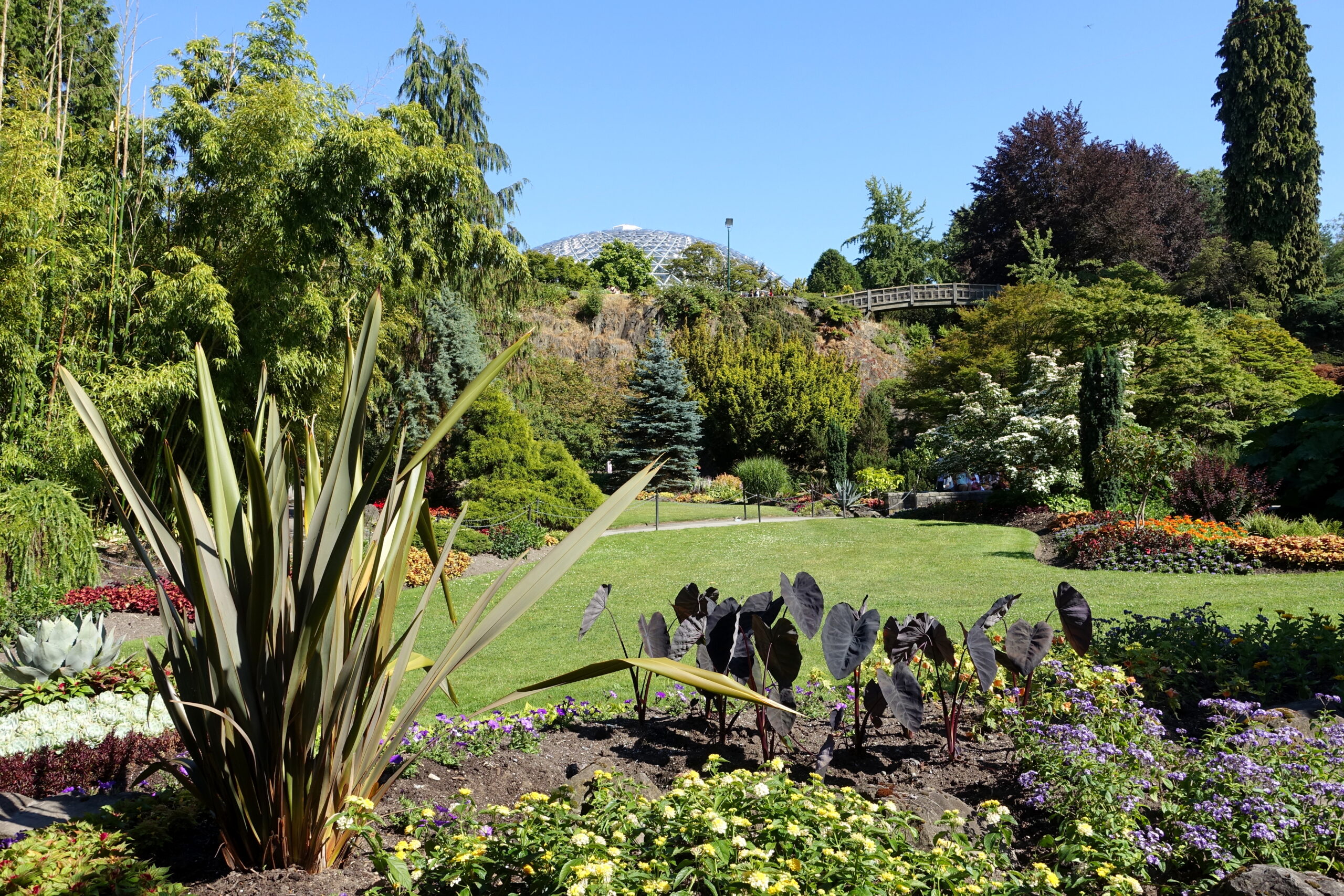
The spring flowers in Queen Elizabeth Park‘s sunken quarry garden are some of the most accessible in the city. The garden is planted for seasonal succession — early spring bulbs give way to flowering trees and then the summer perennials — and the spring sequence is the best of the year. The magnolias that line the upper paths bloom before the leaves open, creating the kind of flowering-tree spectacle that makes people photograph the same tree forty times.
The park is free to enter, and the Bloedel Conservatory at the summit is a genuine rainy-day option if the weather changes mid-visit. On a clear spring morning, the view from the summit across the city to the North Shore mountains justifies the short walk up regardless of the flowers.
Pacific Spirit Regional Park: Old Forest in Spring
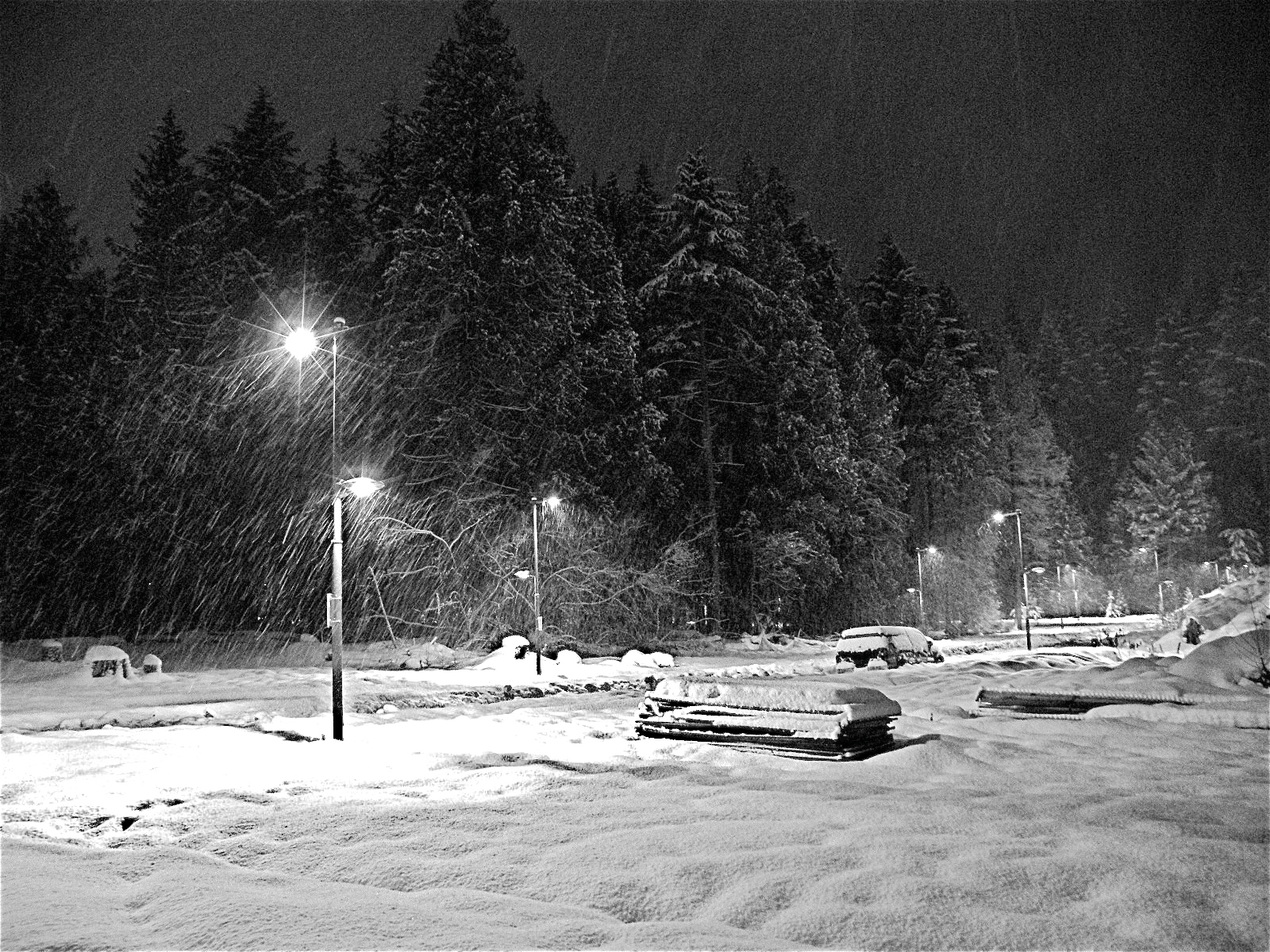
Pacific Spirit Regional Park at UBC covers 763 hectares of second-growth coastal forest at the tip of Point Grey — the largest park in Metro Vancouver proper, and one of the least known outside the west side of the city. In spring the interior forest is quiet, the trail network runs through old-growth understory that the Douglas fir canopy above has protected from development, and the creeks that drain toward the Strait of Georgia run clearly through the ravines.
The park is free and has almost no facilities — no viewpoints, no visitor centre, no curated experience. It’s a forest park, best accessed from the UBC campus edges or from 16th Avenue. On a spring morning with the birds back and the undergrowth emerging, that simplicity is exactly right. If what you want is an old-growth feel without driving to the mountains, Pacific Spirit is the answer.
Minnekhada Regional Park, Coquitlam: Worth the Drive
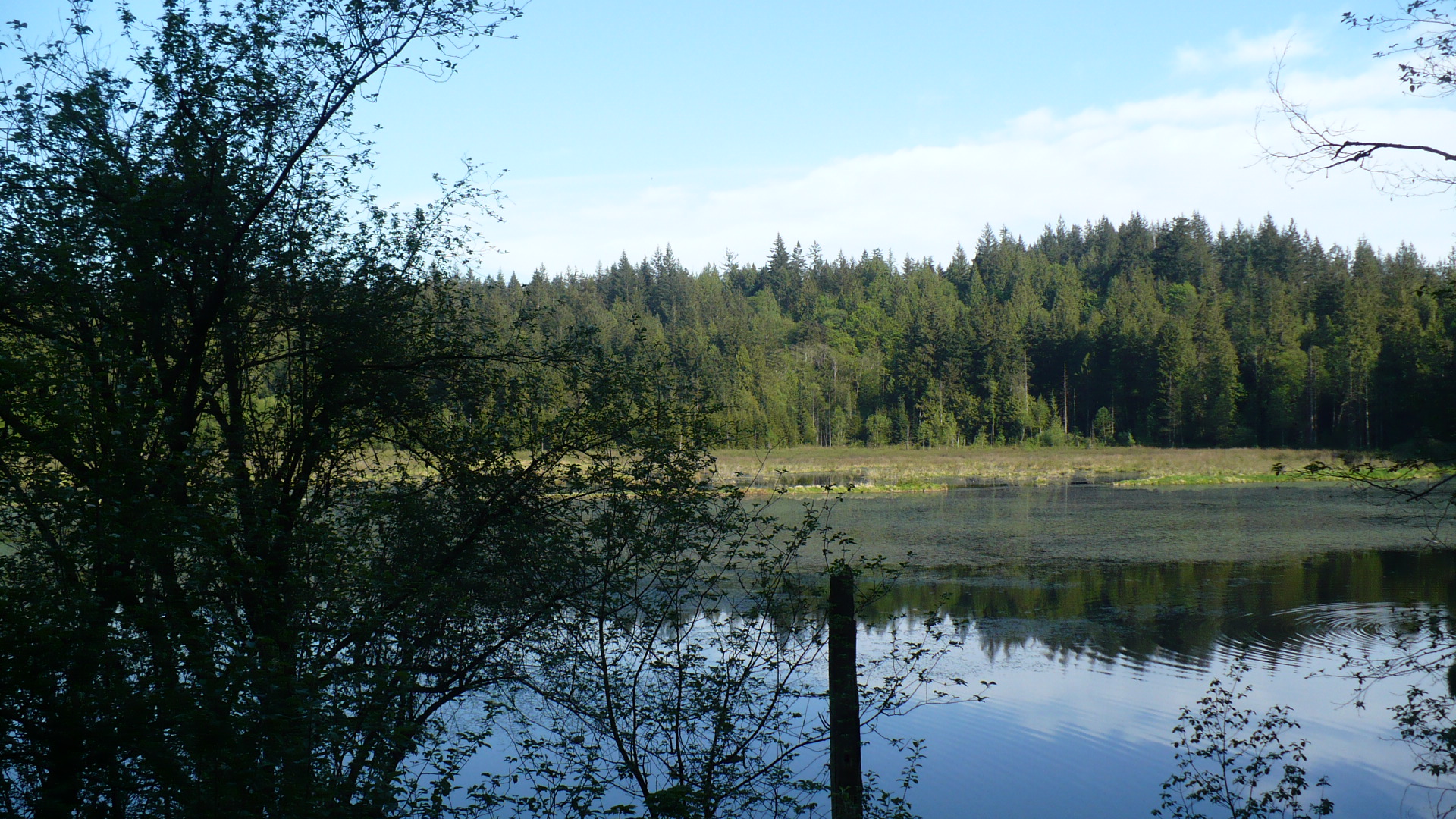
Minnekhada Regional Park in northeast Coquitlam is the spring destination that regional residents should be using more than they are. The park’s 213 hectares include a lodge trail that goes up to a ridge overlooking the Pitt River and marshlands below — in spring the marsh is full of waterfowl and the view east to the mountains is the sharpest of the year. Painted turtles sun on logs in the lower marsh. Great blue herons stand motionless in the shallows. The trail is about 6km with moderate elevation and takes two hours comfortably.
The park requires a car or a specific bus from Coquitlam. It’s worth the logistics — Minnekhada is one of the most rewarding spring parks in the region and stays quiet because it’s not on anyone’s standard list.
Burnaby Mountain: Blooms Overhead, Views East
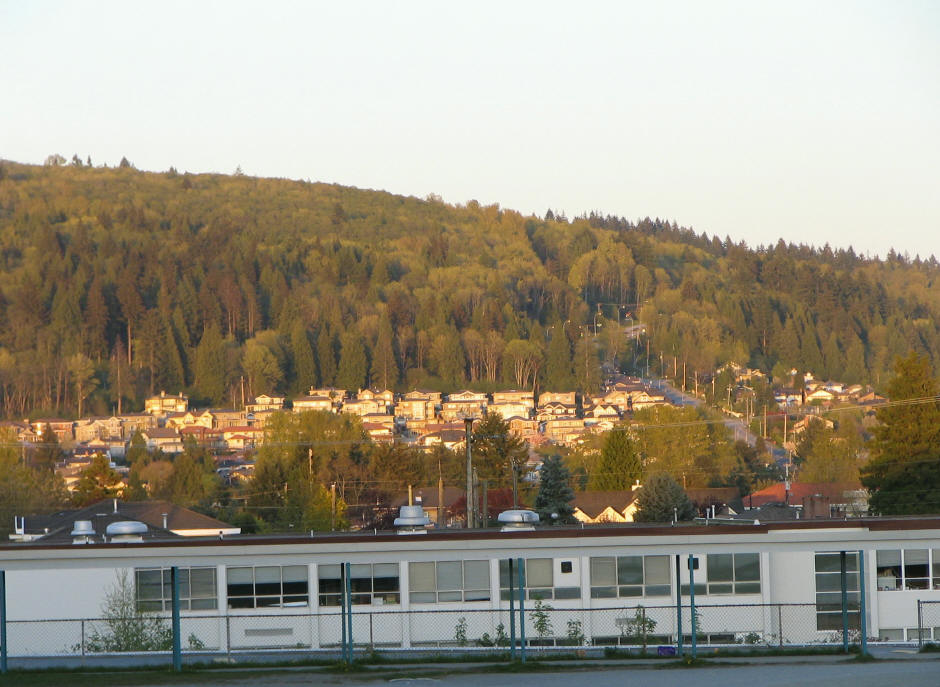
The trails around Burnaby Mountain in spring combine flowering ornamental trees near the SFU campus with forested trail sections that feel entirely wild. The Pandora Trail descends from the campus through second-growth forest — spring is when the trillium blooms in the understory, and the ferns come up bright green against the dark trunk bases of the Douglas firs. The views east from the summit clearing to the Fraser Valley are best before the summer haze builds.
Access by bus from Production Way SkyTrain is straightforward. The combination of the campus gardens in bloom, the forested trails, and the views makes Burnaby Mountain one of the more complete spring park experiences in Metro Vancouver without requiring a car.
VanDusen Botanical Garden: The Spring Peak
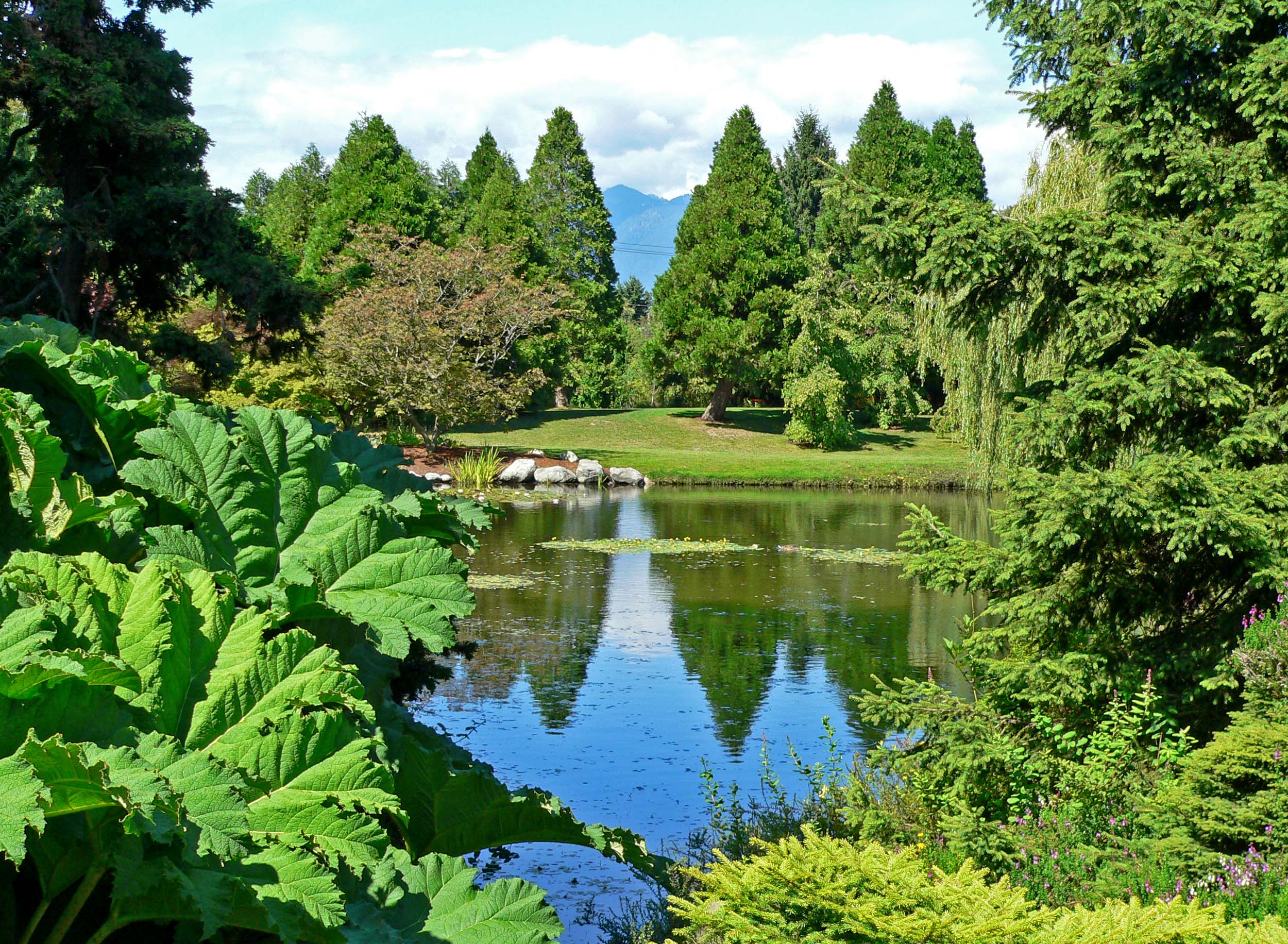
VanDusen Botanical Garden is, frankly, at its best in spring. The rhododendron collection — one of the best in North America — peaks in May. The cherry trees along the main lawn allée bloom in April. And the garden’s design, which works through the seasons, is most compelling when you can watch the succession happening week by week. Admission applies; the spring is the time it earns it most directly.
The Vancouver Cherry Blossom Festival runs annually in spring and includes events at VanDusen and across the city — if your visit overlaps with the festival, the organized walking routes through the blossom-mapped streets of Vancouver are worth using as a framework for a neighbourhood walk.
Spring Timing Notes
- Cherry blossoms: typically peak late March to mid-April in Metro Vancouver, weather-dependent
- Rhododendrons at VanDusen: peak in May
- Trillium in coastal forest understory: April
- Bird migration through Boundary Bay and dyke trail areas: April-May is peak
- Farmers markets at most parks and park-adjacent areas: typically begin May