Lynn Canyon has a suspension bridge, forest trails, and swimming holes in Lynn Creek — and it costs nothing to get in. Here's how to plan the day, what to bring, and how to get there without a car.
Capilano Suspension Bridge draws the crowds and charges admission. Lynn Canyon, a few kilometres east in Lynn Valley, has a suspension bridge of its own, forest trails, waterfalls, and swimming holes in Lynn Creek — and the bridge, trails, and canyon are free to access. For visitors who want a free, forest-focused North Shore outing rather than a managed attraction, Lynn Canyon can be the better fit.
The suspension bridge
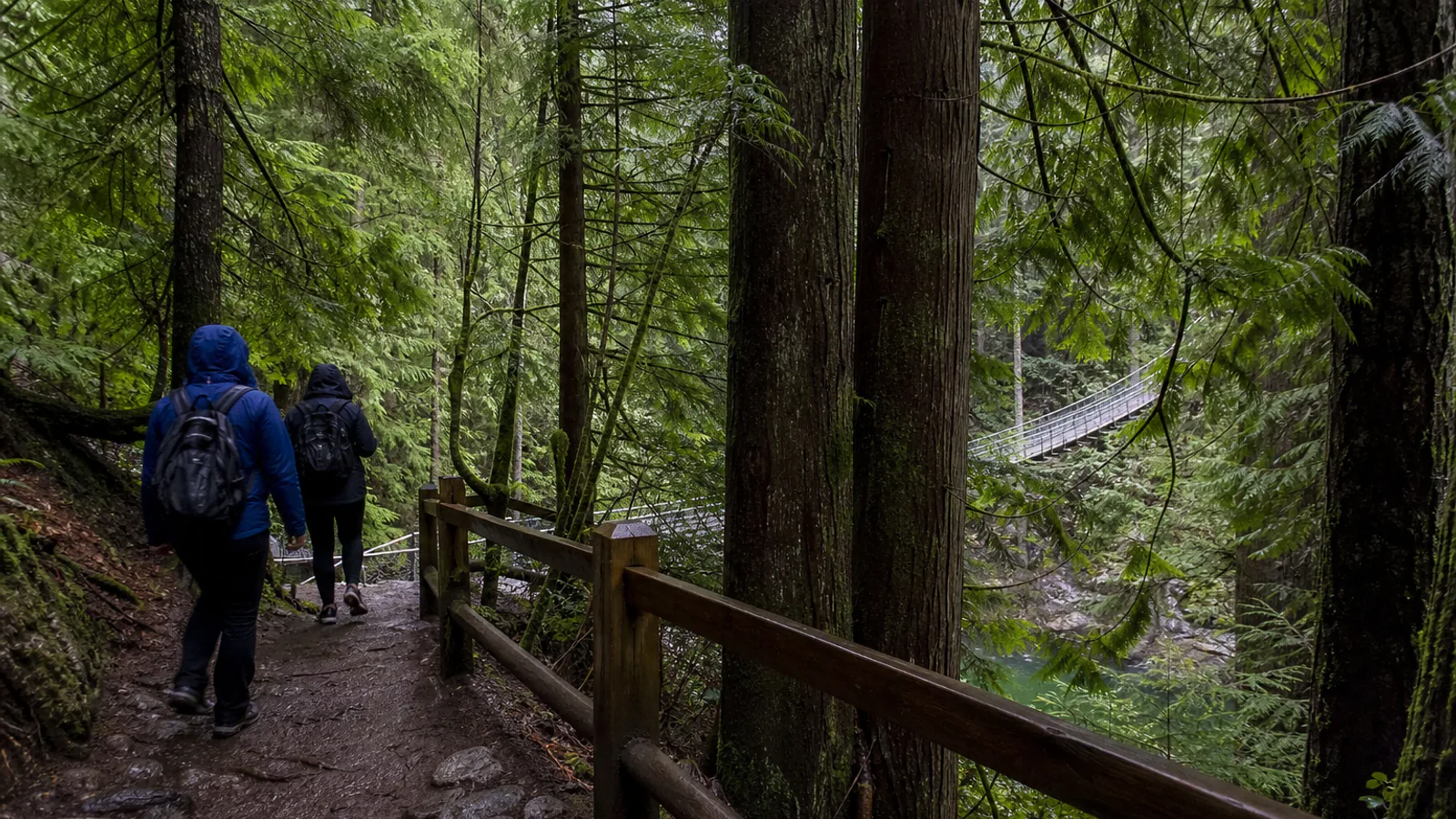
The Lynn Canyon suspension bridge crosses Lynn Creek at approximately 50 metres — roughly 160 feet — above the canyon floor. It’s a wood-plank structure with cable supports; there’s noticeable movement when several people are on it at once. From the midpoint, the view is straight down into the canyon.
The bridge is shorter than Capilano’s — fewer amenities, considerably less infrastructure around it. For many visitors, that’s exactly what they came for.
There is no admission process, no queuing system, and no timed entry. On summer weekends, a waiting crowd can form during busy hours, but early mornings and weekday visits are usually noticeably less crowded. The District of North Vancouver posts current advisories — including any closures from maintenance or seasonal conditions — on their notices page. Check this before going, particularly in winter or after heavy rain.
Trails — Twin Falls loop and Thirty Foot Pool
The trail information page from the Lynn Canyon Ecology Centre has current route details and a downloadable park map. Two main loops branch from the bridge area.
Twin Falls loop: Approximately 1.3 kilometres, taking around 45 minutes at a moderate pace. From the suspension bridge, turn right. The loop descends through forest, crosses Lynn Creek at Twin Falls Bridge, and passes two distinct falls before returning. The first fall is visible from the creek crossing; the second is narrower and more vertical. In late spring and early summer, both run at full force. The trail involves tree roots, stone stairs, and some steeper sections — footwear with grip is more practical than flat sandals.
Thirty Foot Pool: Cross the bridge and turn left, following the creek. The trail takes roughly 20 minutes from the bridge to reach the pool. Sections near the water are wet and slippery regardless of season; conditions worsen after rain or periods of high water. Check the trail information page for the park map and current access details.
Swimming at Thirty Foot Pool
Thirty Foot Pool is a natural plunge pool where Lynn Creek narrows and slows. It’s the main swimming destination in the park and draws a crowd on hot summer weekends.
Before going in, a few things to know. Lynn Creek is fed by snowmelt from the North Shore mountains. Water temperature stays very cold well into June — cold enough that extended swimming carries real risk for some people. By July and August, temperatures are more manageable, but the water remains noticeably colder than most outdoor pools even on the hottest days.
The most common mistake is judging conditions by air temperature. A hot afternoon does not make Lynn Creek warm — the source is snowmelt, not sun. The pool can feel manageable for a quick dip and genuinely cold for anything longer.
The current in the pool can be stronger than it appears, particularly when water levels are higher in spring and early summer. Rocks around the swimming area are smooth and wet. There is no lifeguard at Lynn Canyon at any time.
Check posted signs at the pool before entering. The DNV and the Ecology Centre post advisories when conditions make swimming inadvisable. If you’re visiting with children, assess the current and water level carefully before any swimming.
Lynn Canyon Ecology Centre
The Ecology Centre sits near the main park entrance and has been part of Lynn Canyon since 1971. Admission is by donation for the general public — the suggested amount is $2 per person or $5 per family.
Inside: exhibits on the local forest ecosystem, Lynn Creek, and the wildlife of the North Shore mountains. Staff can answer questions about current park conditions and trail access. The Ecology Centre also runs educational programs for school groups, which are booked separately from general public access.
Current hours, from the plan-your-visit page:
- Mid-April to September: 10am–4pm daily
- October to mid-April: 10am–4pm weekdays, 12pm–4pm weekends
- Holidays: usually 12pm–4pm
Hours can change. Confirm before planning your visit around the Ecology Centre specifically. Phone: 604-990-3755.
Public washrooms — with baby change tables and water fountains — are on the west side of the Lynn Canyon Café building near the park entrance, not inside the Ecology Centre itself.
For most day visitors, the Ecology Centre is worth 20–30 minutes. It’s a good first stop on any visit: trail maps, a staff member who can tell you what conditions are like that day, and washroom access before you head into the trails.
Getting there by transit
Bus 229 — the Lynn Valley/Lonsdale Quay route — is the direct connection from Lonsdale Quay to Lynn Valley.
From downtown Vancouver: take the SeaBus from Waterfront Station to Lonsdale Quay (approximately 12 minutes), then transfer to bus 229 at the Lonsdale Quay Bus Exchange. Get off near Peters Road on Lynn Valley Road. The park entrance and Ecology Centre are a short walk from there.
Check the bus 229 schedule on the TransLink website before going — service frequency varies by time of day and day of week. The trip from downtown Vancouver takes approximately 45–55 minutes depending on connections. Standard TransLink fare applies.
If you’re starting from somewhere other than Lonsdale Quay, use the TransLink trip planner for your specific connection.
Driving and parking
Take the Iron Workers Memorial Bridge (Second Narrows) to North Vancouver, then follow Lynn Valley Road to Peters Road. Parking is signed from there.
Pay parking is in effect from March 1 to October 31, 8am–6pm, at $3 per hour. Outside those hours and dates, parking is typically free — but check the DNV notices page for current information before driving out, as rates and conditions can change.
The lot fills early on summer weekends. On a Saturday or Sunday in July or August, arriving by 9am can be the difference between finding a space and circling residential streets nearby. Transit is often the more practical option during peak summer weekends.
When to go
July and August are peak season — swimming is most feasible, the park is fully open, and the trails are at their best. Arrive before 10am or after 4pm on weekends to avoid the busiest hours at the bridge and pool. Weekday mornings in mid-summer are when the park is at its least crowded.
May and June give the best waterfall displays. The Twin Falls loop is worth visiting in late May when the creek is running full. Swimming is not advisable during this period — the water is fast and cold. Trails can be muddy after rain.
September and October are worth considering. Crowds drop off after Labour Day, water levels lower, and the park is noticeably quieter. Swimming becomes less practical toward late September, but the forest hiking in fall is among the best the park has to offer.
November to March: the park stays open and trails are accessible in dry weather. Check DNV notices before coming out — cold weather and high water can affect trail and bridge access. This is primarily a hiking season.
What to bring
Footwear with grip. The trail network involves uneven roots, stone stairs, and sections near the creek that stay wet regardless of season. Trail runners or hiking boots are more practical than sandals for the full trail system. If you’re planning to swim, water shoes for the rocky pool edge are useful.
Water and snacks. The Lynn Canyon Café is in the park, operated by an independent catering company, but don’t rely on it being open outside peak season — bring what you need for the day.
If swimming: a towel and a change of clothes. The water is cold and the transit ride back is long enough that being in wet clothes matters.
Public washrooms are at the café building near the park entrance.
Who this trip works for
Lynn Canyon works well for adults and older children comfortable on uneven forest terrain. The main trail loops involve tree roots, stairs, and elevation change. Most of the network is not stroller-accessible; the area near the Ecology Centre is more level. If you’re visiting with anyone with significant mobility limitations, most of the canyon trail network will be challenging — the more accessible parts of the visit are the Ecology Centre area and the bridge crossing itself.
This is a real park, not a managed attraction. The experience varies with the season and the weather. Trails are not uniformly signed, the swimming area is not supervised, and weekend parking can be unpredictable. For visitors who want a controlled, guided experience, Capilano is the better fit. For visitors interested in the canyon, the falls, and the option to swim in cold mountain-fed water without paying admission, Lynn Canyon is a practical choice. Both parks are on the North Shore and reachable from Lonsdale Quay — a longer day could include both, though most visitors will choose based on budget and what kind of experience they’re after.
For more on what’s worth doing across the North Shore, read the North Vancouver neighbourhood guide. For free and low-cost options across Metro Vancouver, free and cheap things to do in Metro Vancouver covers the broader region.
Travel details change. YVRBlog aims to use official sources and show the review date above. If something has changed, please contact us.