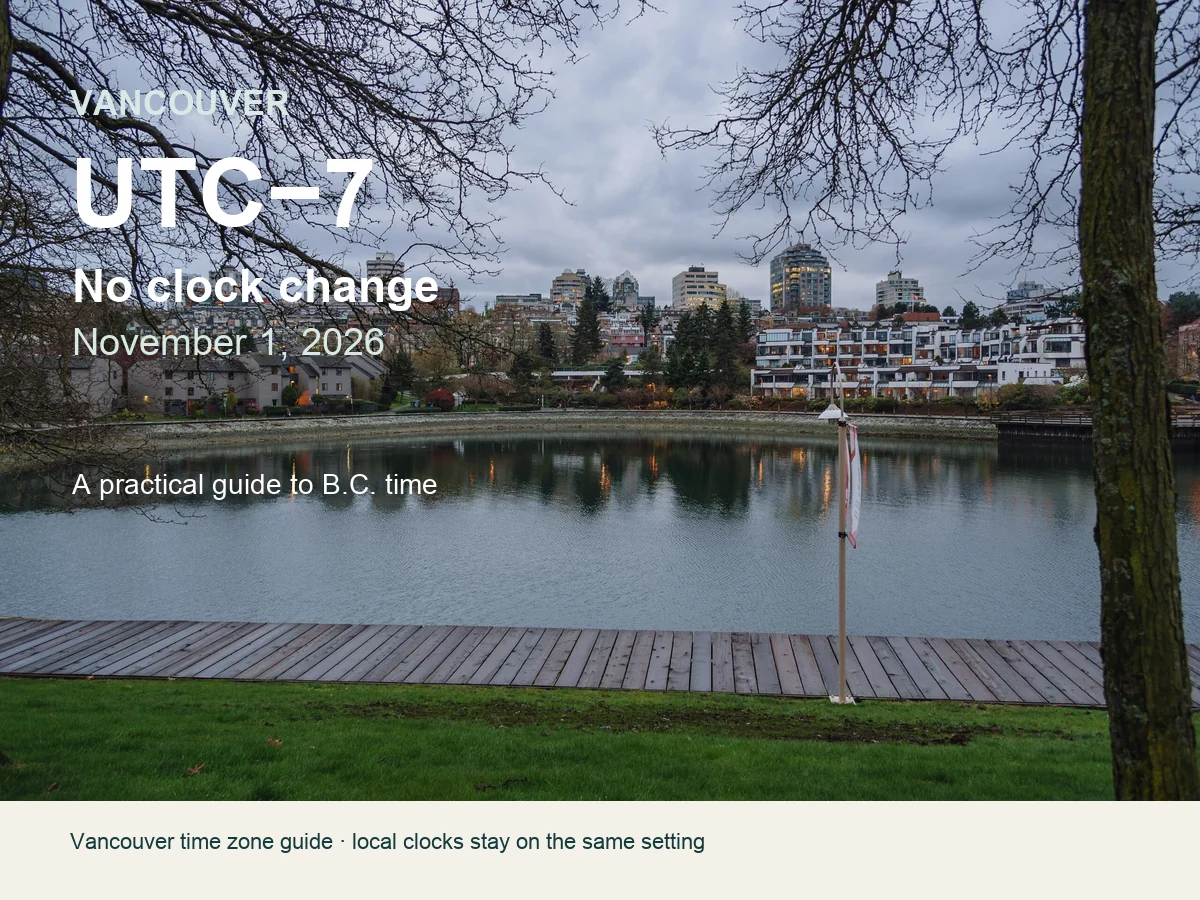
Vancouver is not turning its clocks back on Sunday, November 1, 2026. That is the practical change people will notice first: when the usual autumn clock change arrives, most of British Columbia will simply stay at the same time. If you live in Vancouver or are arriving at YVR, you do not need to set an alarm for a missing hour or move every wall clock back. The province made its final seasonal clock change on March 8, 2026.
\n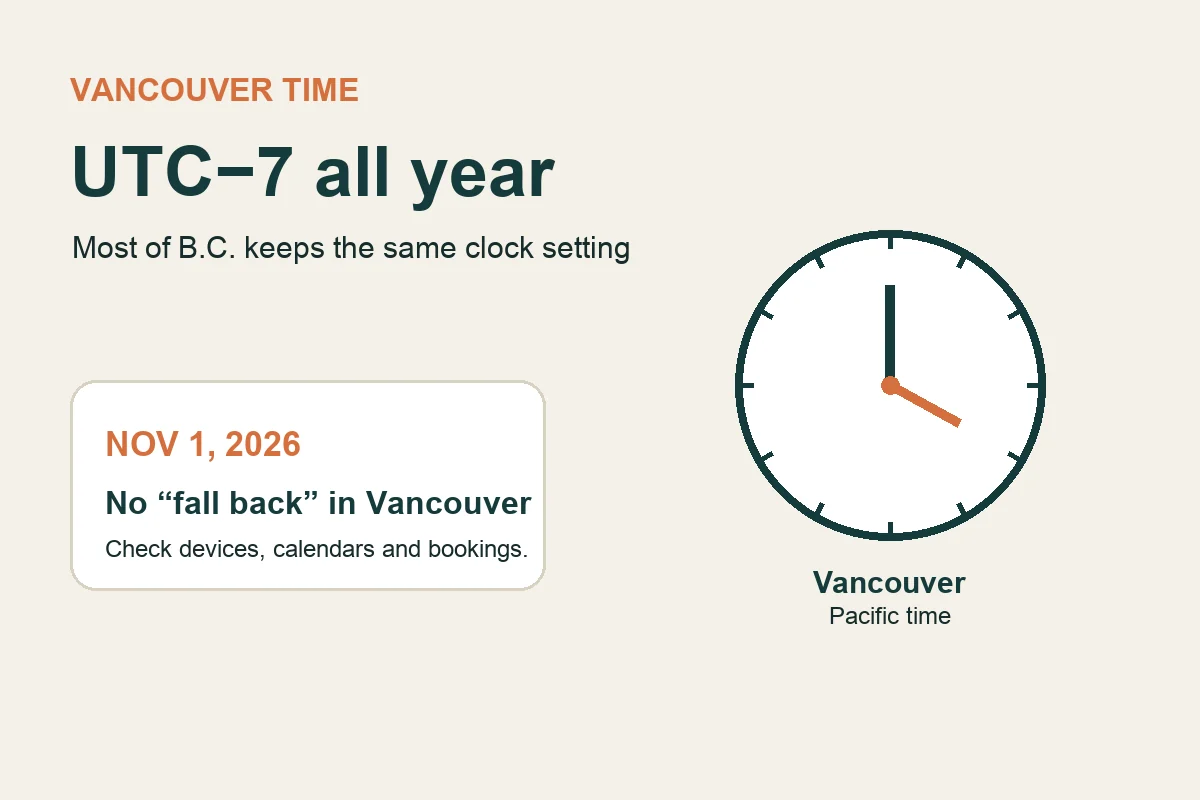
The short version is that most of B.C. now observes Pacific time at UTC-7 throughout the year. The provincial government describes this as permanent daylight saving time, while its public information page uses the simpler name “Pacific time.” The change matters beyond clocks: it affects flight connections, border meetings, ferry bookings, remote work, school calls and any calendar invitation that crosses the Canada–U.S. border.
What happens in Vancouver on November 1?
Nothing changes on the clock. At the moment when Vancouver would previously have moved from daylight time to standard time, local clocks remain at UTC-7. In everyday terms, Vancouver keeps the same clock setting it used through the summer. The extra evening light is retained, but winter mornings are darker than they were under the old seasonal system.
- Do not set clocks back one hour in Vancouver on November 1, 2026.
- Your phone, computer and smartwatch should update automatically, but check older appliances and vehicle clocks.
- Appointments booked in Vancouver remain at the same local clock time.
- International and cross-border bookings may display a different offset after nearby regions change.
What time zone is Vancouver in now?
Vancouver is in the Pacific time zone, seven hours behind Coordinated Universal Time (UTC-7). Before 2026, that offset applied during daylight saving time and then shifted to UTC-8 in winter. Under the new B.C. system, the seasonal switch between UTC-7 and UTC-8 ends for most of the province. January and July now use the same UTC offset in Vancouver.
You may still see the abbreviation PDT in software, airline systems and technical documentation because many systems use the daylight-time label for UTC-7. The safest way to avoid confusion is to check the numeric offset, UTC-7, and the city name, Vancouver, rather than relying on an abbreviation alone.
\n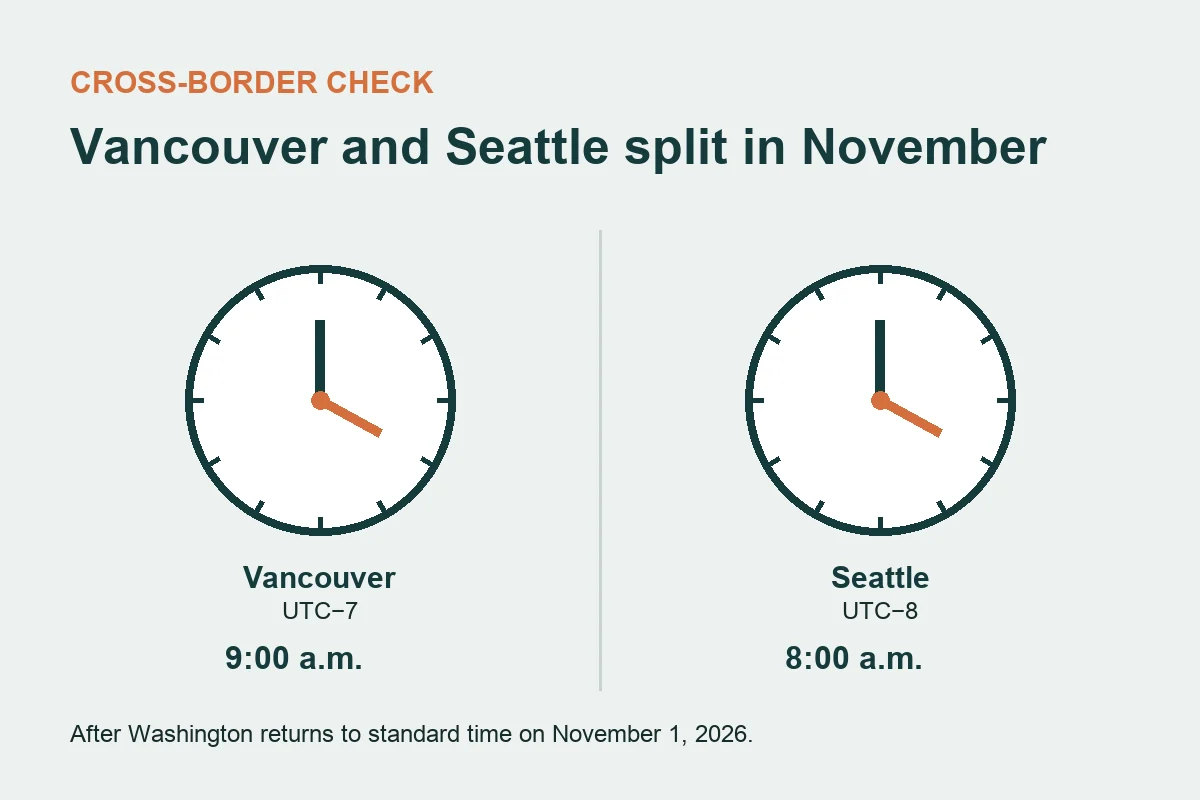
Why B.C. stopped changing the clocks
The legal groundwork was created in 2019 through the Interpretation Amendment Act. That law gave the province a route to change how time is observed, but B.C. waited while neighbouring jurisdictions considered whether they would make a similar move. The concern was straightforward: a permanent change on the west coast could create a new mismatch with Washington, Oregon and California for part of the year.
Before the law was used, the province held a public engagement process. The government reported more than 223,000 responses, with 93 percent supporting an end to the twice-yearly clock change. The arguments were familiar to anyone who has had to reset a child’s sleep schedule, update a business system or make a long-distance appointment after a time change: a fixed clock is easier to remember and creates fewer small disruptions.
The provincial regulation that set the old seasonal change was repealed effective March 9, 2026. Clocks still moved forward on March 8 as they normally would. That spring change became the final one for Vancouver and most of B.C.; November is the point at which the new year-round arrangement becomes visible.
The important B.C. exceptions
“B.C. is staying on one time” is a useful Vancouver shortcut, but it is not a perfect description of every community in the province. Local charters mean some northern and southeastern communities follow different time practices.
- Northeastern B.C. and the northern Rocky Mountains: communities including Dawson Creek, Fort St. John, Fort Nelson, Chetwynd, Hudson’s Hope, Taylor and Tumbler Ridge already observe Mountain Standard Time (UTC-7) year-round. They will continue that practice and align with Vancouver’s UTC offset, even though the local time-zone label may remain Mountain time.
- East Kootenay and Golden-area communities: Golden, Cranbrook, Fernie, Sparwood, Invermere, Kimberley, Radium Hot Springs and Elkford continue to follow the Alberta-aligned pattern, switching between UTC-7 in winter and UTC-6 in summer under current local arrangements.
- Local choice remains possible: the provincial guidance says local governments retain authority to determine what time zone they observe, so check the municipality when a trip involves a community outside the Lower Mainland.
For a Vancouver visit, this means the province-wide headline is simple, but a road trip into the Kootenays still deserves a location-specific check. Do not assume that every B.C. address will use the same clock setting just because the province’s largest cities do.
\n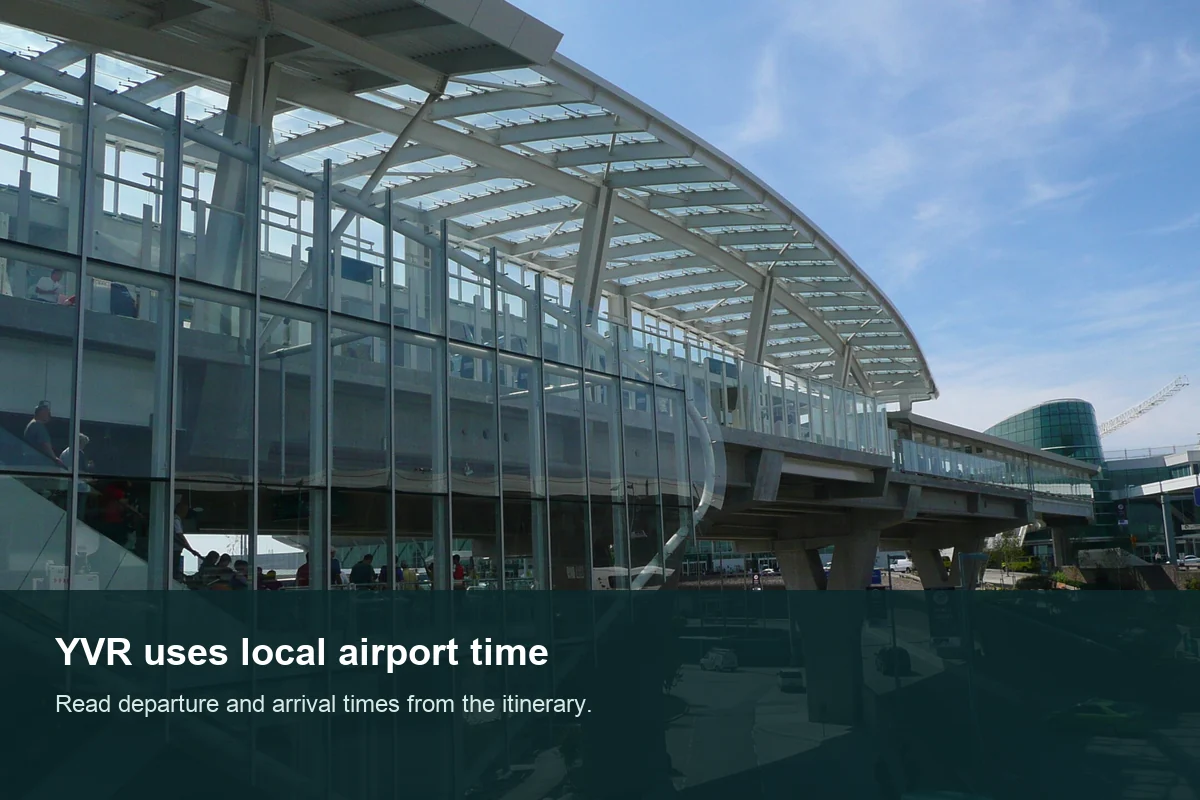
Why Vancouver and Seattle will be one hour apart
Vancouver and Seattle usually share the same clock time, which is why the November change can catch travellers off guard. Under current U.S. rules, Washington State returns to Pacific Standard Time on November 1, 2026. Vancouver does not. From that date, Seattle is one hour behind Vancouver.
The difference matters for the most ordinary cross-border plans: an early appointment in Bellingham, a Seattle flight, a concert ticket, a work call or a bus connection through the Peace Arch. If someone in Seattle says “11 a.m.”, that is noon in Vancouver after the U.S. change. Recheck the displayed time on reservations instead of assuming the two cities still match.
Useful Vancouver time conversions after November 1
Once most North American clocks move to winter time, these are the practical offsets from Vancouver’s UTC-7 setting. They are seasonal comparisons, so recheck them when another region changes its clocks.
- Seattle and other U.S. Pacific locations: one hour behind Vancouver during the U.S. winter period.
- Toronto and Montreal: two hours ahead of Vancouver while Eastern Standard Time is in effect.
- Calgary and Edmonton: one hour ahead of Vancouver while Mountain Standard Time is in effect.
- London: seven hours ahead after the United Kingdom returns to Greenwich Mean Time.
- Tokyo: sixteen hours ahead because Japan stays on Japan Standard Time year-round.
For travel planning, use the time shown for the departure or arrival airport, not just the time on your phone when you bought the ticket. Airline itineraries normally show local times, but a calendar reminder copied from an email can be interpreted differently if the event was created in another time zone.
What Vancouver residents and visitors should check
Flights and airport pickups: YVR schedules use local airport time. A Seattle connection may acquire a one-hour difference after November 1, while a Toronto connection will have a smaller winter gap than it did under the old B.C. system. Build your plan from the local departure and arrival times printed on the itinerary.
Ferries and buses: sailings and scheduled departures are listed in local time for the terminal or stop. If your itinerary crosses a border or connects with an Alberta-aligned community, confirm the time zone shown in the operator’s current booking system before leaving Vancouver.
Phones, laptops and older clocks: modern devices usually update through their time-zone databases. Older microwaves, dashboard clocks, wall clocks and some workplace systems may still need a manual check. If a device offers “Vancouver” or “Pacific time,” choose the city-based setting rather than a generic manual UTC offset.
Meetings and shared calendars: keep the event tied to a named city. “Vancouver, 9 a.m.” is clearer than “Pacific time, 9 a.m.” when a guest may be joining from Seattle, Calgary or Toronto. For an important appointment, write the UTC offset in the confirmation message as well.
\n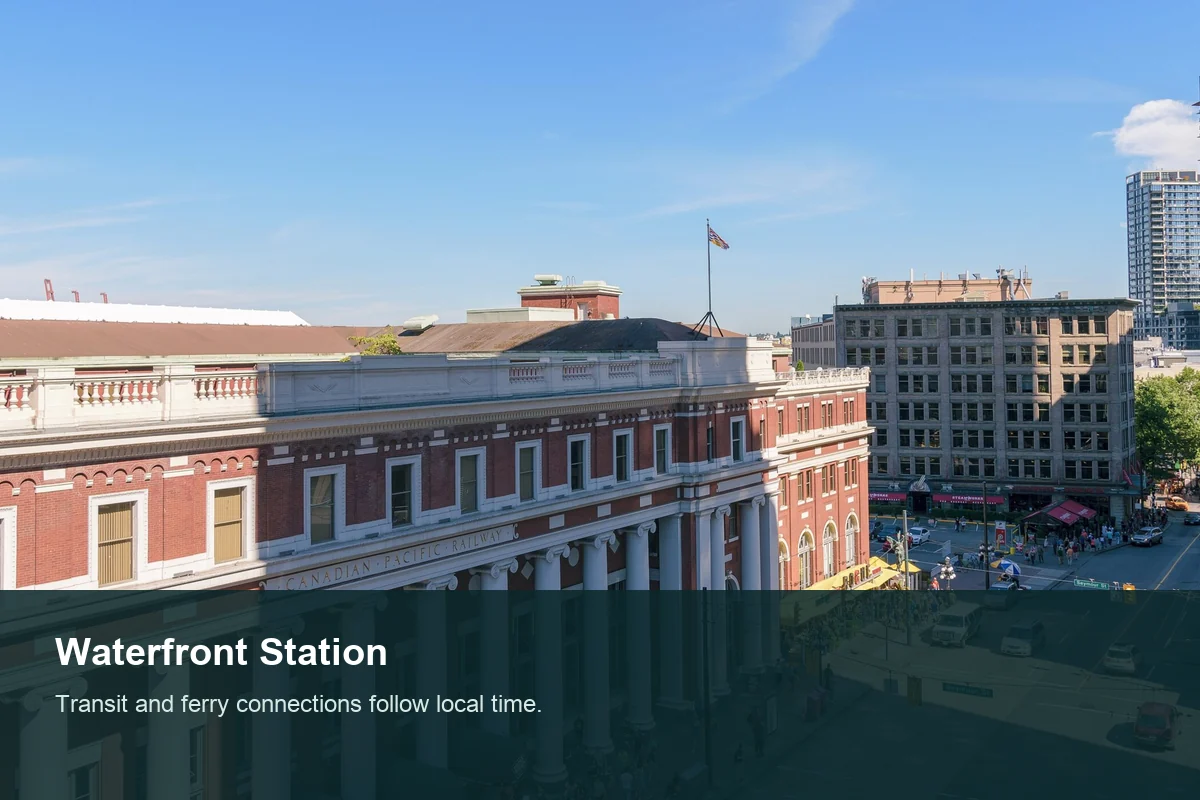
Quick answers
Does Vancouver turn the clocks back in November 2026? No. Vancouver remains at UTC-7 when November 1 arrives.
When did B.C. make its last seasonal clock change? Most of B.C. moved forward on March 8, 2026. That was the final seasonal change under the new system.
Is Vancouver still on Pacific time? Yes. The provincial guidance calls the year-round setting Pacific time, with Vancouver at UTC-7.
Will all of B.C. use the same clock? No. Northeastern communities already on UTC-7 remain aligned by offset, while East Kootenay and Golden-area communities continue Alberta-aligned seasonal changes under current local arrangements.
Will Vancouver and Seattle have the same time this winter? No. Seattle is scheduled to be one hour behind Vancouver after Washington returns to standard time on November 1, 2026.
For the legal change and the community exceptions, see the Province of British Columbia’s permanent daylight time guidance and the Order in Council that brought the change into force. Both are worth checking again before a future trip because time-zone rules and local arrangements can change.
One small habit helps: when a booking crosses a border, write both city names beside the time. “Vancouver 9 a.m. / Seattle 8 a.m.” is much harder to misread than a bare Pacific abbreviation. It also gives anyone checking the plan later a quick way to spot an old calendar entry.
If you are planning your first visit to the city, our Vancouver first-time visitor guide covers the practical details that sit alongside time-zone planning, including getting around and building a realistic day in the city.
Costs change. YVRBlog aims to use official sources and shows the review date above. If something has changed, please contact us.